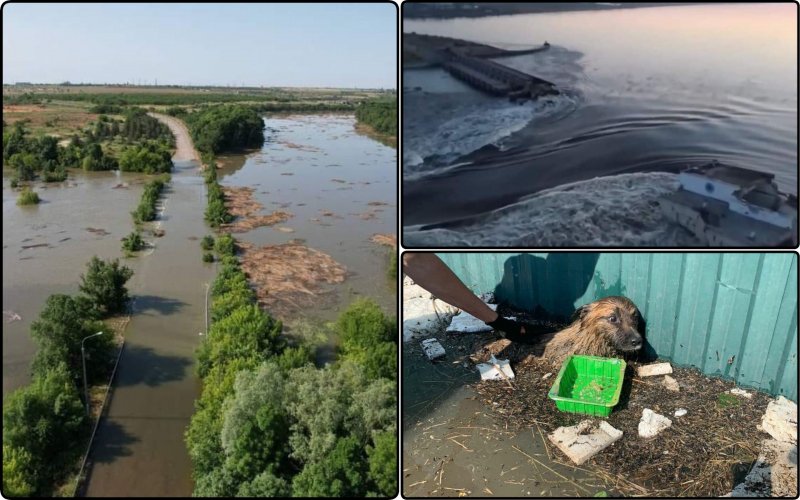
About 55,000 hectares of forests were flooded in the Kherson Oblast due to the explosion of the Kakhovskaya HPP, of which 47,000 hectares are in the occupied territory.
Trees up to 10 years old are at risk of death, and most animals will have no chance of survival, the head of the State Agency of Forest Resources Yuriy Bolokhovets reports on Facebook.
"This is ecocide. And Russia is a terrorist country. The enemy must be responsible for this!" he said Bolokhovets
He emphasized that it is currently impossible to assess the damage, because there is no access to the occupied territories.
Bolokhovets predicted that Mr the thick layer of forests and young plantations could literally be swept away by a stream of water. In addition, the pine trees planted on the Left Bank of the Dnipro can die due to flooding. These trees are adapted to dry conditions, and standing water will promote root rot and change the acidity of the soil.
"It threatens the death of the trees if the water stays for up to 20 days, as it is predicted. Trees up to 10 years old are under special threat," he said.
According to him, there is still hope for the preservation of plants, but animals are actually doomed. It is likely that some animals will manage to cling to an island of land, but the vast majority will simply be carried by the current into the open sea. These are deer, roe deer, wild boars. And for lizards, snakes, hares, hedgehogs – there are no chances.
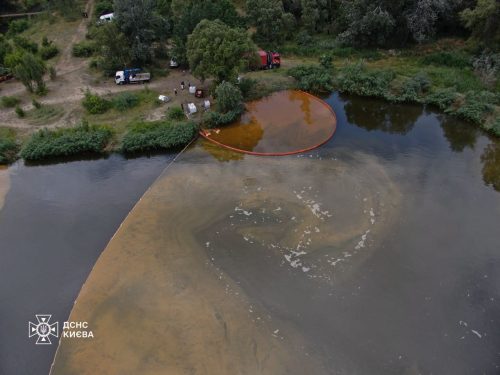
He also added that 150 tons of machine oil, which got into the Dnipro River, can settle on plants, which will lead to irreversible consequences in the process of photosynthesis.
Bolokhovets emphasized that flooding also threatens the Kinburn spit, most of which is below sea level.
"Probably, the isthmus at the end of the bay outside the Dnieper delta will be almost completely flooded and this could happen 50 hours after the dam breaks. "The Kinburn Spit regional landscape park, which has been suffering from fires as a result of shelling for more than a year, may now be partially under water," he said.
Earlier, EcoPolitic wrote, that on the night of June 6, the Russian occupiers blew up the dam at the Kakhovskaya HPP.
As EcoPolitic previously reported, the Committee on Environmental Policy and Nature Management stated that the blow-up of the dam at the Kakhovskaya HPP led to a man-made disaster and an extraordinary ecological situation, which has destruction with deep and irreversible changes in nature and environmental losses.