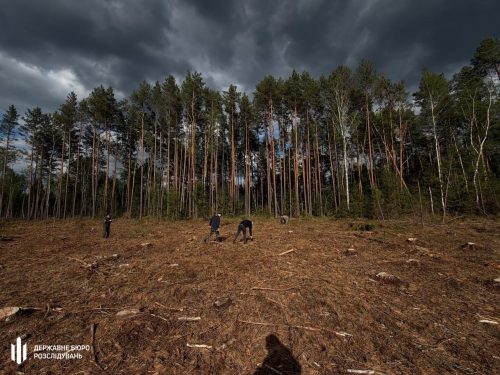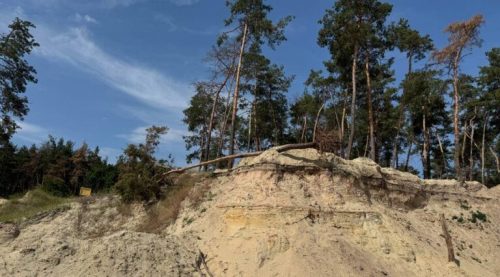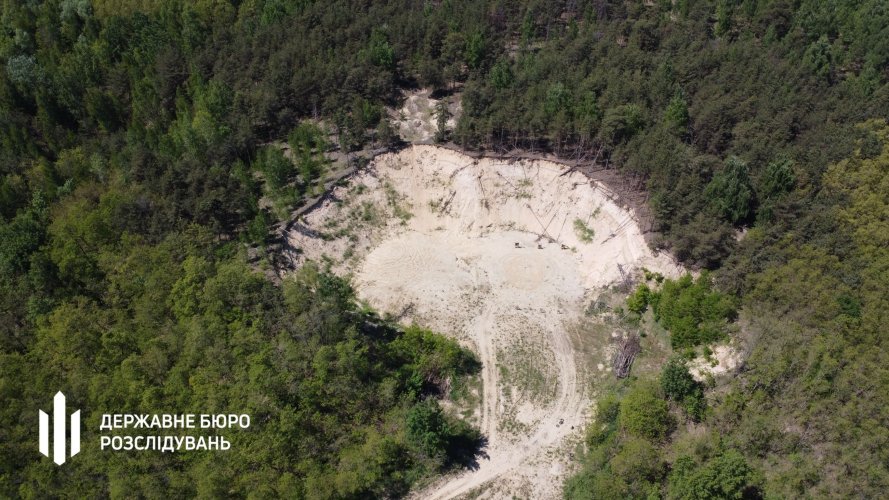
In May and June, the Ministry of Environmental Protection and Natural Resources of Ukraine approved the Pokrovska site for amber mining and the Korchyn site for sand mining in Rivne region. They are both covered with forest.
This was reported by experts of the Ukrainian Environmental Protection Group (UPG), who have been analyzing all mining sites approved by the Ministry for almost 2 years.
The Pokrovska field has an area of 12 hectares, and the Korchyn field has an area of 60 hectares. Both are covered with forest. The activists also raised questions about the Sadova 85 field, part of which is a swamp and borders on the territory of the Rivne Nature Reserve expansion.
The UPG emphasized that there were alternatives to locate these quarries. As an example, they cited areas damaged by illegal amber mining, as well as a large amount of agricultural land where sand could be extracted.
"How can we simultaneously talk about the importance of protecting forests and at the same time agree to their destruction? To attract funds from international donors to restore drained swamps and at the same time turn the same swamps a couple of kilometers away into wasteland?" the activists are outraged.
They warned that the strict environmental conditions for extraction prescribed by the ministry's officials would not be able to stop entrepreneurs who have paid millions of hryvnias for the permits. According to the members of the UPG, business will use political decisions to “push through the conclusions of the environmental impact assessment it needs.”
Therefore, the activists called on the Ministry of Environment to stop this practice and return to the positions it has taken in recent years, when it did not allow peat, amber, sand plots to be auctioned if they fell within protected areas, forests, or if their extraction could lead to significant damage to water resources.
The UPG believes that globally, the situation can only be remedied by conducting an environmental impact assessment procedure in the field of subsoil use BEFORE the auction, not AFTER.
As a reminder, in early May, EcoPolitic reported that the Ministry of Ecology would conduct unscheduled inspections of dormant mining licenses.
We also told you that 3.5 months apart, the Ministry issued two opposing conclusions on the possibility of peat extraction on the same site in the Dniester floodplain.