
Scientists of the Institute of Space Research named after Goddard (GISS) of NASA in New York recognized this July as the hottest in the entire history of observations.
This is stated in an article on the NASA website.
It is noted that it was especially hot in the countries of South and North America, North Africa and the Antarctic Peninsula, where the temperature was higher than average by 4°C.
Overall, July 2023 was 0.24 degrees Celsius warmer than any other July, and 1.18 degrees warmer than the July average between 1951 and 1980.
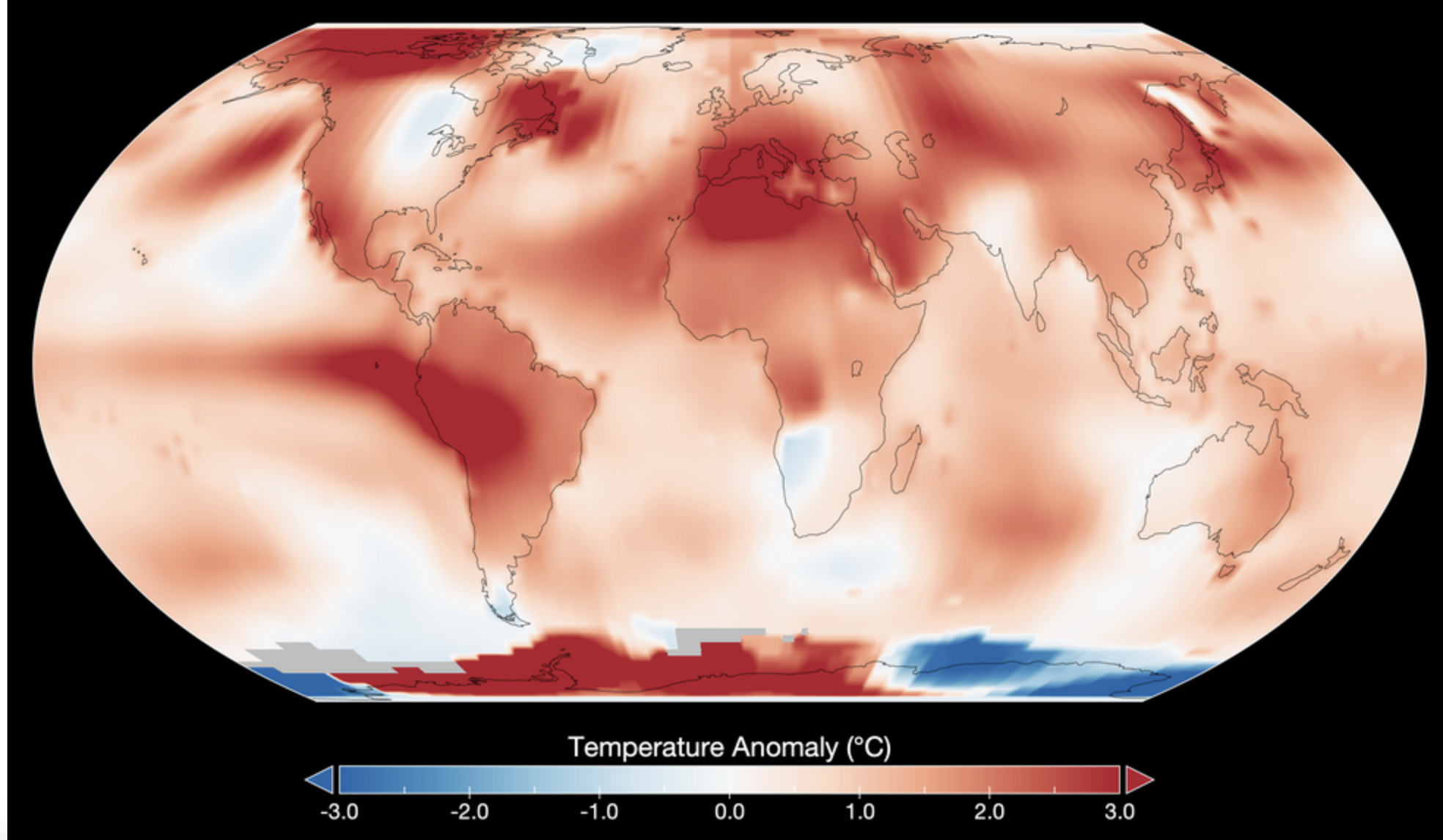
"NASA's data confirmed what billions of people around the world felt: July temperatures made it the hottest month on record. In every corner of the country, Americans are feeling the effects of the climate crisis right now, underscoring the urgency of President Biden's historic climate agenda." , – commented the head of NASA, Bill Nelson.
NASA emphasized that the record hot July continued the trend of global warming. According to NASA, the five hottest Julys since 1880 have occurred in the past five years.
As EcoPolitic reported earlier, at the beginning of August, the EU Copernicus climate change service set a new record for the average daily global sea surface temperature — 20.96°C. Oceans absorb heat from climate change, which has catastrophic consequences for the health of the planet. The frequency of marine heat waves doubled from 1982 to 2016, and has become more intense and longer since the 1980s.