Regional administrations in Ukraine are allowing hunters to temporarily "regulate the population" of foxes and wolves, citing an excess of the optimal number of predators and the threat of rabies. However, animal rights activists point out that the authorities rely on outdated standards from 27 years ago, and there is still no real independent census of wild animals in the country.
How the figures for predator culling permits are formed and why they are controversial is discussed in an article by "Espreso".
Where the "optimal" standard came from
Regional anti-epizootic commissions issue temporary permits to regulate predator populations, arguing that the number of foxes exceeds the permissible level of 0.5–1 animal per 1,000 hectares of land. For example, Lviv Oblast reports three foxes per thousand hectares, while Poltava Oblast reports that the norm has been exceeded three to four times.
However, this standard comes from veterinary and sanitary documents of the Ministry of Environmental Protection and the State Forestry Committee dating back to October 1999. There is no information on any modern scientific research that would confirm the relevance of this figure.
"Who determined the fox population density standard in Ukraine, and why should it be 1 fox per 1,000 ha, when in neighbouring Poland the density reaches 1 fox per 100 ha, and in Britain, Italy and France it is even higher? These questions also apply to wild boars, and without answers to them, claims about an excessive number of predators look manipulative," stressed Liudmyla Chekhovska, a volunteer activist with the UAnimals organisation.
Who counts wild animals
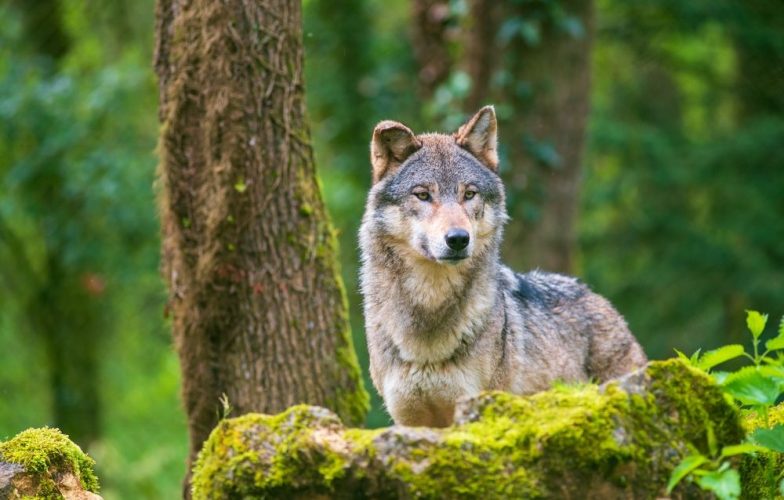
Another problem is the lack of verified data on the actual number of predators. According to Vitalii Smahol, PhD in Biology at the Schmalhausen Institute of Zoology, before the full-scale war there were about 50,000 foxes in Ukraine, and now, excluding the occupied territories, there may be more than 250,000. According to the State Forest Resources Agency census, 3,915 wolves were also counted in hunting grounds, compared to 2,102 in 2020.
At the same time, Oleksandr Ponomarenko, a senior researcher at the "Dniprovsko-Orilskyi" Nature Reserve, notes that these figures are only expert estimates or the results of hunting censuses. According to him, no scientific institution, neither nature reserves nor the National Academy of Sciences, has conducted an independent count of predatory species. The authorities most often operate with figures provided by land users, who may overstate the number of animals in order to obtain a culling permit.
How "temporary permits" work on the ground
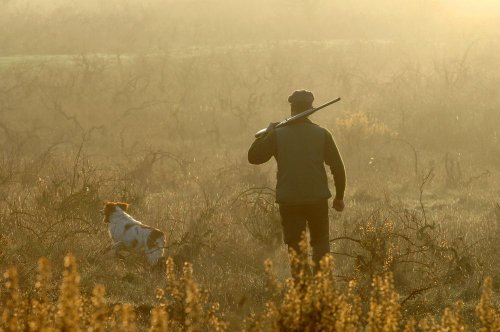
Formally, hunting is prohibited, but Article 33 of the Law "On Hunting Management and Hunting" allows hunters to be involved in regulating predator populations. Such measures last from one or two months to six months. For example, in Lviv Oblast, from November 2025 to March 2026, hunters killed 1,282 foxes, 33 wolves, 123 wild boars, three raccoon dogs and one jackal on weekends. In Kirovohrad Oblast, 47 foxes were shot in four weekend days, but the laboratory accepted only 29 of them for testing; the rest were rejected because the bullet had hit the wrong place.
As EcoPolitic previously reported, hunting was allowed again in several Ukrainian oblasts, which provoked a sharp reaction among citizens. In addition, the Verkhovna Rada criticised draft law No. 15431 on hunting, calling it immoral, anti-European and contrary to EU norms.