By 2028, the Khmelnytskyi City Territorial Community aims to achieve Zero Waste City status. The city is already a candidate for this designation but must implement a series of large-scale measures to prevent waste generation.
This was reported by Suspilne, citing an official response from the Khmelnytskyi City Council.
Khmelnytskyi joined the Zero Waste Cities program in December 2024. The program is coordinated by Zero Waste Europe, and in Ukraine by the Ukrainian Zero Waste Alliance.
"If the city successfully completes the certification process by 2028, it will receive the status of a 'Zero Waste City,' confirming the transition to a resource conservation system," Khmelnytskyi City Council officials told reporters.
More and more waste
Throughout 2024, residents of Khmelnytskyi "generated" 111,200 tons of household waste. The following year, in 2025, the volume of waste reached 113,200 tons.
Over 99% of waste is sent to landfill, since the share of separately collected waste is less than 1%. This includes polymers, paper, metals, and glass delivered for recycling.
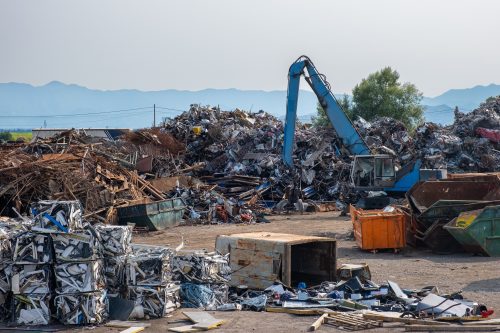
The Khmelnytskyi landfill, located at 7 Myru Avenue, has been accepting waste for 70 years, since 1956. In that time, 5.6 million t of waste have accumulated there.
Costly system upgrade
The city council reported that the waste management system modernization project costs over €34 million. It is being implemented by the municipal enterprise “Spetskommuntrans” together with the European Bank for Reconstruction and Development (EBRD) using credit and grant funds.
Several directions of work are already underway in the city:
- The old landfill is planned for reconstruction. In August 2025, preparatory work for reclamation already began, as well as the construction of two sanitary sections. The contractor is a Greek-Azerbaijani consortium.
- Treatment facilities have been operating in test mode for over a year. They are capable of treating 200 cubic meters of leachate per day, which is produced at the landfill site.
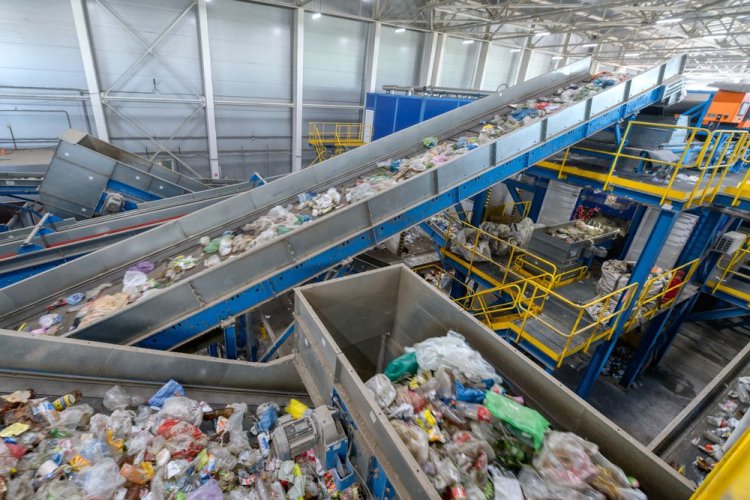
The city also plans to build a waste processing complex, where secondary raw materials will be further sorted, as well as composting of organic, including food, waste. The tender winner to construct the facility is currently being selected.
Much depends on the people
There are three municipal waste management centers operating in Khmelnytskyi. They accept 13 types of waste, including plastic bottles, clothing, and even construction debris. Addresses of the centers:
- 7 Myru Avenue;
- intersection of Pilot’ska and Chornovola Streets;
- 1 Knyaz Sviatoslav Khorobryi Street.
However, effective waste management largely depends on the awareness of the city’s residents, which, unfortunately, remains insufficient.
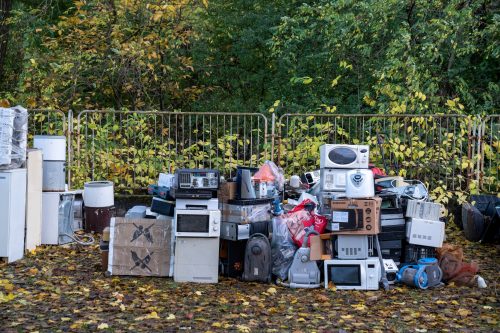
“Garbage is often piled next to containers or in green areas, and only a small portion of residents sort their waste,” the city council noted.
Recall that Khmelnytskyi is one of the Ukrainian cities where hazardous household waste is collected by an eco-bus. The April schedule of the mobile collection point was reported by EcoPolitic in this article.