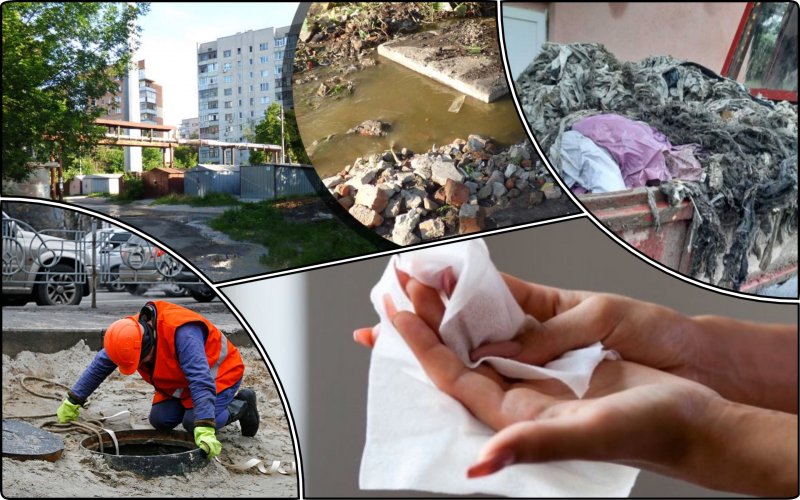
Communal officials urged Ukrainians not to throw wet wipes, cotton pads, and hygiene items into the sewer network, because they create traffic jams.
This leads to emergency gusts and harms the operation of treatment facilities, reports PrJSC "AK Kyivvodokanal".
It is noted that sewage pipelines are not intended for the transportation and disposal of household waste. Nothing should get into them, except waste products, toilet paper and water, which is used to wash it all away. Even food residues and grease that enter the drain when washing dishes cause clogged pipes and blockages.
"Wet wipes, cotton pads, ear sticks, pads, and diapers remain particularly dangerous traffic jams and at the same time the most popular candidates for flushing," the utility workers emphasized.
They explained that toilet paper, unlike wet wipes, is shredded and dissolved in the network, which does not harm its operation. However, synthetic materials only increase in volume.
It is noted that a napkin thrown into the toilet can cause traffic jams:
- in indoor pipes;
- in the city sewage network, where similar waste will be encountered;
Communal officials emphasized that in 2022 they eliminated 11,000 such traffic jams. If the citizens followed the rules, Kyivvodokanal could direct these resources to the reconstruction and modernization of the facilities.
- at the Bortnytsia aeration station.
The report said that BSA is the only sewage treatment plant in the city, where all sewage goes through several stages of purification before returning to the river. At the first stage, sewage is cleaned of solid waste with mechanical dams. However, the equipment is not designed for this amount of waste, so the employees have to manually remove 5-6 tons of garbage, and after rains – more than 10 tons.
It is noted that such waste from BSA is sent for incineration at the "Energia" plant. However, in small settlements, where there are no high-quality sewage treatment facilities, garbage thrown into the toilet can end up directly in the water body, where it will poison the environment for years. In addition, it can be eaten by animals, which will inevitably lead to death.
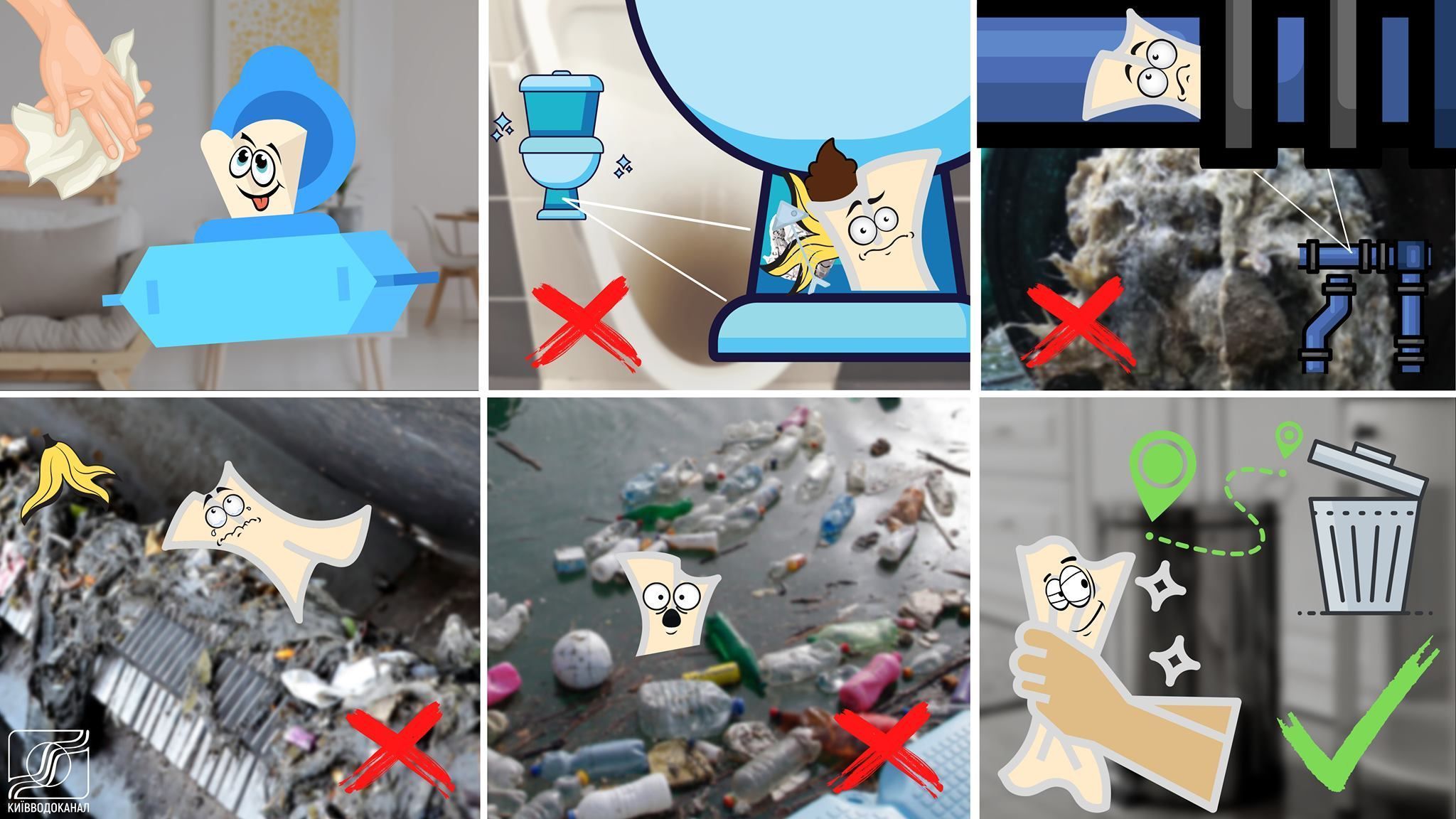
"One conclusion: except for toilet paper, you can't throw anything into the toilet," the communal workers emphasized.
They added that with a frozen mass of fat and garbage that compacts into one big lump in the sewer is called fatberg. The largest gyreberg weighing 15 tons was found in the sewers of London. It was the size of a bus and consisted of grease and wet wipes.
Earlier, EcoPolitic wrote, that wet wipes do not decompose and are not compostable, which is why they are very difficult to recycle. Scientists claim that they do not contribute to disinfection, are not able to completely clean the surface of the skin and, if used incorrectly, contribute to the significant spread of bacteria.
As EcoPolitic previously reported, in August 2021 in Kyiv due to a sewage accident in the area of Lesya Ukrainka boulevard, tons of sewage entered the Dnipro river.