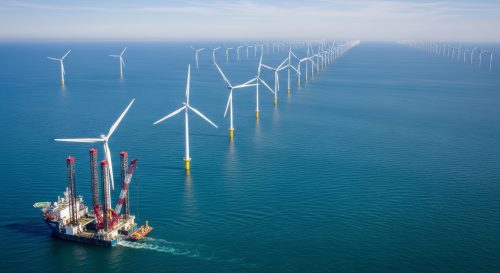
On August 23, Canada and Germany will sign an agreement on green energy, which will allow the construction of a wind power plant for the production of hydrogen and ammonia for export.
The agreement could become key to the development of Canada's hydrogen industry, reports CBC News.
It will be signed by Canadian Prime Minister Justin Trudeau and German Chancellor Olaf Scholz in the province of Newfoundland in the city of Stephenville.
The article noted that, if approved, the project would be the first of its kind in Canada.
Germany is keen to find new sources of energy because russia's invasion of Ukraine has led to a surge in natural gas prices. As well, russia has reduced its flow of natural gas to its European customers, prompting concerns about supply shortages.
Meanwhile, the company behind the Newfoundland project, World Energy GH2, has said the first phase of the proposal calls for building up to 164 onshore wind turbines to power a hydrogen production facility at the deepsea port at Stephenville. Long-term plans call for tripling the size of the project.
"There is a heightened urgency for Canada to step into this new market that's in such high demand," said Stephenville Mayor Tom Rose, "We're poised now to be the green energy hub of North America."
He added that the province did not lift the moratorium on wind farm development until 2022.
Rose said Stephenville is an ideal location for a wind farm because the area has a world-class "wind corridor." In addition, the city has the means to produce the large amount of water needed to produce hydrogen. After all, heavy infrastructure remained at the site of the Abitibi-Price paper mill, which was closed in 2005.
"It seems that this is the energy of the future, and the demand for it is very high," he said.
This multi-billion dollar project was registered with the province in June 2022 and now requires an environmental impact report.
World Energy GH2 noted that the development of large-scale green hydrogen production capacity is just beginning, which gives Canada, in particular Newfoundland and Labrador, the opportunity and advantage to be the first in the green energy sector.
"Newfoundland and Labrador's unique geography, strong wind resource and proximity to large centres of demand, will make it a globally competitive green hydrogen producing region," the company said.
The vast majority of existing hydrogen production relies on natural gas or coal to generate electricity, which means unwanted carbon emissions.
Construction of the first wind farm is planned for the end of 2023 on the Port-au-Port peninsula. However, the local community is concerned about the project's potential impact on the ecosystem, which includes rare and endangered plants.
Earlier, EcoPolitic wrote, that in Germany, the specialty chemicals company Evonik is developing an anion-conducting membrane for cheap production of green hydrogen.
As EcoPolitic previously reported, in the US, the draft law on reducing inflation, among many climate-oriented provisions, includes tax incentives for production green hydrogen at the lowest price in the world $0.73 per kilogram.