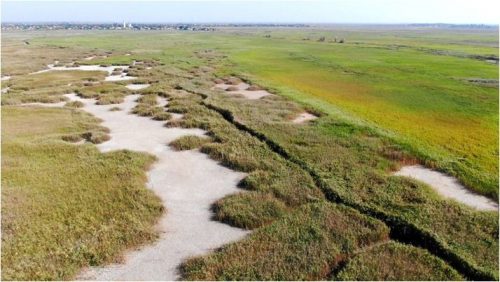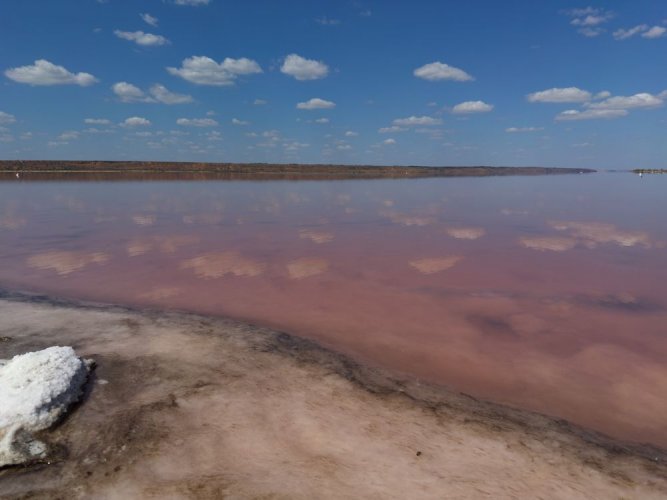
The Kuyalnik Estuary in Odessa region has been losing water faster every year, and may eventually become unsuitable for recreation. The water body is shrinking and gradually turning into a salt marsh.
This was reported by the publication Podrobnosti.
The Kuyalnik Estuary is located 3 km from the Odessa Gulf and north of Odessa. Its ecosystem is known for its healing mud, but this popular health resort is rapidly shrinking due to a number of factors:
1) Global warming.
2) Harmful human activity.
3) Pollution of adjacent rivers that flow into the Black Sea.
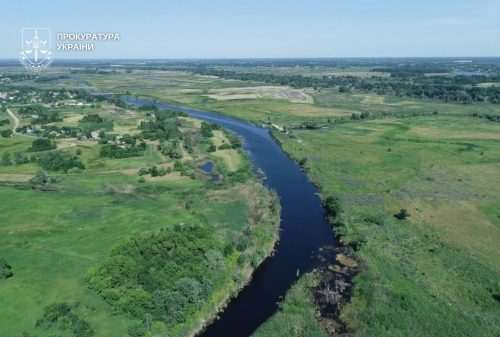
"Every day, every year, the estuary dries up because our climate has changed and we don't have rain. The flow of the Velykyi Kuyalnik River has been blocked, dams have been built, and there is no water inflow that could reach the estuary," said Alexander Shestun, director of the Kuyalnik National Nature Park.
For eleven years, the estuary has been connected to the Black Sea by a canal. Water from the Black Sea filled the Kuyalnik estuary, but now this is not enough. According to experts, a way must be found to save the estuary from drying up. This could be done by installing devices for desalinating seawater, and the option of filling the estuary with water from the Dniester River is also being considered.
“There is another project: transferring water from the Khadzhibey Estuary. But it is necessary to build additional treatment facilities, because the water in the Khadzhibey Estuary does not meet the quality standards,” said Oleg Derkach, deputy director of the Kuyalnik National Nature Park.
Concerned residents decided to hold a campaign in support of the Kuyalnik Estuary. They collected trash on the slopes of the estuary and participated in various workshops, such as evaporating salt from local brine.
At the end of the campaign, the participants sent a letter to the President of Ukraine and the government asking for help in saving the pearl of Ukraine: the Kuyalnik ecosystem.
"Today, three communities, a park, scientific institutions, and regional authorities are united and looking for a solution, but their efforts are not enough to save it! Completely different resources and a completely different level of solution are needed—we want a specific state program that would help solve this problem," says Natalia Matkovska, representative of the Regional Center for Sustainable Development NGO.
As EcoPolitics reported earlier, emissions and explosions from anti-ship mines, loud noises from UAVs, and fires caused by military operations are daily disrupting the balance of ecosystems in the Tuzlivski Limany National Nature Park.