Last year, at least 152 unprecedented extreme weather phenomena occurred worldwide, and about 50% of them took place on the European continent.
Such data is contained in the latest “State of the Global Climate 2024” report published by the World Meteorological Organization (WMO).
The key points of the research
- 2024 was the hottest year in 175 years of observations.
- The concentration of CO2 in the atmosphere is now at its highest level for the last 800,000 years.
- Globally, each of the last 10 years has been among the top ten warmest on record.
- Last year was likely the first year on record where the temperature was more than 1.5°C above the pre-industrial era.
- Some of the effects of the planet's warming are irreversible “for hundreds if not thousands of years.”
The WMO claims that it is still possible to keep the average global temperature within 1.5°C. The critical value set out in the Paris Agreement has not been exceeded as it has been measured for several decades as was also added by the organization.
How extreme weather has affected Europe
Tropical cyclones, floods, droughts, and other hazardous conditions have led to the largest number of new population shifts in 16 years due to extreme weather. These events have also contributed to the aggravation of the food crisis and caused huge economic losses.
According to the WMO, last year in Europe, 114 abnormal and 75 unprecedented extreme weather conditions caused the dislocation of 26,800 people, 5,600 people were injured and 111 died. These unprecedented weather events that are beyond the historical norm resulted in 86 deaths and 24,800 people being displaced.
These events included 34 heat waves that covered an area from Norway, where temperatures above 30°C were recorded for the first time in September, to Bulgaria, where the intense summer period was the longest since 1932.
Another 21 extraordinary cases were mostly heavy rains. Most of them occurred in Denmark. During February and March, many areas of Lombardy in Italy experienced a two-month period with the highest amount of precipitation on record.
In 2024, Europe has also experienced 9 unprecedented floods that resulted in 32 deaths. 4 of these occurred in Italy: 3 in Northern Italy in September and October alone.
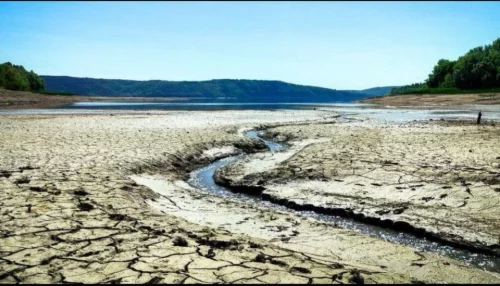
Poland, Estonia, and Denmark witnessed a severe drought that resulted in the displacement of 4,800 people and 4 recorded deaths.
WMO Secretary-General Celeste Saulo emphasized that investments in meteorological, water, and climate services are more critical than ever in order to address the challenges and develop rather sustainable communities.
Earlier, EcoPolitics reported on scientists' warning that 2024 would be the warmest year on record and the first calendar year to face a temperature above 1.5°C.