
A study by the EU's Copernicus Climate Change Service (C3S) found that Europe experienced the second warmest winter on record.
The average temperature from December 2022 to February 2023 was 1.4°C higher than the 1991-2020 average, surpassing the previous record for the winter of 2019-2020, EURACTIV reported.
The article emphasized that due to the severe winter heat at the end of December and the beginning of January, ski resorts from France to Hungary had to be closed due to the lack of snow.
It is noted that on January 2, the European Commission announced that hundreds of temperature records were broken across the continent. For example, in the Swiss city of Altdorf, the temperature reached 19.2°C, breaking the record since 1864.
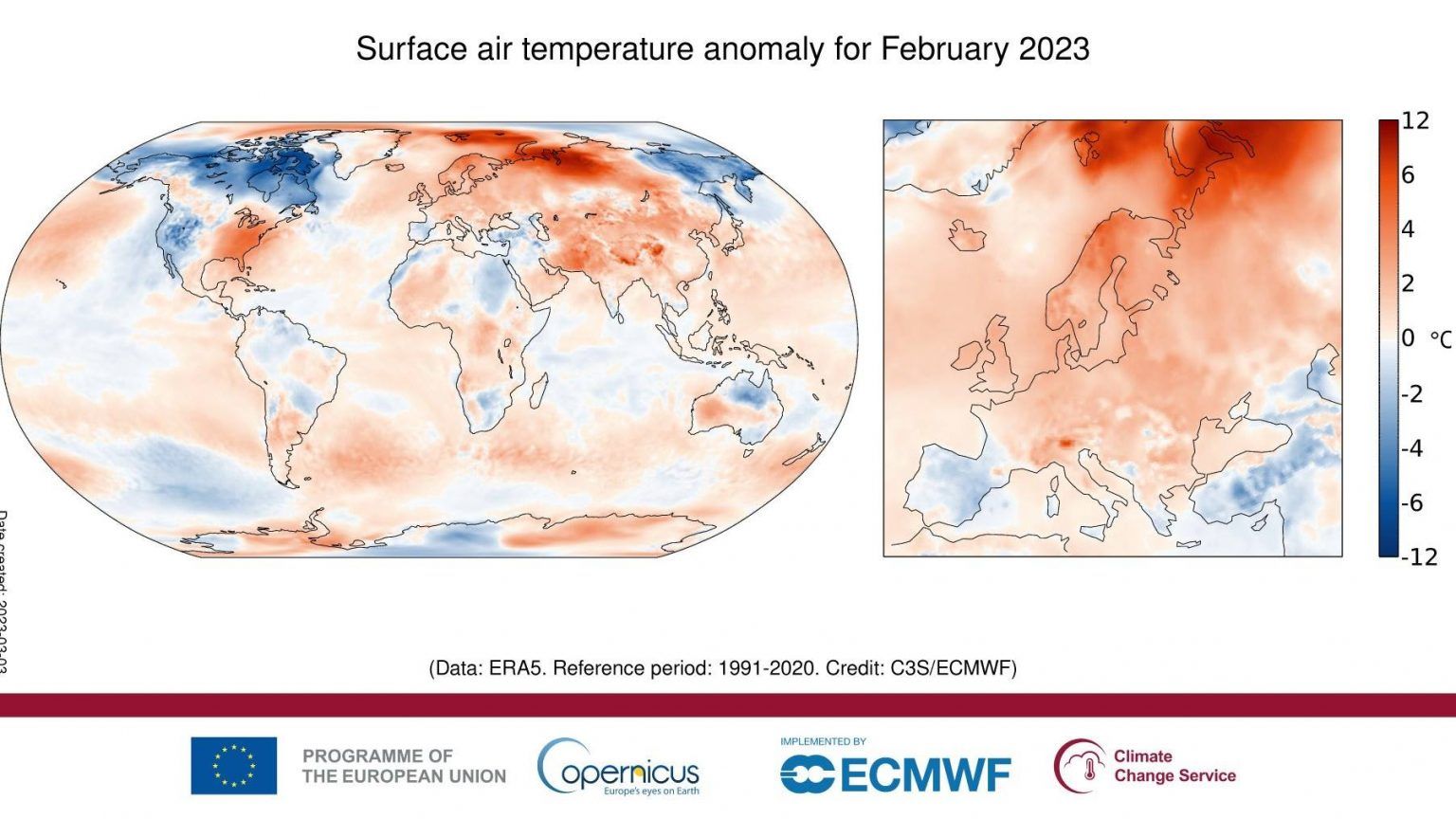
The researchers emphasized that the temperature was particularly high in eastern Europe and in the north of the Nordic countries. Against the backdrop of record temperatures in Europe, temperatures in parts of Russia and Greenland were below average.
They noted that European winters are getting warmer as a result of rising global temperatures due to human-induced climate change.
The story highlighted that the unusually mild winter has brought some short-term benefits to governments struggling with high energy prices. However, warming threatens agriculture and wildlife. After all, an increase in temperature in winter can lead to the fact that plants will start growing prematurely, and animals will wake up from winter hibernation. They may die due to later cold weather.
It is noted that due to climate change, other extreme phenomena also occur. Thus, the level of Antarctic sea ice in February fell to the lowest level in the 45-year history of satellite monitoring. This could lead to global sea level rise.
Earlier, EcoPolitic wrote, that according to the International Energy Agency, global carbon emissions in 2022 increased to a new record value, which brings the world to a dangerous level of global warming. Emissions reached 36.8 billion metric tons.
As EcoPolitic previously reported, climate change has become one of the five main global risks for 2023.