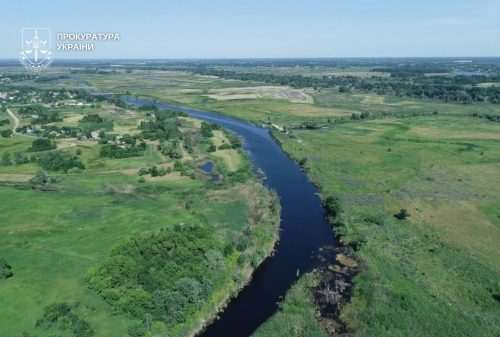
In summer, rivers, as well as the plants and animals that live on their banks, are under the greatest strain due to the large influx of vacationers.
The State Environmental Inspection (SEI) of the Polissya District explained how to behave in order not to harm the environment while vacationing near the water.
Eco-inspectors reminded that violating the rules of conduct near a body of water can have serious ecological consequences for its flora and fauna. They noted that people often cause harm unconsciously, and therefore decided to remind them of the basic rules.
Do not leave trash near the water after vacationing.
Even organic waste (banana peels, leftovers, napkins) harms the river's ecosystem. Plastic items left behind can take decades to decompose and harm animals if they end up in the water. Therefore, take all trash with you to dispose of it in the appropriate containers.
Do not light fires in the coastal zone.
Inspectors say that dry grass is often found in such areas. Therefore, lighting fires in such places carries the risk of fires that can destroy vegetation, animals, and even residential buildings.
Do not pull out coastal vegetation; treat it with care.
Experts say that reeds, cattails, and water lilies are natural filters that purify water. These plants prevent erosion of the banks and are also home to frogs, fish, and birds.
Refrain from loud music and noise.
The river should be a quiet zone. Experts remind us that loud noises are a form of noise pollution that harms animals no less than litter. They scare wild birds, interfere with their reproduction, and cause stress to many members of the fauna.
Do not violate the ban on fishing and crayfish catching.
The DEI reminded that despite the fact that the spawning ban on fishing for aquatic biological resources in rivers and their root waters and reservoirs has ended, it continues to apply in the tributaries of rivers. The ban on the extraction (fishing) of aquatic biological resources is in effect until June 30, as determined by the Rules for Amateur Fishing.
In addition, a ban on river crayfish fishing is in effect until June 30 inclusive in the fishery water bodies of the Zhytomyr and Rivne regions.
What are the fines?
Littering in forest areas is subject to administrative liability under Article 73 of the Code of Ukraine on Administrative Offenses: for citizens – a fine of 51 to 119 UAH, for officials – from 170 to 340 UAH.
The fine for unauthorized burning of vegetation in accordance with Article 77-1 of the Code of Ukraine on Administrative Offenses currently ranges from 3,060 to 6,120 UAH.
For the destruction of species listed in the Red Book of Ukraine, Article 90 of the Code of Ukraine on Administrative Offenses provides for administrative liability for citizens – a fine of 340-510 UAH with confiscation of illegally obtained items.
In early June, EcoPolitic shared the history and interesting facts about World Environment Day.