The Ministry of Environmental Protection and Natural Resources of Ukraine has approved the State Water Monitoring Program for 2025, which covers 7 river basins – Dnipro, Dniester, Danube, Southern Bug, Don, Vistula, and Black Sea.
The Ministry announced this on Telegram.
According to the Ministry of Environment, monitoring will be carried out at 547 locations, including 139 on surface water bodies from which water is abstracted for the needs of the population.
The types of monitoring at the posts will be different:
- diagnostic monitoring will be carried out in 87 points;
- in 445 points – operational;
- in 15 points – research.
Specialists added additional points of water quality control to the Program:
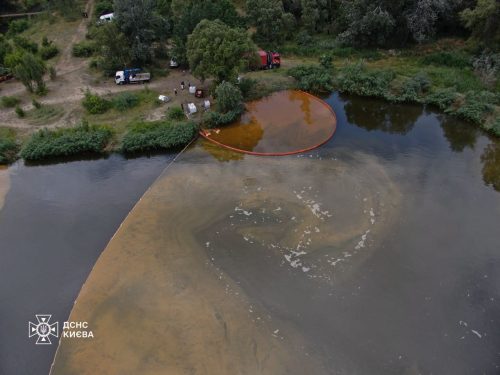
- on the Seim River – in connection with last year's situation with pollution of the Seim and Desna rivers from the territory of the Russian Federation and to continue monitoring the current situation;
- in the Lower Dnipro and Don subbasins – to study the impact of military operations on surface waters.
The Ministry also identified the departments responsible for monitoring:
- State Emergency Situations Service of Ukraine (SES) – by biological, hydromorphological and physico-chemical indicators;
-
The State Agency of Water Resources of Ukraine (State Water Agency) – according to physico-chemical, chemical priority and basin-specific indicators.
The results of the monitoring will be used to assess the state of surface waters and analyze the effectiveness of the implementation of measures provided for in river basin management plans.
The program takes into account Ukraine's international obligations regarding cross-border cooperation and potential risks of water pollution as a result of military operations. EcoPolitic got acquainted with the document and found out that 10-11 chemical indicators are planned to be controlled in most of the territory of Ukraine, but the exceptions are the Regional Office of Water Resources (ROVR) in the Kharkiv region and the Siver-Donets Basin Water Resources Administration (BUVR). 16 chemical indicators will be monitored here due to the proximity to the war zone. Sampling frequency is 12 times a year.
Hydromorphological indicators will not be checked at all ROVR and BUVR, but only at those specified in the Appendix to the order. A total of 16 indicators will be monitored every 6 years.
You can familiarize yourself with the document on the website of the Ministry of Environment at link.
Earlier, EcoPolitic wrote, that in the middle of December 2024 Ukraine received from Korea 3 mobile laboratories for water quality control. Also at the beginning of November 2024 The Ministry of Environment presented DSTU projects on water quality monitoring according to EU standards.