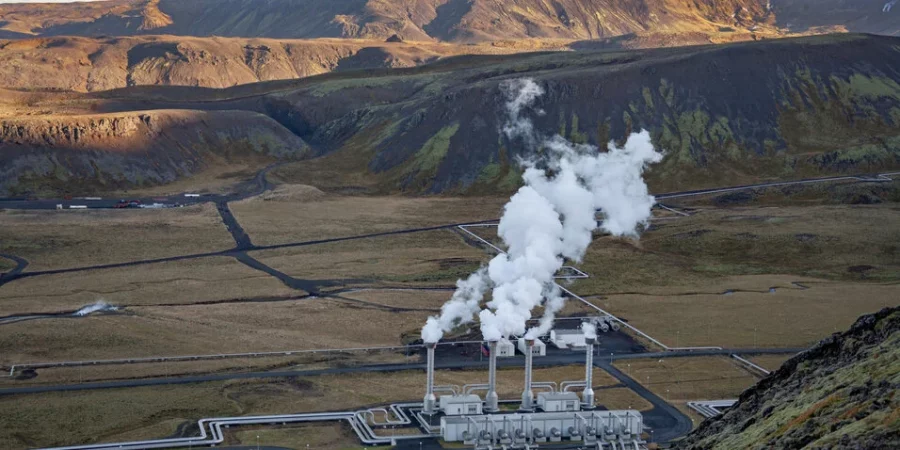
The global transition to "clean" energy could accelerate heat from the depths of the planet. Enhanced geothermal systems (EGS) technology allows geothermal energy to be "extracted" at almost any point on the globe. This weather-independent energy source is uninterruptible, making it a competitor to nuclear and coal power.
Research by scientists at Stanford University has shown that advanced geothermal technology can provide humanity with clean and inexpensive energy, replacing fossil fuels.
"EGS is a promising clean, renewable technology that works in conjunction with wind, solar, hydro, and energy storage systems. It can help provide the world with energy for all its needs, thereby supporting energy security. At the same time, it eliminates the air pollution and global warming factors associated with energy," said lead author Mark Jacobson.
Not only where there are geysers
Geothermal energy has long been perceived as something exclusive and only available in regions with high volcanic activity. For example, in New Zealand and Iceland, it is not necessary to drill too deep to obtain thermal energy from the Earth.
However, EGS technology makes this option available in different parts of the world. To do this, it is enough to drill wells 3–8 km deep, depending on the local structure of the crust.
How does it work?
Water is poured into a hole in the rock. Deep underground, it will heat up and return to the surface. This circulation can provide round-the-clock energy production that does not depend on the season or weather.
According to scientists, a geothermal power plant can theoretically be installed anywhere on the planet.
Why is it profitable?
Researchers have calculated how profitable the implementation of ESG technology is. Assuming that EGS covered only 10% of electricity demand, the need for onshore wind power would be reduced by 15%, solar power by 12%, and battery storage systems by 28%.
Geothermal plants take up less space than conventional wind and solar power plants. Land requirements have fallen from 0.57% to 0.48% of total land area, which can be crucial for densely populated countries.
Another factor is economic. Geothermal energy reduces costs by 60% compared to the use of fossil fuels. If we also take into account the damage to public health and the climate caused by "traditional" oil and coal, the savings amount to 90%.
The use of EGS technology does not lead to higher energy prices—the impact on the overall costs of the energy system has proven to be minimal.
Geothermal energy is an uninterrupted source of generation, unlike wind and solar. That is why EGS can be used to stabilize the system instead of coal or nuclear energy, which currently perform this role.
However, the future of the technology is still uncertain, as there is no definitive understanding of the cost of constructing EGS facilities. Nevertheless, the construction of the first geothermal power plant in the US was approved back in October 2024. The facility, capable of generating 2 GW of energy, will be built in Utah.
“Thanks to improved drilling speeds for EGS wells, the costs of EGS are rapidly decreasing. This enables EGS projects to be completed quickly, in contrast to nuclear power, which requires 12 to 23 years from planning to commissioning. Furthermore, unlike nuclear power, EGS carries no risk of radioactive waste leakage from storage facilities or lung cancer during underground uranium mining,” added Professor Jacobson.
Earlier, EcoPolitic reported that in China, wind energy was generated for the first time by an airborne wind power station. The 1 MW facility successfully transmitted this energy to the ground.