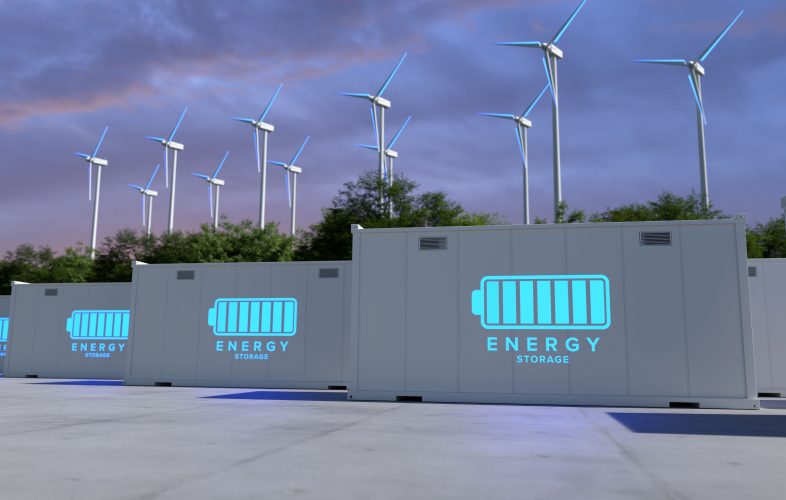
Against the backdrop of an unstable power grid damaged by Russian attacks, Ukraine is rapidly developing its market for battery energy storage systems (BESS). By the end of 2025, the country had become one of the top five leaders in terms of growth in storage capacity.
This was revealed in SolarPower Europe’s ‘European Battery Market Outlook 2026–2030’ report.
Experts regard Ukraine’s emergence on the European BESS map as an extremely important signal, highlighting the technology’s significance for security.
“Following the significant damage inflicted on its energy infrastructure as a result of Russian attacks, battery energy storage systems have rapidly evolved from an investment opportunity into a critically important asset for energy security. Ukraine’s experience demonstrates that batteries not only facilitate the transition to clean energy but are also vital for the protection of democratic societies,” the report states.
On a par with the leaders
SolarPower Europe notes that the energy storage market has become more geographically diversified. The top three remain unchanged — Germany, the UK and Italy. However, Ukraine and Bulgaria have closed the gap on the leaders, demonstrating the universal importance of energy storage for different energy systems.
European scale
Overall, in the course of 2025, 36 GWh of new battery storage systems were installed across European countries. As a result, the total installed storage capacity surpassed the 100 GWh mark for the first time.
Nearly half of the installations were on an industrial scale, marking the beginning of a new stage in the development of BESS in Europe. At the same time, battery installations for residential use continue to decrease, especially compared to the sharp surge in 2022, when Europeans faced an energy crisis.
The medium forecast by SolarPower Europe indicates that in 2026, more than 50 GWh of BESS will be installed, and by 2030, this figure will reach 138 GWh. Thus, in four years, the total installed battery capacity will be 580 GWh. However, this growth rate is not sufficient for the storage sector’s development.
“According to our most probable scenario, the EU will not reach its new energy storage target, despite the tremendous growth expected in the coming years. Bridging this flexibility gap will require more decisive policy action,” the report emphasizes.
It is worth recalling that energy storage systems are an important part of grid systems with a high share of generation from renewable sources. Sun and wind provide intermittent output depending on the time of day, season, or weather conditions, so batteries are needed for predictability.
EcoPolitic reported that solar power plants with storage systems in Ukraine are becoming increasingly popular.