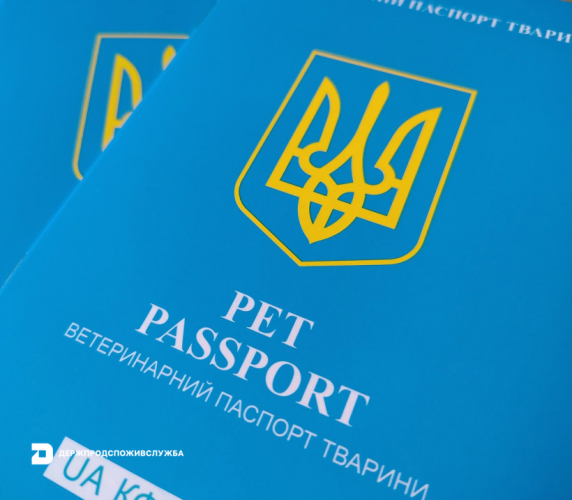
Veterinary passports in Ukraine are now issued in a new format. This is a standardised document with a unique number, containing all the necessary information about the animal — from its identification details to records of vaccinations, treatment and diagnostic tests.
This was announced by the State Service of Ukraine for Food Safety and Consumer Protection.
Standardisation of veterinary documents
Ukraine is gradually modernising its veterinary system and bringing national legislation into line with European standards. The new passport format is an important step in this direction. It standardises information about pets, aids in their identification and is also more convenient for maintaining medical records.
The new veterinary passport contains identification details of the animal and its owner, information on vaccinations, treatment, diagnostic test results and other veterinary procedures, including preventative measures.
The document complies with current legislative requirements and forms part of the new veterinary documentation system. The new veterinary passport:
is issued in a unified format;
- has a unique identification number. It consists of the UA code, series, and a serial number;
- may be issued only on a form printed strictly in accordance with the requirements of the State Service of Ukraine on Food Safety and Consumer Protection.
Practical aspects
If a pet has an old-format veterinary passport, it still remains valid. That is, a document that meets previous legislative requirements does not need to be replaced.
Currently, new veterinary passports are issued only by state veterinary institutions that have the authority to do so. However, it is not possible to get a veterinary passport "just like that." Beforehand, the animal must:
- undergo a clinical examination;
- have identification in accordance with legislative requirements;
- undergo the necessary preventive veterinary treatments.
“The unified document format ensures the standardized record of information on pets, improves the quality of veterinary support, and contributes to proper control over preventive measures. The updated document also simplifies the confirmation of the animal’s veterinary status when traveling, participating in exhibitions, transferring the right of ownership, or receiving other veterinary services,” emphasized Deputy Head of the State Service of Ukraine on Food Safety and Consumer Protection, Chief State Veterinary Inspector of Ukraine, Volodymyr Kusturov.
EcoPolitic previously reported that Ukraine is creating a unified national register of cats, dogs, and ferrets. Registration is free of charge. In the future, digital veterinary passports will be created based on this register and integrated into the Diia platform.