Ferrexpo aims to achieve zero emissions by 2050 and plans to invest $3.3 billion in production modernization to achieve this goal.
The analytical material with infographics on the company's decarbonization plans was prepared by GMK Center.
The mining company disclosed this amount in its Climate Change Report in December 2022. It is necessary to achieve zero CO2 emissions. It is planned that approximately two-thirds of these investments will be directed to the production and storage of renewable energy.
Interim results and plans for 2050
In 2023, Ferrexpo reduced the carbon intensity of its pellet production process (Scope 1+2) by 32% compared to the 2019 baseline. The company intends to reduce the carbon intensity of its production by 50% by 2030. Ferrexpo aims to achieve zero emissions (Scope 1+2) by 2050.
Ferrexpo has identified the following projects as the key ones that will account for the bulk of its carbon emissions reduction
- transition to biofuels in the pelletizing process;
- gradual phase-out of fossil fuels;
- electrification of technological mining vehicles and equipment;
- use of hydrogen-fueled barges.
According to the company's estimates, these measures should provide 90% of the potential emission reductions and form the basis of its Net Zero strategy. The first three measures play a leading role, accounting for 82% of the emissions reduction.
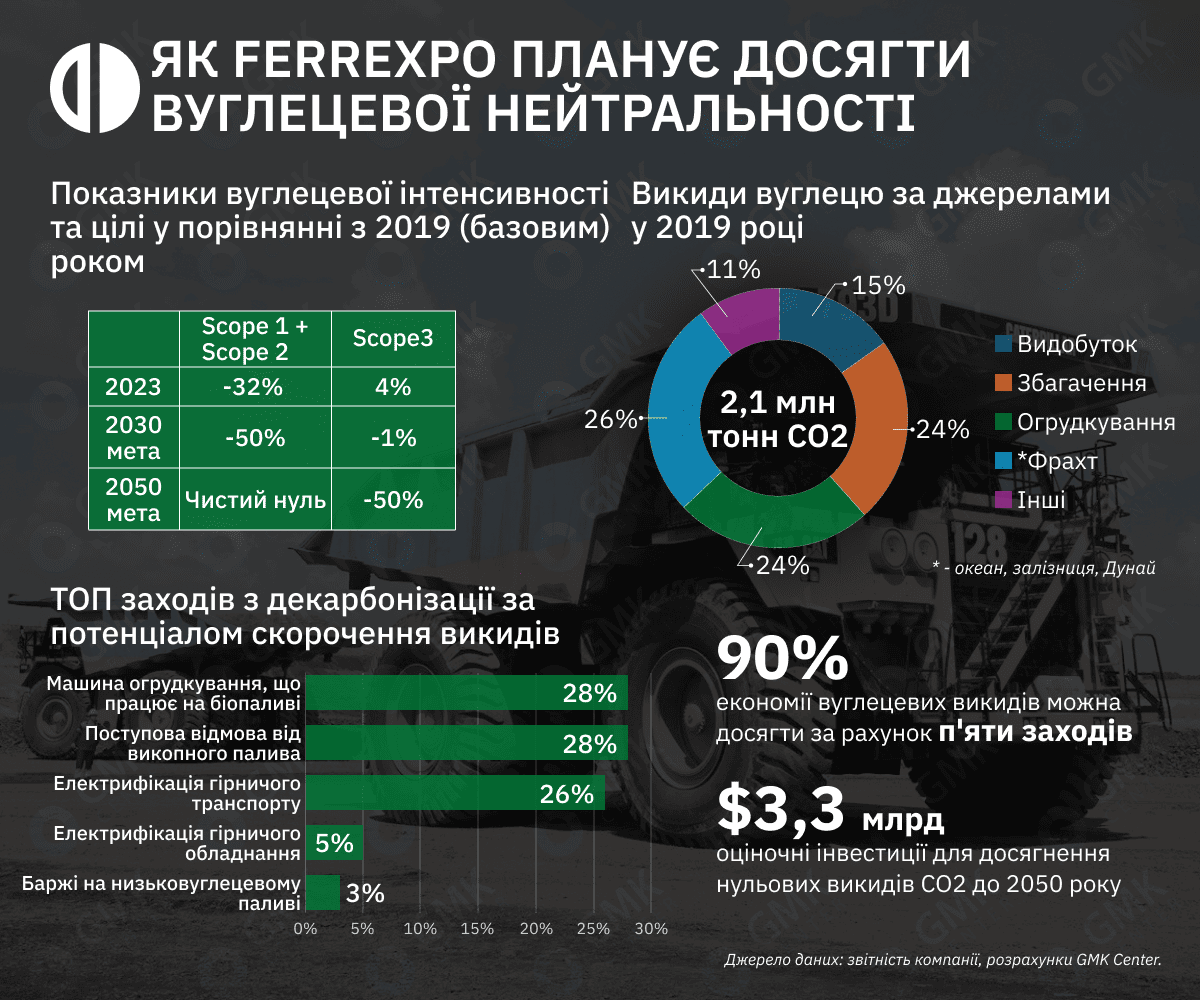
Source: gmk.center.
The most effective emission reduction measure among the above is the transition to biofuels in pelletizing. Its implementation will require investments in the purchase of biofuels and integration of biofuel systems into production processes.
The company considers electrification of mining vehicles to be the fastest and easiest measure to implement. Ferrexpo will look for suppliers of electric vehicles suitable for ore mining and develop the infrastructure of charging stations for them.
However, the priority is to eliminate fossil fuels from the energy balance. The company says it has already begun planning a “green” transition.
The electrification of mining equipment and the use of hydrogen-powered barges can provide a smaller reduction in carbon emissions, but the company emphasizes that these measures remain important for the implementation of the Net Zero strategy.
In March, EcoPolitic reported on the plans of the mining and metallurgical company Metinvest to invest UAH 1.4 billion in gas and solar power plants. We also reported that Ukrainian titanium producer Velta is investing $10 million in renewable energy sources.