In 1986, the International Whaling Commission voted for a global moratorium on whaling. This historic document for the fate of marine life came into force on February 19.
For 40 years now, on this day, the world has been celebrating not only whales, but also dolphins, seals, and other marine mammals that are threatened by human activity and the climate change it causes.
In some countries, the date of World Day of Sea Mammals Protection changes and is celebrated on the third Sunday of February. This day is intended to draw attention to the problems faced by marine life and to unite the world in their protection.
Ecosystem regulators
Marine mammals are not only about 120 species of unique representatives of Earth's fauna. They perform a number of stabilizing functions in marine ecosystems.
They "form" food chains by transferring nutrients from the depths. In doing so, the animals feed phytoplankton, which absorbs CO2 and generates oxygen that living creatures on the planet breathe. Scientists estimate that each whale is responsible for storing more than 30 tons of carbon, thereby helping to combat climate change.
Main threats
Unfortunately, legal protection does not guarantee the safety of marine mammals. Their health and lives are constantly threatened by numerous dangers.
Habitat pollution. The animals get entangled in remnants of fishing trawls, swallow plastic bags mistaking them for food, and encounter chemical pollution, especially after maritime disasters that cause oil spills. In particular, Black Sea dolphins have felt the consequences of Russian aggression – as of 2023, scientists reported nearly 50,000 animals killed.
There is another threat to marine life in the Black Sea – methane leakage. According to the Center of National Resistance, as a result of the occupiers’ actions on the sea shelf, nearly a thousand sources of leakages of this deadly gas for animals have emerged, which could collapse at any time.
Another source of pollution is microplastics and fine particles of polyfluoroalkyl substances (PFAS), known as “forever chemicals.” A recent study found them in the bodies of whales and dolphins in New Zealand.
Underwater noise. Vessel movement and offshore operations, including seabed drilling, create noise pollution in seas and oceans. This is critical for marine mammals, as it disrupts communication with conspecifics, finding mates, and hunting.
Collisions with watercraft. Ships pose a physical threat to the marine giants, as they can cause injuries.
Poaching. Despite the ban, marine mammals still often encounter those who illegally seek profit. Criminal liability is provided for such actions, including in Ukraine. As reported by the State Environmental Inspectorate, such restrictions are determined by the conservation value of these animals and the need to preserve rare species.
Who is remembered on this day in Ukraine?
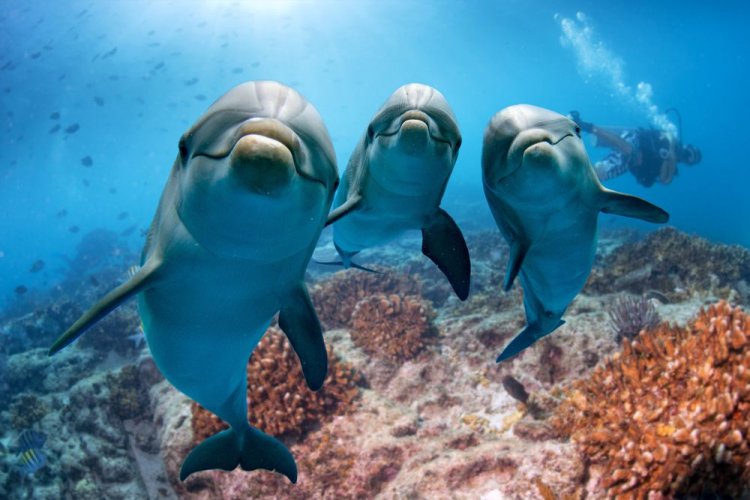
The only marine mammals actually represented in Ukraine are dolphins. Three species inhabit the Black Sea: the bottlenose dolphin, the harbour porpoise (Azovka), and the common dolphin. Historical documents also mentioned the presence of the monk seal; however, it has long been considered extinct.
“All Black Sea cetaceans are protected under international conventions and national legislation, as their populations remain vulnerable,” the Department of Environmental Inspection (DEI) emphasizes.