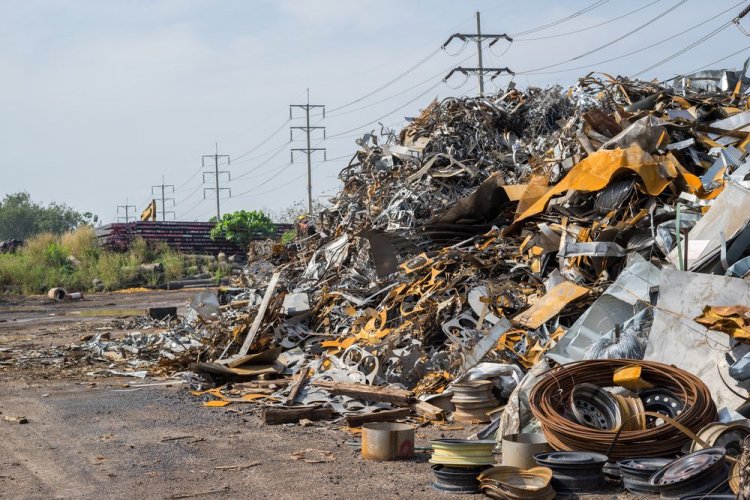
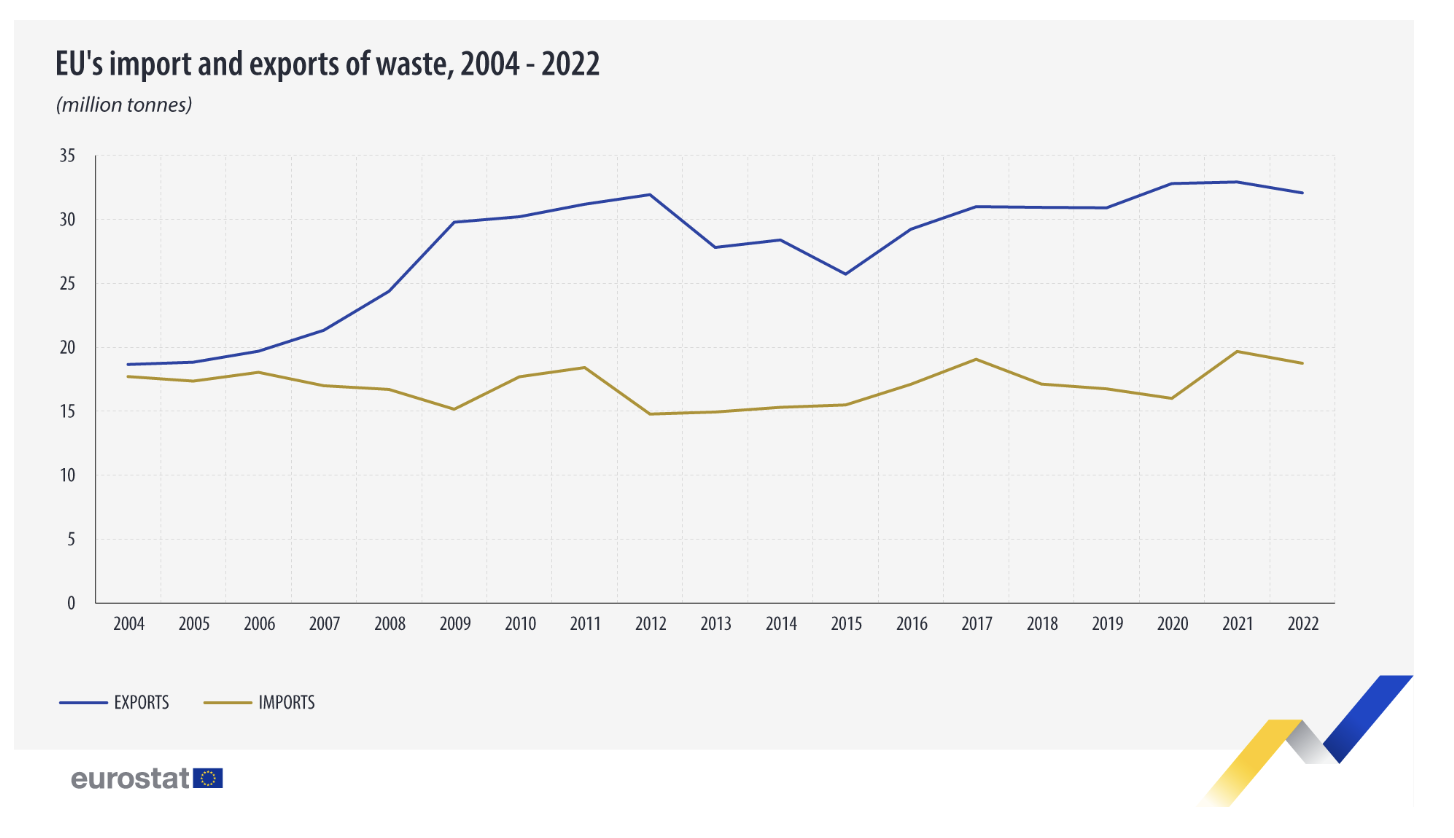
The EU exported 32.1 million tons of waste to non-bloc countries in 2022, including 17.8 million tons of ferrous waste (iron and steel), which accounts for 55% of these exports.
Waste imports from non-EU countries decreased by 5% from 2021 to 18.7 million tons, Eurostat said.
Compared to 2021, the volume of such exports decreased by 3%.
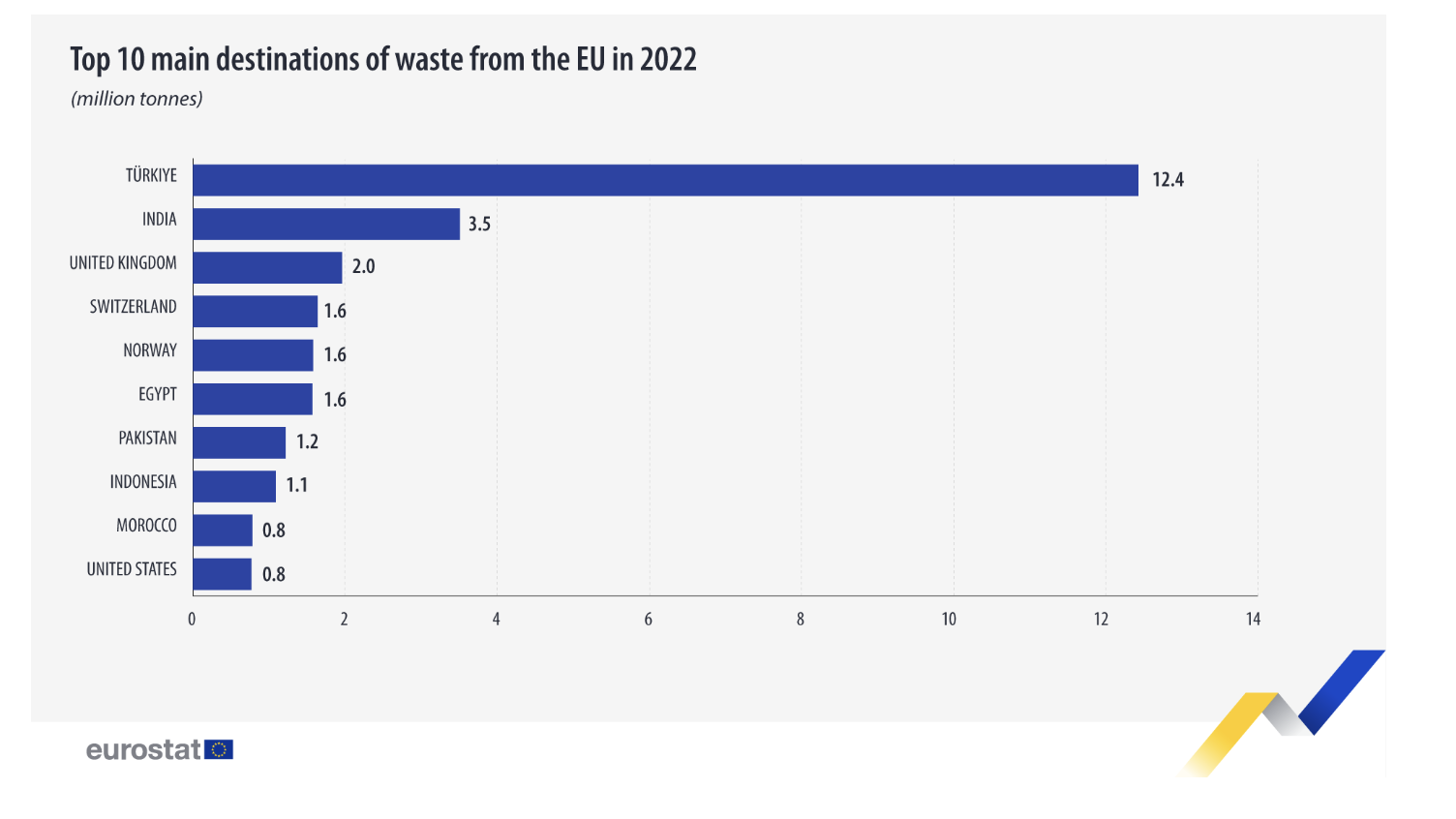
It is noted that the largest amount of waste exported to Turkey – 12.4 million tons, that is, 39% of total waste exports.
Also in the top 10 exporters of waste 2022 included:
- India – 3.5 million tons;
- Great Britain – 2 million tons;
- Switzerland, Norway, Egypt – 1.6 million tons each;
- Pakistan – 1.2 million tons;
- Indonesia – 1.1 million tons;
- Morocco and the USA – 0.8 million tons each.
The report said that the main destination of ferrous metal waste was Türkiye. The country received 10.7 million tons, that is, 60% of all ferrous metal waste exported from the EU.
“Significant volumes of paper waste were also exported, accounting for 4.9 million tonnes or 15% of EU waste exports in 2022. The main destination was India (30% of total paper waste exports),” Eurostat added.
It is noted that in 2022 the EU imported:
- 4.2 million tons of ferrous metals – 22% of all waste imports;
- 2.4 million tons of paper – 13% of all waste imports
The largest volumes of waste came from the UK – 1.3 million tonnes, or 33% of total ferrous metal waste, and 1.2 million tonnes, or 49% of total paper waste imports.
Earlier, EcoPolitic wrote, that as a result of the blocking of the border by Polish carriers in Ukraine for recyclers, the cost of 5B grade paper waste increased to 9,000 hryvnias per ton from 4,300 hryvnias.
As EcoPolitic reported earlier, a report by Sandbag, a non-profit think tank on climate change, showed that Europe could reduce emissions from the steel industry by 73% by 2030 by using scrap and direct reduction of iron (DRI) technology from hydrogen.