In 2024, European countries increased their production of biogas and biomethane by 300 million cubic meters compared to 2023. Nineteen of the 22 billion cubic meters were produced in European Union countries. Total production now accounts for 6% of the EU's total gas demand, which is equivalent to the combined consumption of Denmark, Ireland, and Belgium.
This is evidenced by data from the European Biogas Association (EBA), which was analyzed by the Bioenergy Association of Ukraine.
Growth in production capacity
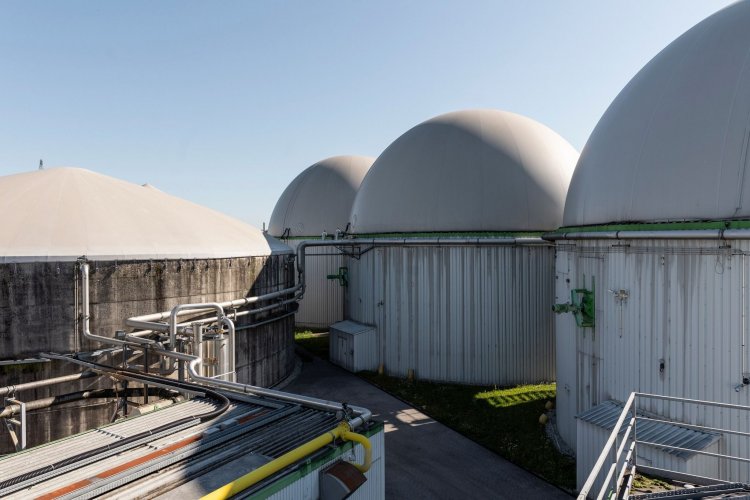
Over the year, the number of biomethane plants in Europe increased by 111 to 1,620. Currently, 25 countries produce this gas – Poland joined them in 2022, and Ukraine and Lithuania will join in 2023.
Technological equipment is increasingly using environmentally sustainable types of raw materials. These include agricultural waste, household organic waste, and sewage sludge.
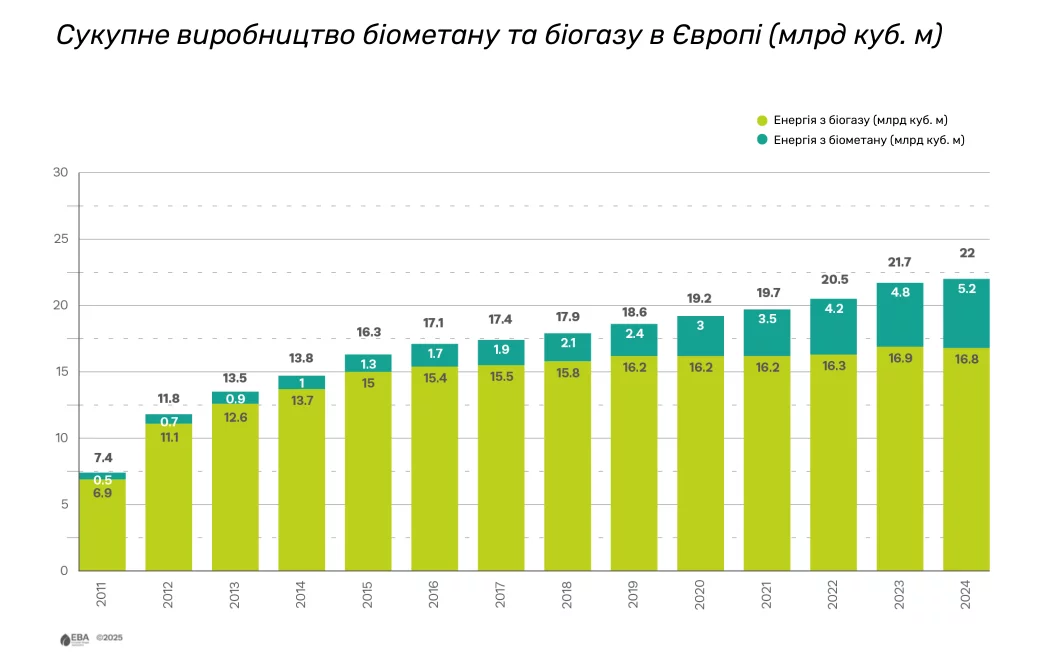
Source: EBA. Translation: UABIO.
Other "green" products
Liquefied biomethane (bio-LNG) is currently produced by 16 countries, which have 101 plants for this purpose. However, in three years, capacity will increase to 13.1 TWh/year thanks to the construction of 153 additional plants.
Digestate (dry matter) already has the potential to replace 17% of nitrogen fertilizers in the European Union. By 2040, this figure could reach 65%. In total, European countries produced 25 million tons of this substance in 2024.
Potential for replacing fossil fuels
The European Union is still more than 80% dependent on imported gas. Therefore, the EBA report emphasizes that countries need to increase the production and use of renewable gases. This will not only allow them to get rid of external energy dependence, but also to abandon fossil fuels in the future.
At the same time, biogas and biomethane can become a balancing factor for a "green" energy system. When weather conditions are not conducive to generating energy from sunlight and wind, these gases can ensure the stability of the networks.