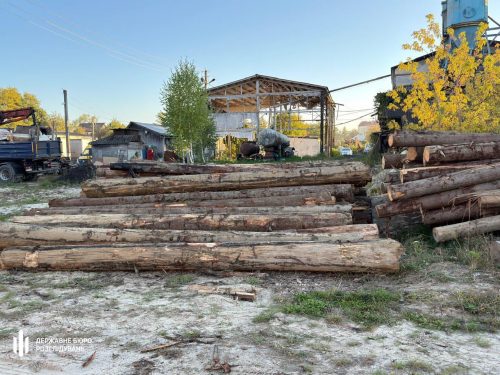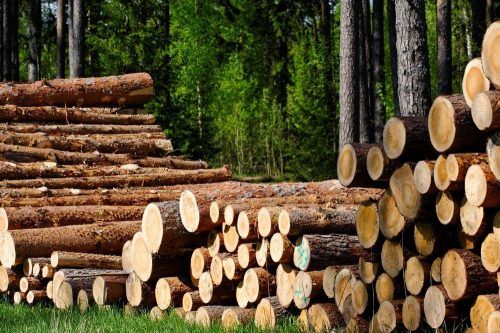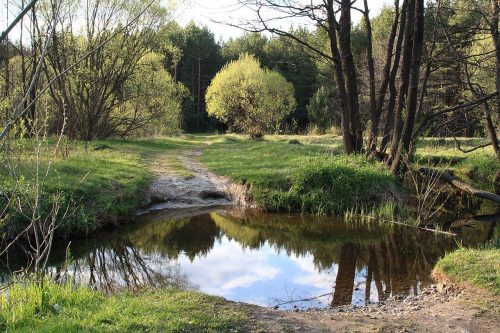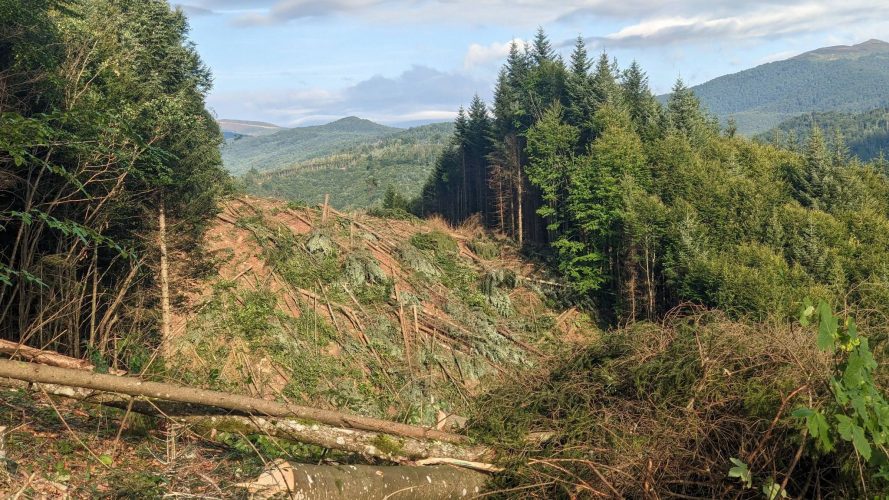
Back in June, following the discovery of Red List salamanders in the Zhdeniivska community, logging operations in Zakarpattia were suspended. However, despite public promises and assurances that joint surveys of the area would be carried out, the state-owned enterprise ‘Forests of Ukraine’ has resumed clearing a corridor for the construction of a power line. The power line is initially being laid to the wind farm on the Runa mountain pasture.
The "Save Pikuy" community reported that the felling had resumed.
Witnesses reported the destruction of the forest to the local police. They later discovered that cars were patrolling along the cleared strip. Environmental activists suspect that these are security guards protecting the illegal operations.
On their Facebook page, the activists posted a series of videos showing the felling.
Total disregard for society
The Ukrainian Nature Conservation Group (UNCG) has reiterated that logging should not resume until joint commission inspections have been carried out in consultation with the public and scientists.
"No joint surveys ever took place. It is clear why — because then it would have been impossible to conceal the presence of Red List species, in particular the spotted salamander, which is protected not only in Ukraine but also at European level," the community added.
Activists are outraged by the resumption of logging and believe that “the authorities have turned their backs on Ukrainians”. Specifically, this concerns the 26,000 people who signed a petition calling for the protection of the Carpathians. Separately, decisions by the Verkhovna Rada’s committees on environmental policy and European integration have been disregarded, whilst the positions of the European Commission and the European Parliament have been ignored.
UNCG has sought public comments on these actions from the Ministers of Economy and Agricultural Policy, as well as the leadership of the State Forestry Agency and the state-owned enterprise ‘Forests of Ukraine’.
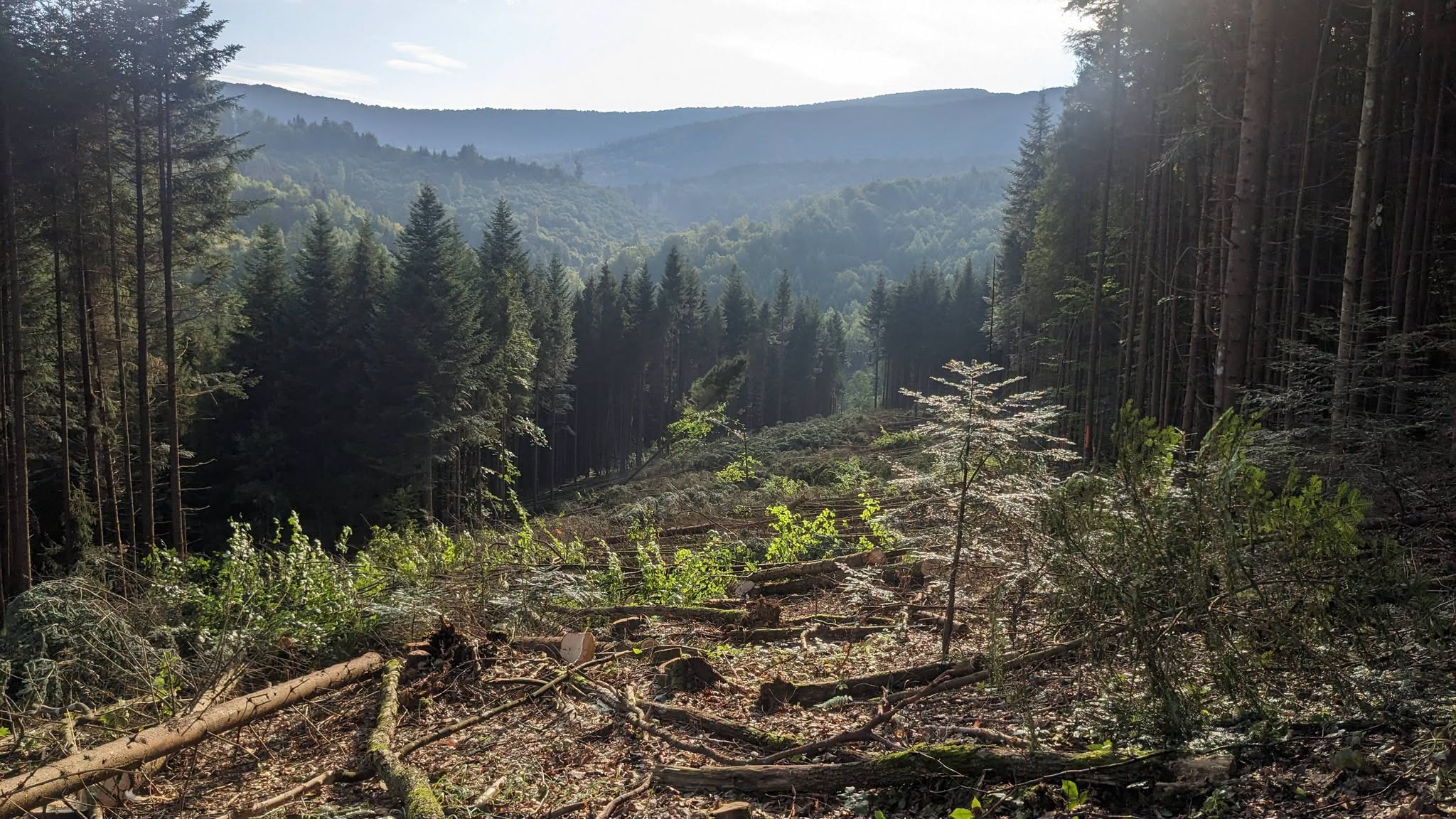
Source: Save Pikuy
EcoPolitics reported that pro-government commissions had failed on several occasions to spot rare species up close in the areas selected for deforestation. The first survey was actually carried out in early March, when the snow had not yet melted everywhere. So, naturally, it was extremely difficult to come across plants or animals listed in the Red Book. Activists insisted that the inopportune timing had been chosen deliberately.
Back in May, environmentalists spotted the rare salamander once again, but the commission failed to notice it. Ironically, no representatives from UNCG or the Ukrainian Herpetological Society were invited to join the commission.
In early June, campaigners filmed the spotted lizards once again. Following this, the State Enterprise ‘Forests of Ukraine’ finally announced that it would suspend logging and set up a new commission to carry out a survey.
But within two and a half months, these promises had been forgotten.