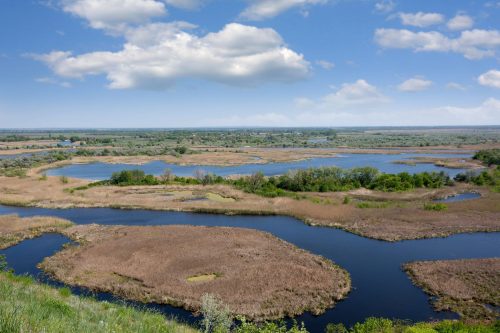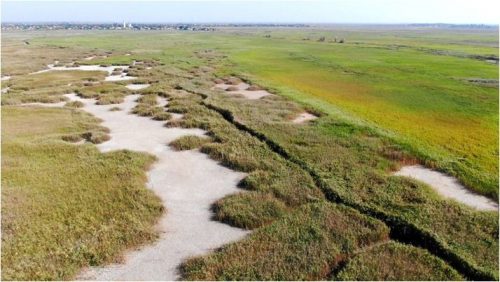
Ecosystems of the bed of the former Kakhovka reservoir are being restored

Ecosystems of the bed of the former Kakhovka reservoir are being restored facebook.com/profile.php?id=100018225577556

Anna Velyka

The ecologist believes that the first year after the dam explosion showed that the disaster did not happen

According to Valentyn Shcherbyna, vice president for military ecology and ecosystem restoration at the Association of Environmental Professionals, the former Kakhovka Reservoir is being restored as a stable and self-sufficient natural system that should not be disturbed or interfered with.

The expert shared his vision of the situation on his Facebook page.

He noted that large-scale changes are currently taking place, both visible at first glance and not detectable by remote sensing methods – changes in the hydrological and geochemical regimes of soils, microclimate, and flows of substances and energy in an ecosystem that develops according to its own laws.

"The "Mystery of Nature" is taking place. All we can do now is to observe and study with enthusiasm," Shcherbyna is confident.

He believes that it would be expedient to create an international biosphere reserve "Dniprovski Plavni" on this territory, "as a unique world laboratory of Nature".

In March 2024, EkoPolitic reported that water returned to the Kakhov reservoir.
Tags: ,
Related
Ukraine is preparing to increase fines for damage to water resources by a factor of ten

Littering a body of water could cost you over 5,000 UAH, while erecting a fence could cost nearly 12,000 UAH

Saving the water bodies of southern Odesa Oblast: what solutions is the Ministry of Economy proposing?

Some of the measures involve automating the regulation of water flow from the Danube into local lakes

The Danube region in Odesa Oblast is at risk of desertification

The cause is large-scale hydraulic engineering intervention, exacerbated by climate change

More than 80% of the world’s freshwater fish have disappeared. What do dams and pollution have to do with it?

97% of migratory fish species are already at risk of becoming extinct