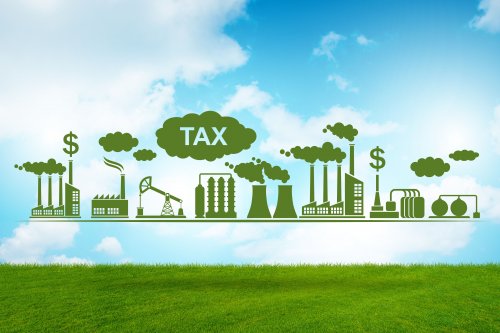
The regulation of environmental tax use at the local level is extremely ineffective. EcoPolitic, analyzing the situation in the regions, noticed that communities are using environmental funds to resolve their municipal issues. And outdated regulations allow them to do so. Is Rivne region following the same path?
The environmental tax should work for the environment
According to the results of the first 10 months of 2025, polluting enterprises in Rivne region paid UAH 89 million in environmental tax. According to the State Tax Inspectorate of the region, these revenues were 8% higher than last year.
UAH 63 million of the total amount of eco-tax was transferred to the state budget, while the remaining UAH 26 million went to local council budgets.
The tax authorities cite the increase in revenues as evidence of the importance of a systematic approach to environmental protection. But what is considered a "systemic approach" in the region? To find out, EcoPolitics analyzed the environmental protection programs of councils at various levels.
It should be noted that their activities are not financed exclusively by eco-tax revenues, but are supplemented by funds from other sources.
Regional level
The current regional environmental protection program opens, as is traditional, with a “sewerage” section.
A separate section is dedicated to the construction and reconstruction of treatment facilities. The intentions here are admirable and truly environmental-preventing pollution of the environment in general and rivers in particular. However, first and foremost, this is the management of engineering infrastructure, which in an ideal world should belong to the sphere of housing and communal services. But not in Rivne Oblast. Here, the plans include major repairs, reconstruction, and modernization of treatment facilities, even the construction of new ones. The entities responsible for implementation are clearly not environmental bodies but local councils and departments of urban planning, architecture, and housing and communal services.
If we expect measures genuinely related to environmental protection rather than municipal services, we are in for further disappointment. The next item in the program is the construction and reconstruction of sewage pumping stations, sewage networks with a list of collectors and networks.
The region also plans to purchase pumping equipment and instruments for monitoring the quality of surface and groundwater. Out of nine activities, only one is not related to sewerage, namely, equipment for the regional hydrometeorology center.
From the perspective of the Rivne Regional Council, even the development of design documentation for the reconstruction of wastewater systems and treatment facilities is considered “environmental”.
The purchase of vehicles for collecting household waste and waste containers is also included in the environmental protection program. In addition, to reduce the load on the region's landfills, there are plans to build a sorting station and purchase equipment for waste compacting. By the way, the development of the Regional Waste Management Plan is also one of the measures of the environmental program.
It is true that Rivne Oblast also plans many activities for the protection of nature reserves and wildlife, as well as educational and informational events. However, their funding is incomparable with the amounts allocated for sewerage and waste management.
The situation in communities
Smaller communities are also following the example of the region. For instance, in the Kostopil City Territorial Community's environmental program for 2024–2026, out of 11 measures, 5 concern sewage, and 4 are related to waste. We are already familiar with the essence of these measures – from reconstructing treatment facilities and collectors to purchasing waste containers and vehicles for waste removal.
The Radiviliv City Community has also addressed wastewater and waste issues. Its environmental protection program for 2026–2028 plans the reconstruction and construction of treatment facilities and sewage networks, improvement of stormwater drainage systems, and the construction of container sites. The rule “plants = ecology” applies here as well: planting and purchasing flowers and trees, as well as maintenance activities, are also part of the environmental program. Remarkably, maintaining lawns and road shoulders along main roads is also considered an environmental measure.
Reviewing the Kozyn Village Council's environmental protection program for 2025 initially inspired some hope. It includes restoration of local water bodies, sanitary cleanup of shorelines, and reclamation of disturbed lands. However, there are dubious items too. In particular, the village community classifies the purchase and planting of saplings, creating flower beds and gardens, and their care as environmental measures. Mapping of waste disposal sites is also included in the environmental program.
All-Ukrainian inefficiency
The approach to using the environmental tax in Rivne region is not unique. A similar situation exists in Vinnytsia, Cherkasy, Ivano-Frankivsk, Zhytomyr and other regions. We are convinced that this approach is used by communities across Ukraine, since they have a formal “permission” from the state – a government resolution from 1996.
Does waste and wastewater pollute the environment? Then add it to the environmental program. Do trees absorb CO2? Add them too. Until the state gives communities clearer guidelines on what is “ecological,” they will keep including an increasing number of beautification or public utility activities in their environmental protection programs.
EcoPolitic previously reported in detail on the questionable positive impact of the environmental tax on the improvement of the environment.