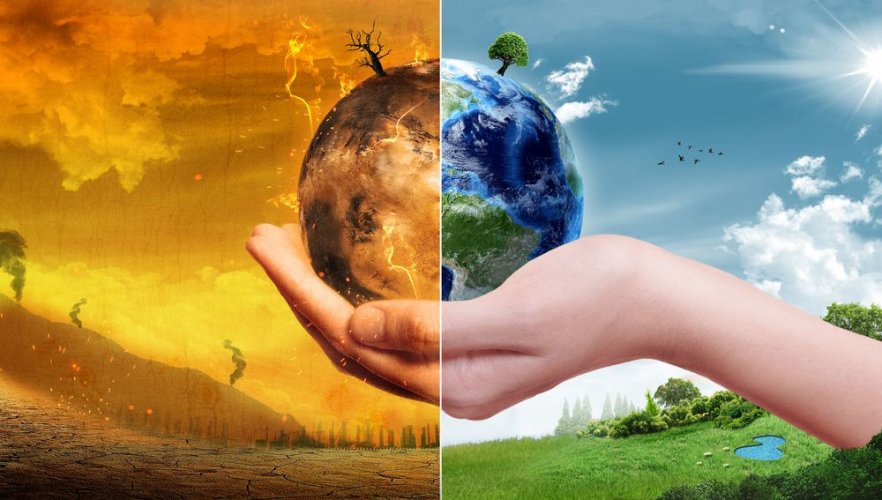
Our planet will warm by more than 1.5°C compared to pre-industrial levels in the next two years.
This is the forecast of the World Meteorological Organization (WMO) in its new report.
7 years ago, the UN Intergovernmental Panel on Climate Change predicted that the world would not cross the 1.5°C limit set in the Paris Climate Agreement until 2040. Two years ago, the group predicted that the world would cross this threshold between 2030 and 2035. But now the scientists have further downgraded their forecast.
What is the reason?
This acceleration is due to higher-than-expected temperatures over the past few years, a decrease in air pollution that has been cooling the Earth, and greenhouse gas emissions that continue to rise globally despite the development of renewable energy.
Therefore, irreversible tipping points in the climate system, such as melting Arctic glaciers or large-scale coral reef collapse, are closer than scientists previously thought.
According to the WMO report, we are facing another 5 years of high temperatures. Combined with the hot conditions caused by the El Niño weather phenomenon, this means that by 2027, the planet will officially warm by 1.5°C over a long period of time.
Zeke Housfather, a climate scientist and head of climate research at Stripe, believes that there is no way to prevent a 1.5°C rise in global temperatures other than geoengineering. As a reminder, geoengineering is the intentional cooling of the planet, for example, by injecting aerosols into the atmosphere. However, this practice is hotly debated.
Will renewable energy save us?
Although renewable energy sources have grown significantly over the past decade, they still account for only about a third of the world's energy mix. Even as wind, solar, and battery power have increased their share of the grid, the world is also consuming more electricity than ever before.
What's next
Failure to meet the target would mean the end of an encouraging phase of the global fight against climate change – and the beginning of a period of uncertainty about what comes next. At the same time, humanity will face increasing extreme weather events, including deadly heat waves, which will increase for every tenth degree of warming, scientists predict.
Earlier, EcoPolitic reported that 2024 was the hottest year on record in Europe, and also brought the largest floods since 2013. We also told you that, according to scientists, global warming could threaten Europe's wind energy.