The police of the Solomyanskyi district of Kyiv are obliged to open a criminal case based on a statement by the Kyiv Ecological and Cultural Center regarding questionable activities by the Ministry of Economy, Environment, and Agriculture. This decision was made by the Solomyanskyi Court of the capital.
According to the Kyiv Ecological and Cultural Center (KECC), this decision was in response to a complaint from activists about police inaction.
Negligence of law enforcement
On November 14, 2025, the KECC submitted an appeal to the Solomyansky District Prosecutor's Office. Two weeks later, the appeal was forwarded to the police. However, on December 29, it became known that investigators from the Solomyansky Department saw no grounds for entering information about a criminal offense into the Unified Register of Pre-trial Investigations.
A crime that outrages activists
These institutional barriers to activists prevent them from initiating a full-fledged process that would allow officials from the Ministry of Economy to be held accountable. The KECC accuses them of issuing illegal limits on tree felling in Ukraine's national parks.
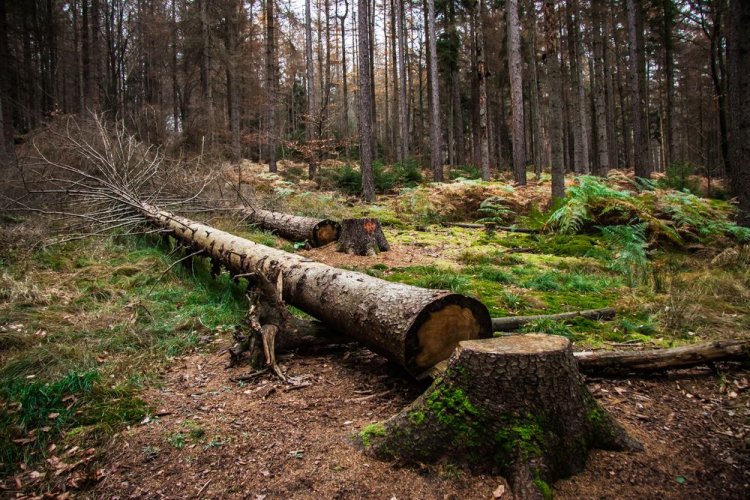
According to environmentalists, in October 2025 alone, Deputy Minister of Economy Ihor Zubovych approved limits for sanitary tree felling on an area of 195 hectares. Formally, this is a permit for a number of national parks to cut down a total of more than 4,500 cubic meters of timber.
The KECC is convinced that sanitary logging is actually a cover for commercial logging.
“Such totalitarian and thoughtless management methods and pseudoscience are particularly egregious when applied to protected natural areas. Their implementation in national parks and other protected sites must be entirely halted as an act that destroys wildlife and biodiversity,” emphasized KECC director Volodymyr Boreyko.
The harm caused by sanitary logging
The Center emphasizes that such activities are not practiced at all in national parks in developed countries, particularly in the United States, Germany, Canada, the Czech Republic, and Poland.
In general, sanitary logging causes significantly more harm than conditional benefits. It leads to soil compaction, reducing its moisture and fertility and worsening root nutrition for plants. Logging, supposedly for "pest control," leads to changes in the local microclimate and threatens rare species. According to environmental activists, 89 species of fauna and 33 species of flora listed in the Red Book of Ukraine are in danger.
Further actions by activists
The KECC has already secured the opening of three criminal cases against the leadership of the Ministry of Economy and filed three lawsuits with the Kyiv District Administrative Court.
According to activists, the Ministry of Economy's anti-environmental activities consist of issuing permits for the illegal harvesting of natural resources in general—not only through sanitary logging, but also through the collection of berries and mushrooms or the harvesting of reeds.
EcoPolitic previously reported on why KECC filed a complaint about the actions of officials of the former Ministry of Environmental Protection with the Office of the Prosecutor General.