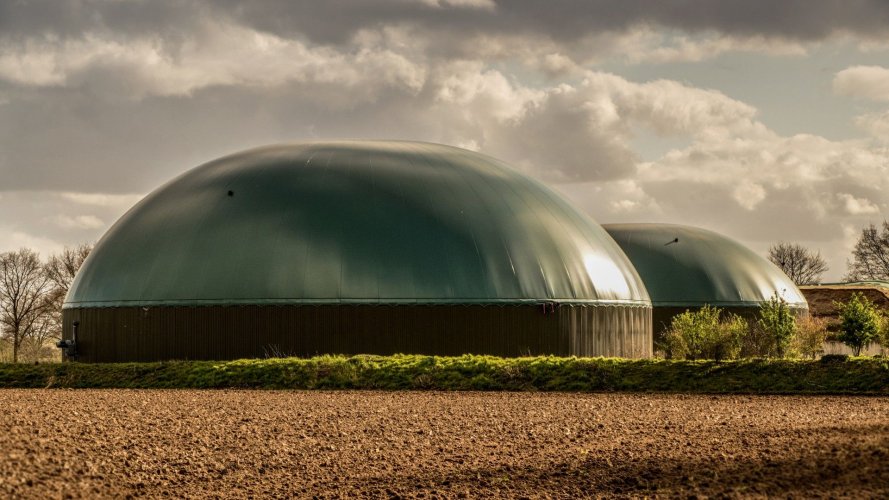
Biomethane production is a relatively new segment of the green energy sector. The relevant legislation in Ukraine was only adopted in 2021. However, by 2025, domestic producers had already entered the international market, and Germany is looking to import Ukrainian biomethane for heating. Meanwhile, it is unprofitable to sell it in Ukraine, as effective incentives for decarbonization are still lacking.
Georgiy Geletukha, Chairman of the Board of the Bioenergy Association of Ukraine, spoke about this to Espreso Media.
Ukrainian biomethane producers
There are currently six producers operating in Ukraine’s biomethane market, with the sixth plant having launched as recently as March. Together, they can produce 106 million cubic meters of this gas per year.
According to Georgiy Geletukha, four plants supply biomethane to gas pipelines, while the other two produce bio-LNG—liquefied and cooled gas. Cryogenic tanks, rather than pipes, are used to transport it.
All Ukrainian biomethane is certified under the ICC EU system, which is recognized by the European Commission.
Export potential
In 2025, Ukrainian biomethane was sold abroad for the first time. During the year, MKP, VITAGRO, and Hals Agro exported 11.2 million cubic meters of gas through the gas transmission system. Meanwhile, UM Liquid Gas sold about 900 tonnes of bio-LNG.
Producers could supply biomethane to the Ukrainian market, but it is extremely unprofitable. Its price is the same as for natural gas, while in the EU it is twice as high.
This price gap is due to strict environmental standards in the European Union. Its decarbonisation policies and high CO2 emissions taxes stimulate a shift to biological gas. In Ukraine, enterprises lack such incentives.
Can biomethane replace natural gas?
According to estimates by the head of the Bioenergy Association, Ukraine consumes approximately 20 billion cubic meters of natural gas annually. The current biomethane production capacity of 0.1 billion cubic meters is clearly insufficient to replace it at this time.
To achieve the necessary production volumes, Ukraine needs 4,000 biomethane plants. According to Georgiy Geletukha, this figure is entirely achievable. Such facilities can be built at virtually every agricultural enterprise.
The estimated investment in this case could amount to €40 billion. However, such an energy transition would reduce greenhouse gas emissions by 50 million tons per year. At the same time, the industry would be able to provide jobs for 250,000 people.
“Before the war, we planned to produce one billion cubic meters of biomethane per year by 2030, about 4.5 billion by 2040, and 20 billion by 2050. So, potentially, biomethane could fully meet Ukraine's current gas needs. The country has sufficient biomass resources for this. However, the war has thrown us off schedule somewhat, as very few are willing to invest in new projects during wartime,” – said Georgii Geletukha.
Biomethane does not ‘steal’ food from people
The scaling up of biomethane production raises concerns about the priorities of agricultural producers. The concern is that if biomethane is profitable, they will grow whatever is needed for its production.
In practice, however, Europeans purchase gas produced from waste in accordance with the classification. This refers to biomass that cannot be used as food for humans or animals.
Approved resources for biomethane production include chicken manure, slurry, stalks, and straw. Heorhii Geletukha cites the example of sugar beet pulp, which is a byproduct of sugar production. Cattle can eat it, so it is not considered waste under European classification.
"Technically, biomethane can be produced from both pulp and silage, but legally it will not be considered biomethane from waste, and it will not fetch a high price," emphasized the chairman of the Bioenergy Association.
EcoPolitic previously reported on Germany’s plans to import Ukrainian biomethane.
Ukraine has also begun producing “green” sugar. Biomethane is used in production processes instead of fossil fuels.