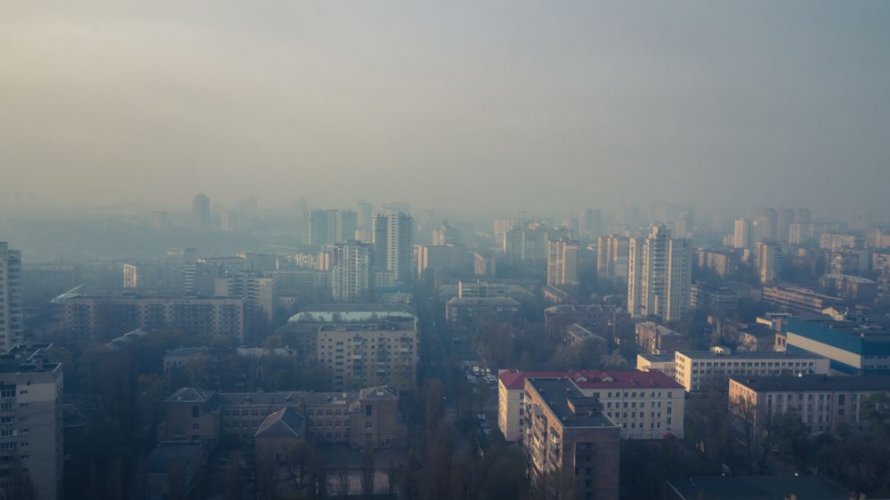
On the afternoon of May 5, the air in all regional centers of Ukraine is safe for people. Monitoring equipment is showing a "green level."
This is according to data from the international monitoring platform IQAir.
In the capital, according to monitoring data, air quality is good. Overall, the level of fine particulate matter pollution is 6.1 μg/m³. As a reminder, the World Health Organization considers 5.5 μg/m³ to be the standard.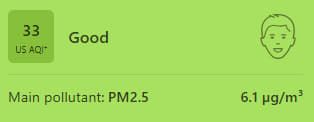
Moderate levels of pollution were recorded at only a few locations. Specifically, on Regeneratorna Street, where the dust concentration is 9.1 μg/m³, and on Horlivska Street. Here, dust pollution is three times higher than WHO standards, at 17.6 μg/m³.
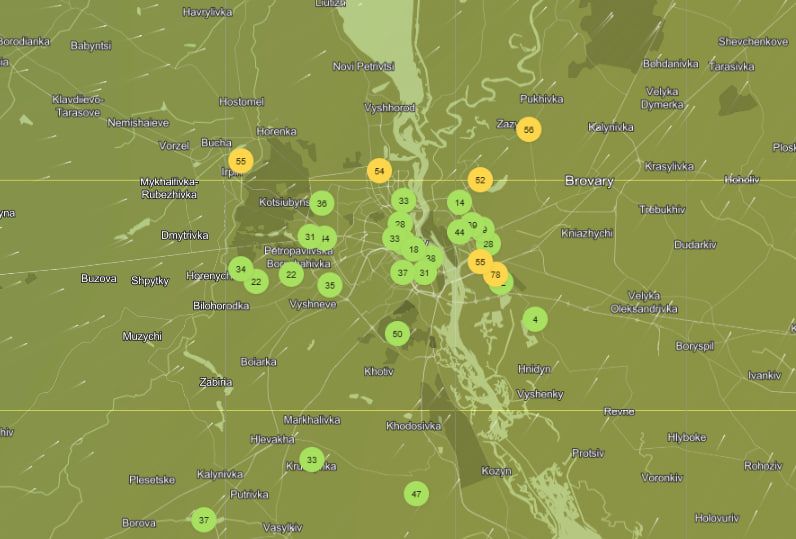
In the rest of Ukraine’s regional centers, monitoring equipment connected to IQAir also shows a “green” level.
Regarding harmful particulate matter levels in individual cities, the situation is as follows:
- Dnipro – 6.6 μg/m³. The highest concentration is on Nikopolskaya Street – 7 μg/m³;
- Lviv – 5.3 μg/m³. The highest reading is recorded by equipment on Kotsylovskyi Street – 6.7 μg/m³;
- Odesa – 5.1 μg/m³. The highest pollution level is on Frantsuzkyi Boulevard – 7.8 μg/m³;
- Vinnytsia – 4.5 μg/m³. The highest dust levels were recorded on Stetsenko Street – 6.4 μg/m³;
- Poltava – 7.2 μg/m³;
- Zhytomyr – 5.1 μg/m³;
- Rivne – 4.8 μg/m³;
- Lutsk – 3.7 μg/m³.
EcoPolitic previously reported on a study by Ukrainian scientists regarding the war’s impact on air quality. It is affected both by an overall decline in pollution due to the shutdown of industry and by local levels exceeding standards by tens of times due to enemy attacks.