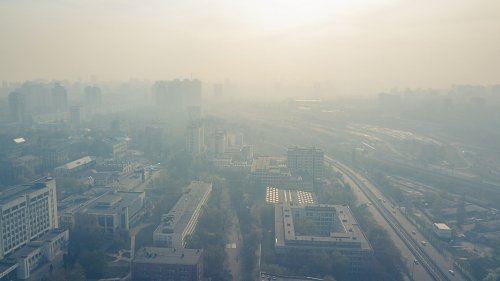
The largest number of facilities with permits to emit pollutants are registered in the Vinnytsia, Lviv, Kyiv, and Cherkasy regions, as well as in Kyiv. By economic sector, agriculture, real estate developers, and the food industry lead the list.
Data from the analysis of the Register of Facilities with Harmful Environmental Impact was published by specialists from the Data Analytics Lab YouControl in collaboration with the NGO "Open Data Association."
In total, there are 995 companies, 34 individual entrepreneurs, and 1,765 facilities in Ukraine that have received emission permits.
Regional disparities
Analysts noted significant unevenness in the distribution of enterprises across regions. The main "hotspots" of industrial impact are the following regions:
- Vinnytsia region – 248 sites;
- Lviv region – 224 sites;
- Kyiv region – 203 sites;
- Cherkasy region – 193 sites.
The experts also highlighted the capital, which has 130 sites with emission permits.
“This indicates a high concentration of industrial potential in the central and western regions,” state the Data Analytics Lab YouControl.
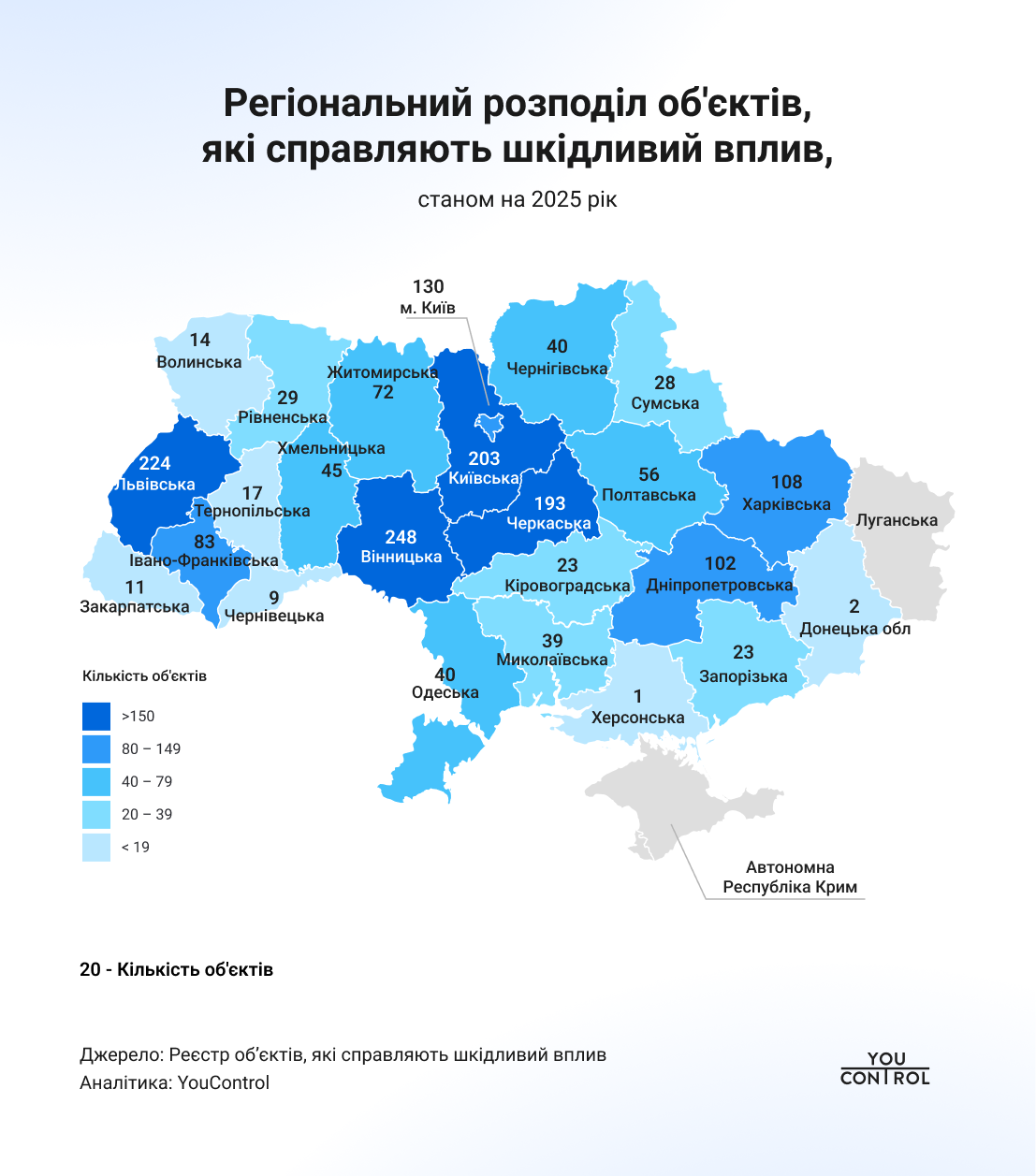
The fewest sites are registered in Donetsk and Kherson regions. This is directly related to the consequences of the war: a significant portion of enterprises in eastern and southern Ukraine have ceased operations, relocated production facilities, or lost the ability to process or renew permit documentation due to ongoing hostilities and temporary occupation of territories.
Distribution by sector
The undisputed leader in terms of businesses with pollutant emission permits is agriculture. This sector accounts for almost 28% of all sites, which means 489 enterprises. Most are poultry farms, pig complexes, grain elevators, and farming enterprises.
Although these are not typically viewed as large industry, they have a substantial environmental impact. Emissions of ammonia, hydrogen sulfide, methane, and other organic compounds create a distinctive odor, well known to residents of nearby villages and even small towns.
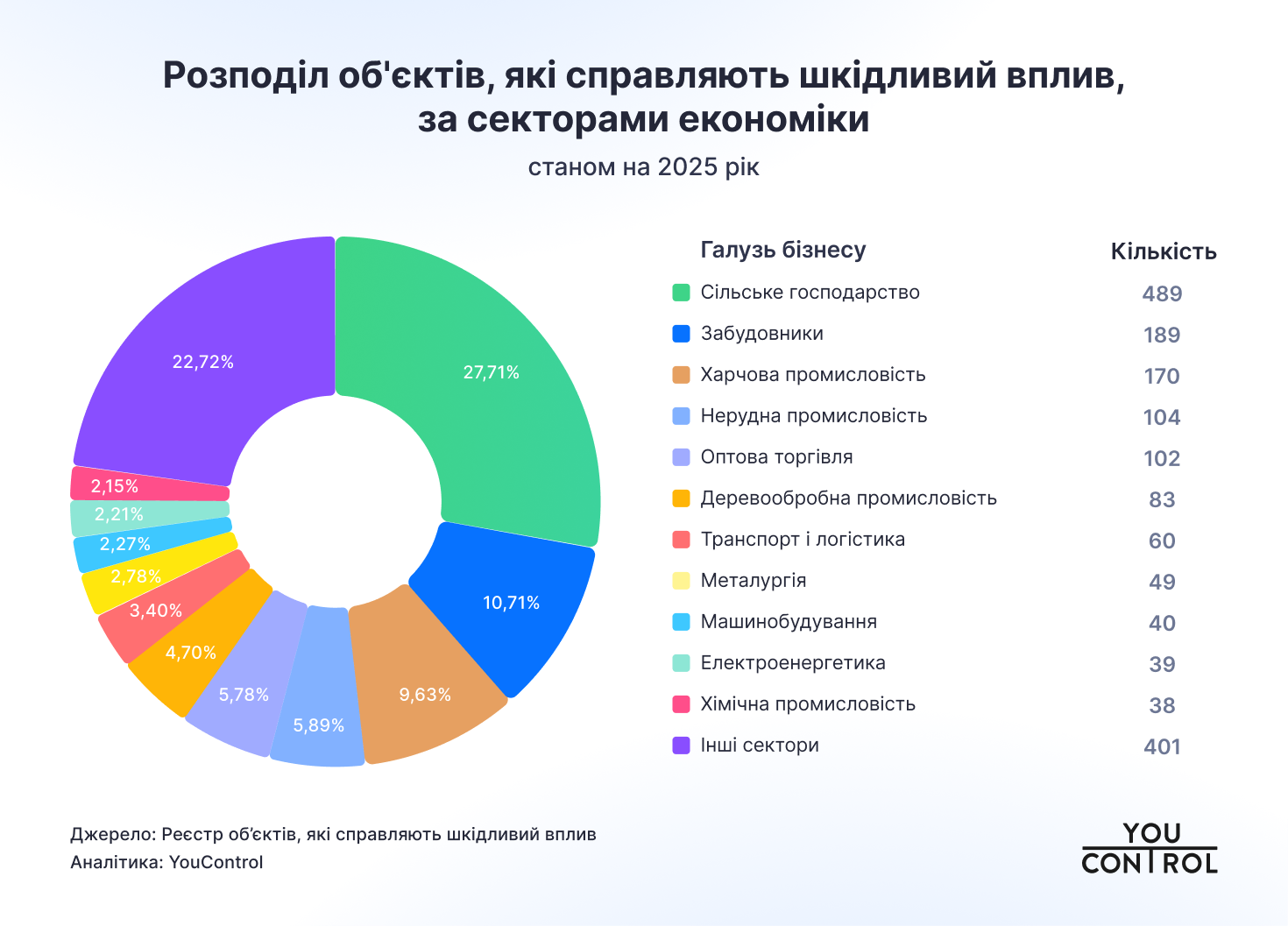
Second place by number of sites goes to the construction sector – 10.7%, or 189 enterprises. This category includes developers, contracting organizations, and asphalt concrete plants. The main pollutants are dust, nitrogen oxides, and carbon monoxide.
In third position is the food industry – 9.6%, or 170 sites. Among them are oil and fat plants, sugar and distillery plants, and meat processing plants. The nature of their emissions largely reflects the specifics of production: these are organic compounds, acetaldehyde, and acetic acid. At the same time, a significant share comes from combustion products formed by in-house energy equipment, including dust, heavy metals, and sulfur and nitrogen oxides.
Earlier, EcoPolitic reported that in Kyiv, an enterprise was poisoning residents with sulfur dioxide. Samples taken by the State Environmental Inspectorate recorded carbon monoxide concentrations exceeding the limit by more than 10 times, and sulfur dioxide by almost 20 times. The director of the enterprise has been charged with suspicion.