In 2016, the Paris Climate Agreement came into force. The countries that joined it committed to reducing greenhouse gas emissions so that global temperatures would not rise more than 1.5 °C above pre-industrial levels. Ten years have passed, and it seems that the world has failed in its climate policy—the last three years have been the hottest in recorded history.
The Reuters team analyzed and prepared infographics on key climate markers—temperature, emissions, glacier melt, and sea level change.
Research by leading scientific institutions around the world confirms that global warming has accelerated significantly since the mid-2010s.
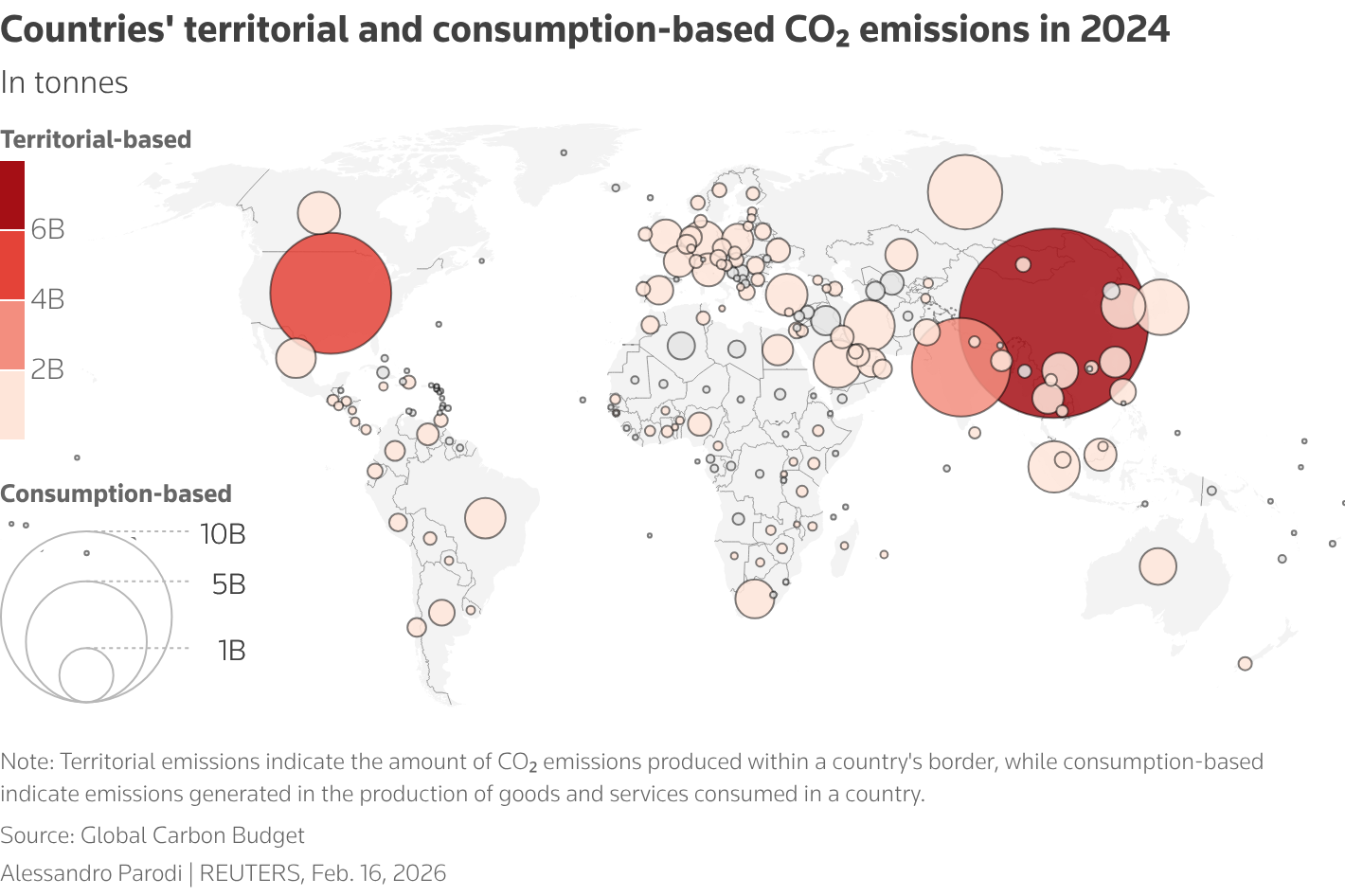
Emissions are only increasing
The record high temperature jump in 2023-2025 was caused by equally record high concentrations of carbon dioxide, methane, and nitrogen oxide. This is evidenced by data from the World Meteorological Organization.
The rapid growth of the renewable energy sector cannot reverse the situation quickly, as fossil fuel use – oil, coal, and gas – is rising simultaneously. Thus, preliminary data for 2025 indicate that emissions also broke a record. According to Global Carbon Budget, final calculations put carbon emissions at 38.1 billion tonnes.
According to a forecast by an international team of scientists, global carbon dioxide emissions will increase by another 1.1% this year. The total concentration of CO2 in the atmosphere will exceed pre-industrial levels by 52%.
If the current rate of emissions remains unchanged, humanity will produce the last 170 billion tonnes – the remaining allowance before exceeding the 1.5 °C global temperature threshold – in just four years.
Source: Reuters
Temperatures are rising
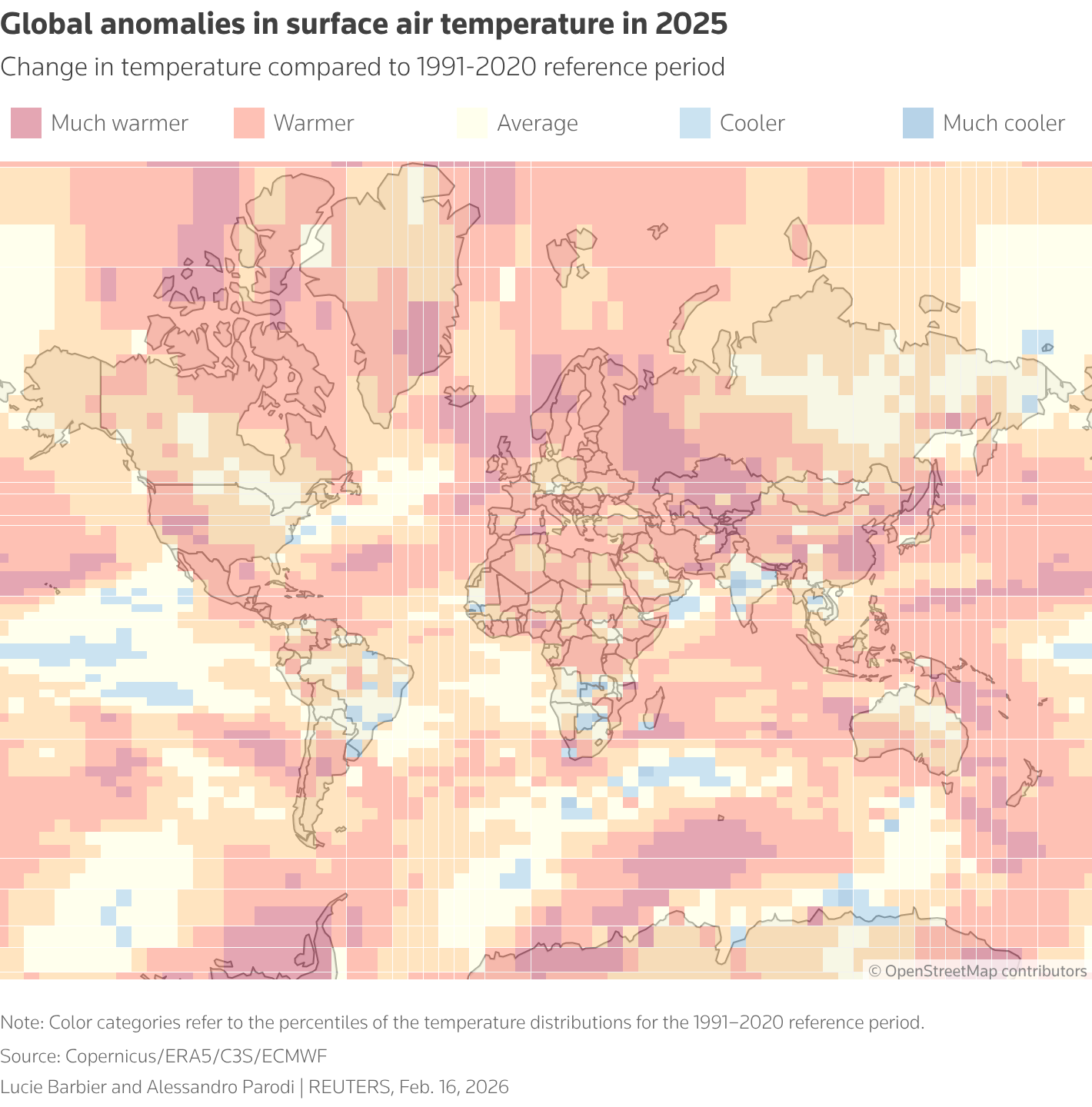
According to data from the Goddard Institute for Space Studies (GISS), in 2025, the temperature on the Earth's surface was 1.19 °C higher than the average for 1951-1980. This is extremely close to the level of the hottest year on record, 2023.
At the same time, the World Meteorological Organization reports that the temperature exceeded the pre-industrial level by 1.44 °C. In any case, 2025 ranks among the three hottest years in 176 years of observations.
Source: Reuters
Melting Arctic glaciers
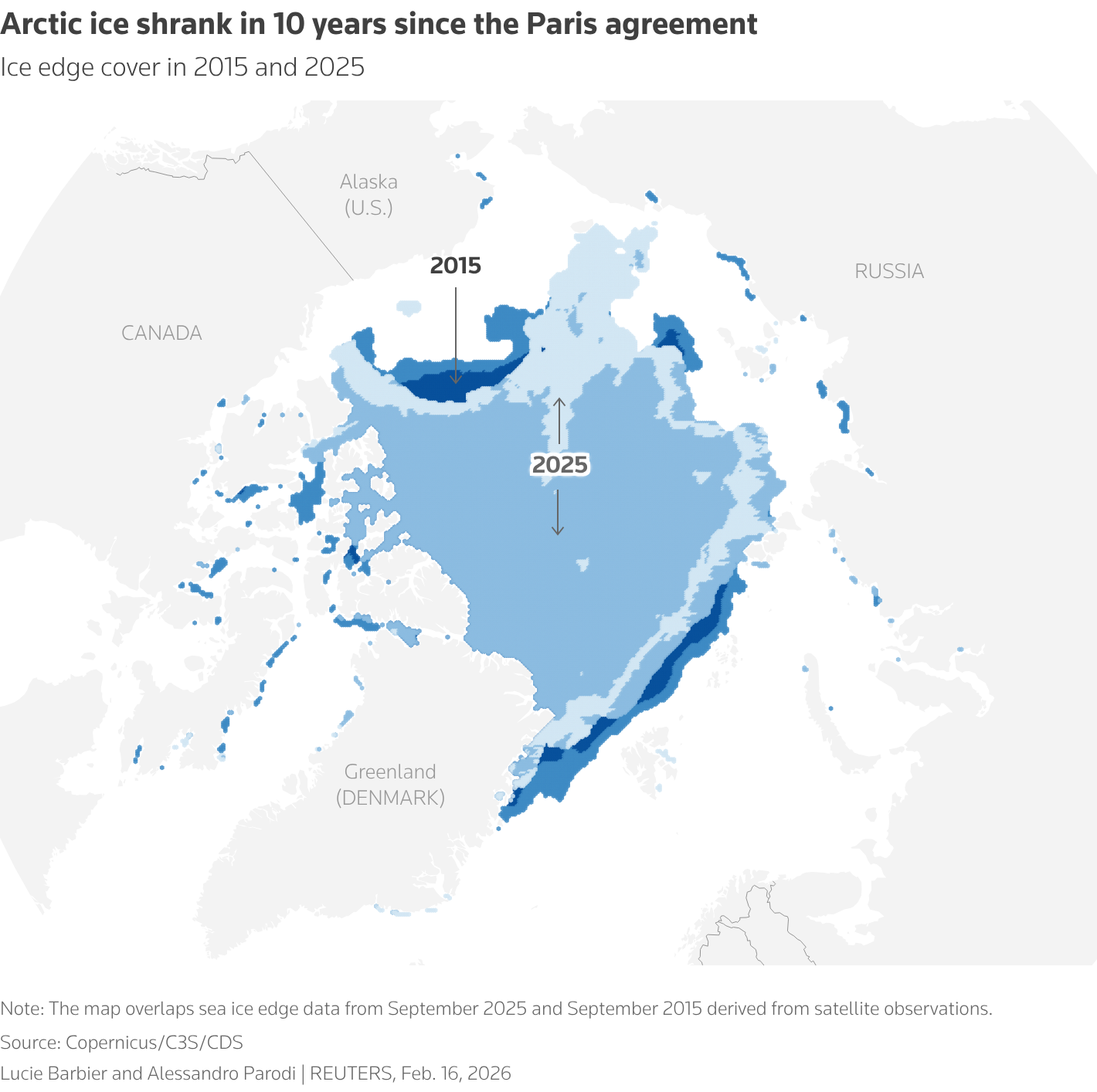
The Arctic is warming twice as fast as the global average. According to a report by the US National Oceanic and Atmospheric Administration (NOAA), the warmest period for northern ice since 1900 was from October 2024 to September 2025.
The lowest winter maximum Arctic ice extent was recorded in March 2025. According to data from the US National Ice Center, 14.47 million km2 were covered by ice.
Source: Reuters
Oceans are warming and rising
2025 was a year of climate records for the oceans as well. NOAA data showed that during this period, the water surface absorbed more heat than ever before.
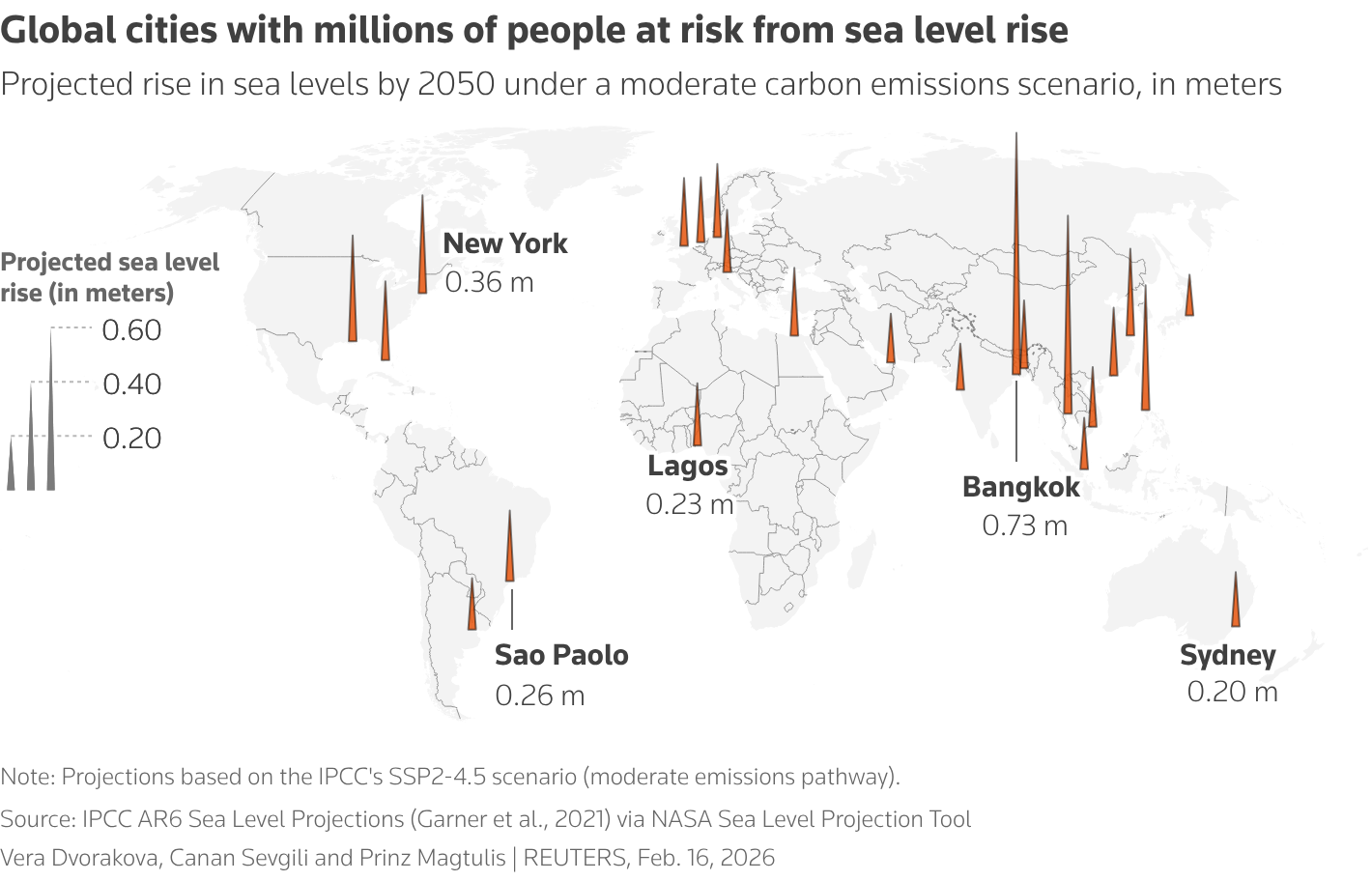
Accordingly, global sea levels are rising. Compared to 1995-2014, the projected rise by 2050 will be 20-29 cm.
Source: Reuters
EcoPolitic reported that one of the key drivers of glacier melting in the Arctic is black carbon – emissions from ship fuel. It leads to heat accumulation on the ice surface.
The year 2025 became the third hottest on record according to the European Earth observation programme Copernicus.