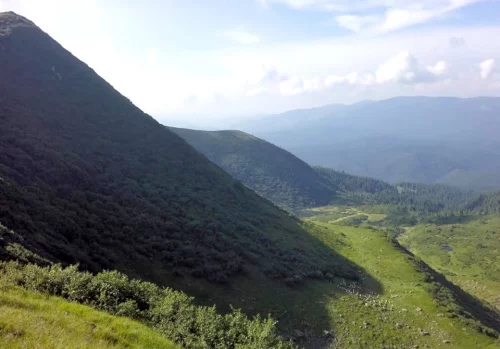
The landscape reserve of local importance “Khrestyschenski Hills” covers an area of 160 hectares and is located on the territory of Sviatohirsk city territorial community of Kramatorsk district, Donetsk region. Its flora and fauna include Red Data Book species.
This was reported by the Department of Ecology and Natural Resources of the Donetsk Regional State Administration.
The protected area includes the gully of the Gola Dolyna River, the left tributary of the Sukhyi Torets River, the left tributary of the Kazenyi Torets River of the Siverskyi Donets River basin. This is one of the few well-preserved, untouched landscapes of steppe river valleys with the characteristic vegetation of floodplain meadows in Donetsk Oblast.
The flora is represented mainly by virgin fescue-feather grass steppe and a small amount of tree and shrub vegetation. 2 species of plants growing here are in need of protection:
- hairy heifer – listed in the Red Book of Ukraine;
- samosil grove – included in the List of plant species that are not listed in the Red Book of Ukraine, but are rare or are under threat of extinction in the region.
There are 8 species of birds in the Red Book of Ukraine on the territory of the newly created reserve:
- pygmy eagle;
- steppe buzzard;
- black gull;
- osprey;
- big and small underarms;
- gravedigger;
- white-tailed eagle
In March, EcoPolitic reported that in Donetsk region began to restore protected forests despite active hostilities.