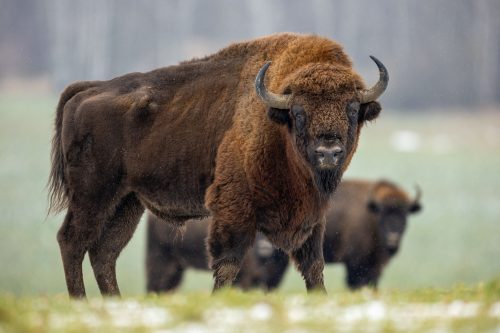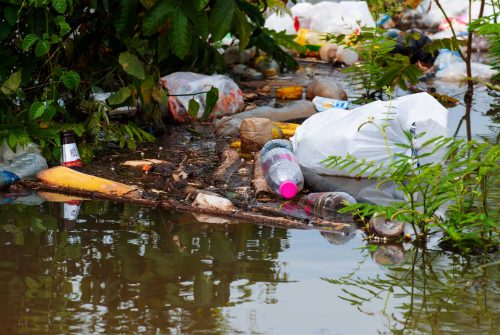
The Ministry of Economy has published a draft Strategy for the Conservation of Biological Diversity in Ukraine until 2035. Together with an operational plan, it sets out the overall objectives and specific measures that the state undertakes to implement in order to preserve ecosystems, flora, and fauna.
The Ministry of Economy, Environment, and Agriculture invites the public to discuss the draft Strategy.
The document sets out the long-term priorities of state policy on nature conservation and aims to integrate them into all areas of development and at all levels, from the national to the community level.
“For the post-war recovery of Ukraine, we need a comprehensive state policy that enables the restoration of not only infrastructure but also ecosystems and wildlife. And it is precisely the Biodiversity Conservation Strategy and the Operational Plan that are the instruments that will help integrate nature conservation objectives into all sectoral and regional policies and decisions for sustainable development,” stated the Minister of Economy, Environment and Agriculture of Ukraine, Oleksii Sobolev.
What outcomes does the Strategy aim to achieve?
- to halt the loss of biodiversity and restore key ecosystems;
- to support the “green” recovery of Ukraine;
- to embed the concept of protection and conservation of Ukrainian nature into all economic sectors;
- to make communities and the state as a whole more resilient to climate change.
Objectives of the new Strategy:
- Implement spatial planning and development of protected areas.
- Restore degraded ecosystems to improve biodiversity status, restore ecosystem functions and services, including areas affected by hostilities.
- Place under special protection at least 30% of Ukraine’s territory – natural areas on land and within the Black and Azov Seas. The Strategy seeks to ensure effective conservation and management of these lands.
- Combat extinction and restore wild flora and fauna species, plant communities, natural habitats, and species’ habitats within their natural ranges that are under special protection.
- Ensure the safety and legality of the use, harvesting, and trade in wild flora and fauna species, preventing their overexploitation.
- Early detection, prevention of spread, minimization, and/or mitigation of the impact of invasive alien species on biodiversity and their eradication.
- Reduce risks and impact levels of pollution from all sources to limits that do not harm biodiversity and ecosystem functions and services.
- Minimize the impact of climate change on biodiversity and increase the resilience of biodiversity by implementing ecosystem-based adaptation and nature-based solutions.
- Ensure the conservation, sustainable use, and restoration of biodiversity based on balancing the interests of local communities and national nature conservation priorities.
- Ensuring sustainable use and conservation of biodiversity in the agricultural, forestry, fisheries, and hunting sectors through the application of biodiversity-friendly practices and support for ecosystem functions and services.
- Restoring, maintaining, and increasing nature’s contribution to people’s lives, including ecosystem functions and services, by implementing nature-based solutions and ecosystem approaches.
- Expanding the area, quality, and ecological connectivity of green and blue spaces in settlements and densely populated areas, as well as ensuring equal and safe access to them for all population groups.
- Ensuring fair and equitable sharing of benefits arising from the use of genetic resources and related traditional knowledge, information on digital sequence data of genetic resources, and facilitating proper access to genetic resources.
- Integrating principles of biodiversity conservation, restoration, reproduction, and sustainable use into legislation, policy-making and implementation processes, planning and economic activities, poverty eradication strategies, and financial reporting at all levels of government and across all economic sectors.
- Introducing mandatory corporate sustainability reporting for business entities and financial institutions in line with European requirements. This will require integration of information on risks, impacts, and consequences for biodiversity and ecosystems through monitoring, assessment, and transparent disclosure of information.
- Promoting the development of responsible consumption. This step aims to reduce negative impacts by 2030 by integrating biodiversity conservation principles at all stages of food production, implementing sustainable practices, environmentally safe technologies and products, as well as introducing educational programs and government policies aimed at environmental protection.
- Strengthening biosafety.
- Eliminating entirely or gradually or reforming incentives, including subsidies, that are harmful to biodiversity.
- Mobilizing and increasing financial resources for the implementation of biodiversity conservation, preservation, and restoration measures.
- Enhancing capacity and institutional capability, technology transfer, and scientific and technical cooperation for biodiversity conservation.
- Providing reliable information to government bodies, businesses, and the public. This includes scientifically substantiated data and innovations for effective management through monitoring, research, education, awareness-raising and communication, and the use of traditional knowledge, practices, and technologies of local territorial communities.
- Ensuring access to information, participation in decision-making, and access to justice.
- Ensuring gender equality and implementing a gender-responsive approach.