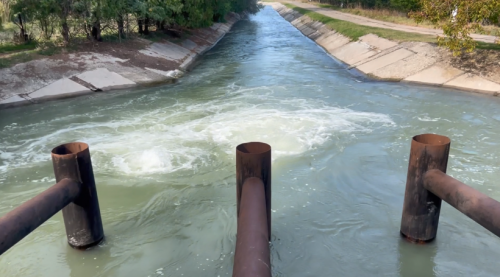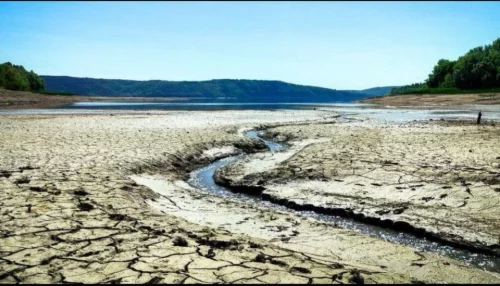
Clean water is not a given, but the result of natural processes and human responsibility. Since 2003, 18 September has been a day when attention is drawn worldwide to the state of water resources and the need to combat water pollution. This is supported by regular water quality measurements, which have also been introduced in Ukraine.
This was reported by the Ministry of Economy and Environment of Ukraine.
Monitoring at national level involves taking water samples, analysing them in laboratories and compiling data by river basin. All this information makes it possible to monitor and assess the ecological and chemical status of water bodies, which in turn forms the basis for drawing up river basin management plans.
Ukrainian network
In Ukraine, water quality testing is carried out by four main laboratories of the State Water Agency – covering the Northern, Southern, Western and Eastern regions – and 22 regional laboratories. Throughout 2025, they carried out around 360,000 measurements. All laboratories are accredited to the ISO 17025 standard.
However, due to the war, the monitoring coverage is somewhat incomplete. This is because some of the monitoring stations are located in areas of active hostilities or under temporary occupation. Furthermore, due to the hostilities, the Eastern Region Water Monitoring Laboratory had to be relocated from Sloviansk to Poltava.
Convergence with EU standards
Under the national water monitoring programme, the state of seven river basins – the Dnieper, Danube, Dniester, Southern Bug, Vistula, Don and the rivers of the Black Sea region – will be assessed in 2026.
Monitoring is carried out at 586 groundwater monitoring points and 553 surface water monitoring points. Of these, 43 are located in cross-border areas, whilst a further 142 are situated at points where water is abstracted for drinking and domestic use by the population.
Water sample analyses currently involve the detection and quantification of 35–40 priority substances. In this respect, Ukraine is gradually moving closer to the EU Water Framework Directive, which provides for the monitoring of 45 substances.
"To fully adopt European approaches, we need modern equipment, qualified specialists and the further expansion of laboratory accreditation. Another important task for us is to develop a unified approach to consolidating data on the quantitative and qualitative parameters of water resources, which are currently collected by various government bodies,” said Iryna Ovcharenko, Deputy Minister of Economy and Environment.
As previously reported by EcoPolitic, three types of monitoring are provided for in Ukraine: diagnostic, operational and research. The State Water Agency’s laboratories measure priority chemical parameters, as well as specific basin-related parameters. Meanwhile, the State Emergency Service’s laboratories are responsible for biological, physico-chemical and hydromorphological parameters.