Residents of most major Ukrainian cities currently have to breathe air with a moderate level of pollution. Only in five regional centers are the average readings completely safe as of the morning of November 3.
This is evidenced by data from the international monitoring platform IQAir.
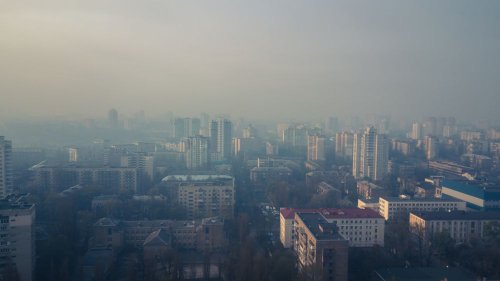
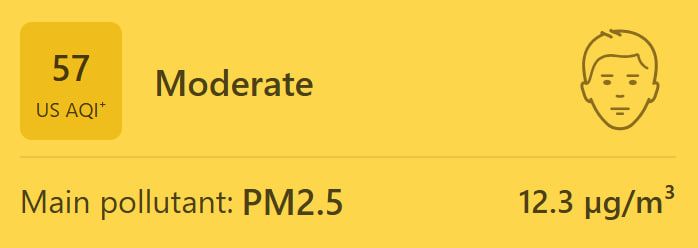
On average, the air in the capital shows a moderate level of pollution. The concentration of the key pollutant, PM2.5 dust, reaches 12.3 µg/m3. For comparison, the average monthly standard set by the WHO is 5 µg/m3.
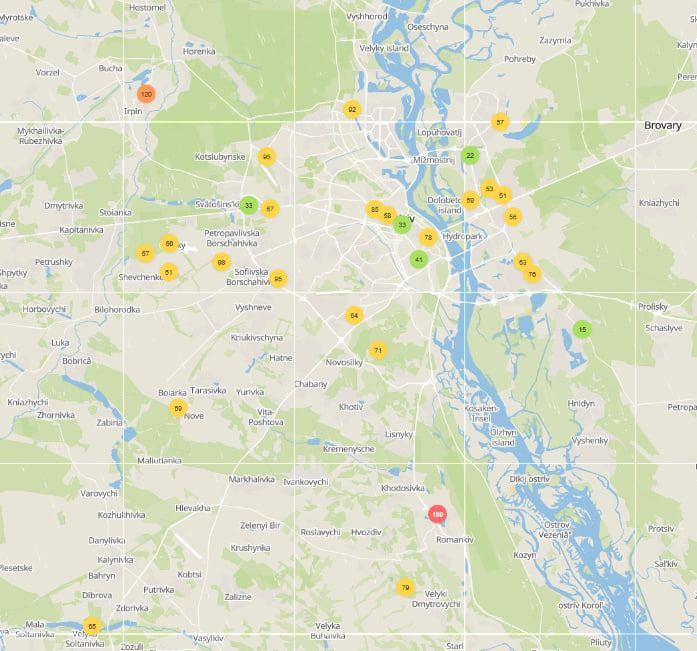
Among individual locations, the dustiest air is on Sichovykh Striltsiv Street (27.6 µg/m3). Concentrations of pollutants above the Kyiv average are also recorded on Trostianetska Street (22.7 µg/m3), Akademika Zabolotnoho Street (19.7 µg/m3) and Omelianovycha-Pavlenka Street (31 µg/m3).
In several settlements near the capital, pollution is even higher. In Irpin, the air is unhealthy for sensitive groups, with a dust concentration of 43.2 µg/m3. Velyki Dmytrovychi records a "red" level: the air is unhealthy for all population groups, and the dust content has reached 106.7 µg/m3.
As in Kyiv, the air in most major cities of Ukraine is currently moderately polluted, with the following dust concentrations:
- Rivne – 30.7 µg/m3;
- Ivano-Frankivsk – 24.9 µg/m3;
- Chernivtsi – 19.4 µg/m3;
- Ternopil – 16.4 µg/m3;
- Lviv – 16 µg/m3;
- Lutsk – 14.7 µg/m3;
- Zaporizhzhia – 12.5 µg/m3. Active fire sources are also recorded near the city;
- Odesa – 11.3 µg/m3;
- Kherson – 11.3 µg/m3;
- Chernihiv – 11.3 µg/m3;
- Kharkiv – 10.8 µg/m3;
- Vinnytsia – 10.6 µg/m3;
- Mykolaiv – 10.6 µg/m3;
- Cherkasy – 10.1 µg/m3.
Only a handful of regional centers can boast good air quality:
- Dnipro – 7.9 µg/m3;
- Khmelnytskyi – 7.3 µg/m3;
- Poltava – 5.1 µg/m3;
- Zhytomyr – 4.6 µg/m3;
- Uzhhorod – 4.6 µg/m3.
As a reminder, due to enemy strikes, the level of air pollution may rise locally, with some indicators exceeding the norm by up to ten times.