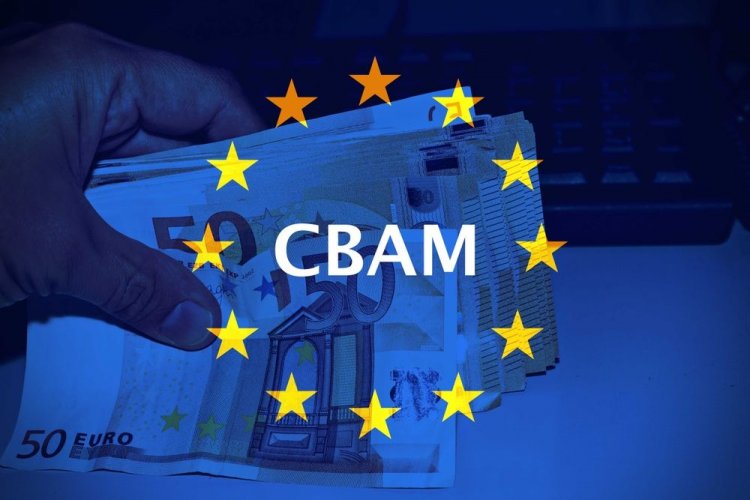
The Ministry of Economy and Environment must step up its cooperation with the European Commission and EU Member States so that Ukraine can finally benefit from special conditions for the application of the Carbon Border Adjustment Mechanism (CBAM).
The European Business Association addressed the ministry with this appeal.
Enormous losses for the state and pressure on businesses
Data from the GMK Centre indicates that, between 2026 and 2030, losses to Ukrainian exports due to the impact of the mechanism could ‘skyrocket’ from $372 million to $1.754 billion.
Ukraine’s GDP losses will be many times higher. Their potential total by 2030 could reach $7,248 billion.
At the same time, as the cost of SVAM certificates rises, so too will the burden on businesses. And the price is not stable — in the third quarter it stood at €82.32, which is 10 per cent higher than in the second quarter.
The scope of the mechanism is not fixed either — the list of products subject to the carbon ‘duty’ may include hundreds of derivative goods with a high steel and aluminium content.
Key areas of work
In its statement, the EBA calls on the Ministry of Economy to focus on two areas of work:
Strategic. This involves the development of a special regime for Ukraine, as provided for in Regulation (EU) 2023/956. It differs for the two periods:
- during the period of martial law — a deferral of payments for embedded emissions arising from imports into the EU. Subsequent settlement of financial obligations under the EU Emissions Trading System (EU ETS) must take place through verified decarbonisation and environmental modernisation projects;
- From the end of martial law until integration with the European Union Emissions Trading Scheme (EU ETS), revenues from the Domestic Emissions Trading Scheme (SVA) should be accumulated in a special fund. The funds in this scheme should be used to finance decarbonisation projects.
EVA proposes introducing regular joint consultations between the business community and the Ministry of Economy. The business community believes this will help to jointly formulate proposals for Ukraine’s negotiating position.
The practical component involves the following activities:
- a review of the default emission factors for Ukrainian steel and cement products;
- developing mechanisms for verifying actual emissions in wartime;
- exemption of Ukrainian cement and cement clinker from the accounting of indirect emissions.
"This approach will make it possible to minimise the negative impact of the CBAM on Ukrainian industry, preserve enterprises’ export opportunities and investment potential, whilst at the same time creating the conditions for decarbonisation and Ukraine’s gradual integration into the European climate system," the Association emphasised.