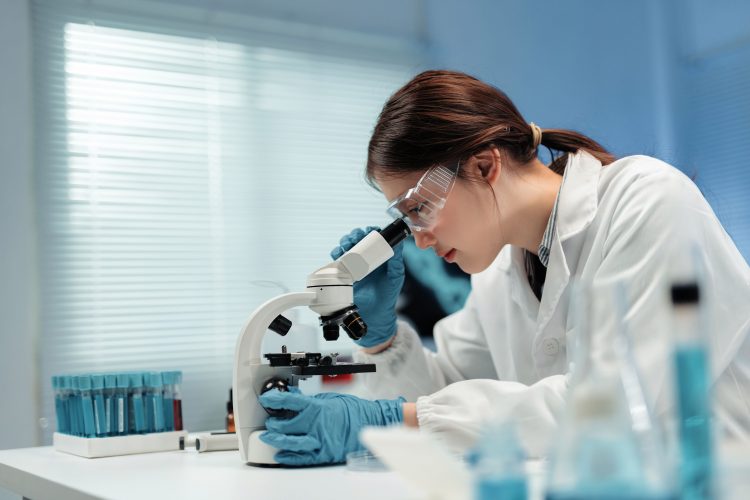
Ukraine’s first national laboratory for the detection of asbestos will use transmission electron microscopy. This will make it possible to separate hazardous demolition waste and identify materials suitable for further processing and use in the construction industry.
According to a statement from the Ministry of Economy and the Environment, the laboratory was established by UNDP in Ukraine with funding from the Japanese Government.
The dangers of asbestos
Large-scale destruction of buildings and structures, as well as their demolition, leads to the release of asbestos fibres into the air. These are fine, barely visible particles that can enter the respiratory system, causing serious illnesses.
First and foremost, those at risk are workers who clear rubble and sort waste.
Laboratory facilities
The equipment in the laboratory aids in the study of the structure and elemental composition of individual fibres. It ensures a high degree of accuracy in the detection of asbestos, even in the case of very fine fibres that are impossible or extremely difficult to identify using optical microscopy.
Part of a larger system
According to the ministry, the Ministry of Economy and the UNDP are working together to improve the system for managing demolition waste. This is taking place in parallel with the introduction of environmentally sound approaches to reconstruction.
Among the measures already implemented is the development of national standards relating to asbestos. These cover rules for sampling, detection and monitoring of asbestos levels in the air. It is these rules that will serve as guidelines for the laboratory’s work. In addition, work has already begun on new standards for circular construction.
"A significant proportion of the waste resulting from the destruction can be recycled and reused for reconstruction. However, it is first necessary to ensure that materials are properly sorted and tested for hazardous substances. The new laboratory will help create the conditions for the safe use of recycled materials in construction, promoting the development of a circular economy whilst protecting people’s health and the environment,” said Olena Kramarenko, Deputy Minister of Economy and Environment of Ukraine.
The laboratory is set to undergo accreditation to the international standard ISO/IEC 17025. Its staff will undergo the relevant training, which will be organised by the UNDP.
The first materials to be processed will be samples collected as part of UNDP projects. This will help to safely remove asbestos-containing materials from waste and identify those that can be recycled without posing a risk to workers’ health.
EcoPolitic has previously reported in detail on the risks posed by asbestos, as well as the steps Ukraine needs to take to ensure the safe identification, transport and disposal of such waste.