As of the morning of 19 October, the air in all major cities in Ukraine is fairly clean, so it poses no threat to public health and does not require any restrictions on time spent outdoors.
This is evidenced by data from the IQAir monitoring platform.
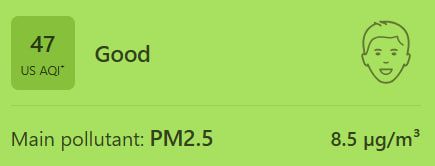
According to the average readings from the monitoring stations, air quality in Kyiv is currently good. The main pollutant is PM2.5 particulate matter. Its concentration stands at 8.5 µg/m3. The upper limit of the safe standard, according to the World Health Organisation, is 5.5 µg/m3.
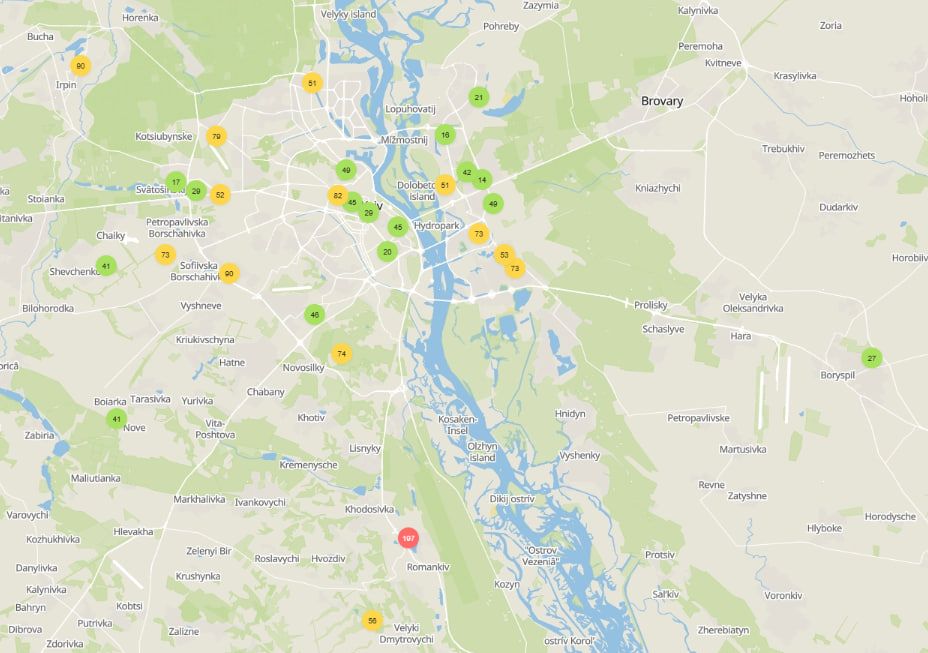
Moderate levels of pollution have been recorded at certain locations — on Horlivska Street (10.3 µg/m3), Sichovykh Striltsiv Street (25.6 µg/m3), Regeneratorna Street (20.8 µg/m3), and Trostyanetska Street (20.7 µg/m3). In the suburban town of Sofiivska Borshchahivka, pollution levels are hazardous to vulnerable groups — dust concentrations reach 37 µg/m3.
A number of large cities also show moderate levels of pollution. However, these levels are not yet high enough to pose a risk to people:
- Kharkiv — 12.7 µg/m3;
- Ivano-Frankivsk — 10.9 µg/m3;
- Chernihiv — 10.5 µg/m³;
- Cherkasy — 10.1 µg/m3;
- Lutsk — 9.3 µg/m3.
In the other regional centres, air quality is good and falls within the ‘green’ range:
- Mykolaiv — 6.6 µg/m3;
- Dnipro — 5.5 µg/m3;
- Zaporizhzhia — 4.1 µg/m3;
- Poltava — 3.5 µg/m3;
- Ternopil — 3.5 µg/m3;
- Rivne — 3.2 µg/m3;
- Uzhhorod — 2.7 µg/m3;
- Lviv — 2.6 µg/m3;
- Odessa — 2.5 µg/m3;
- Kherson — 2 µg/m3;
- Vinnytsia — 1.8 µg/m3;
- Khmelnytskyi — 1.8 µg/m3;
- Zhytomyr — 1.4 µg/m3.
As a reminder, air pollution can trigger flare-ups of lung and cardiovascular diseases, and, with prolonged exposure, can cause these conditions to develop in healthy people. Find out more about how the environment affects the body in the article.