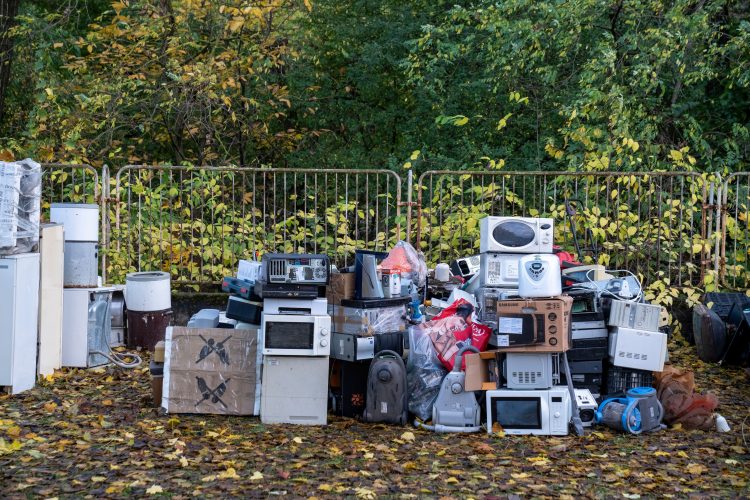
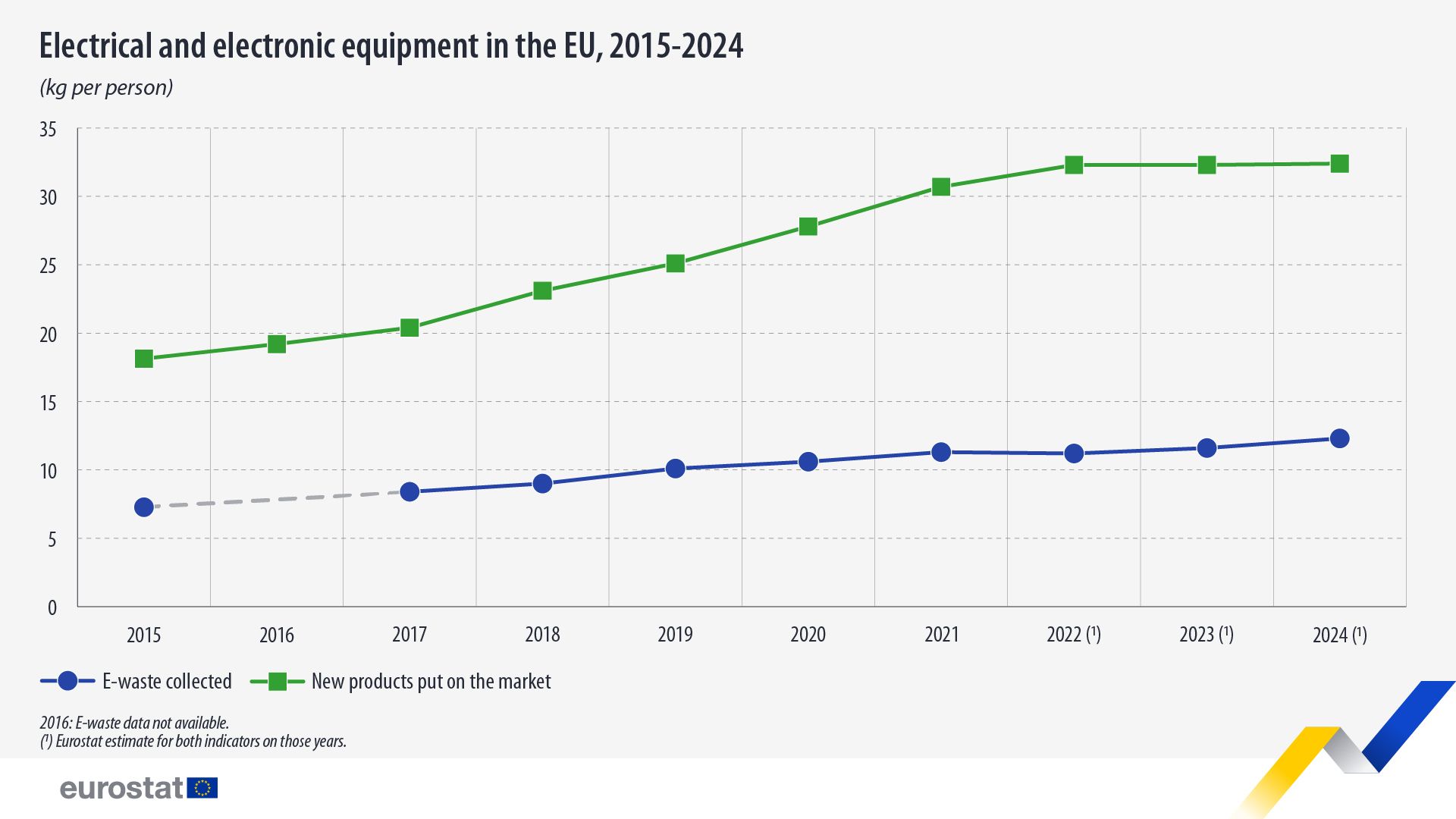
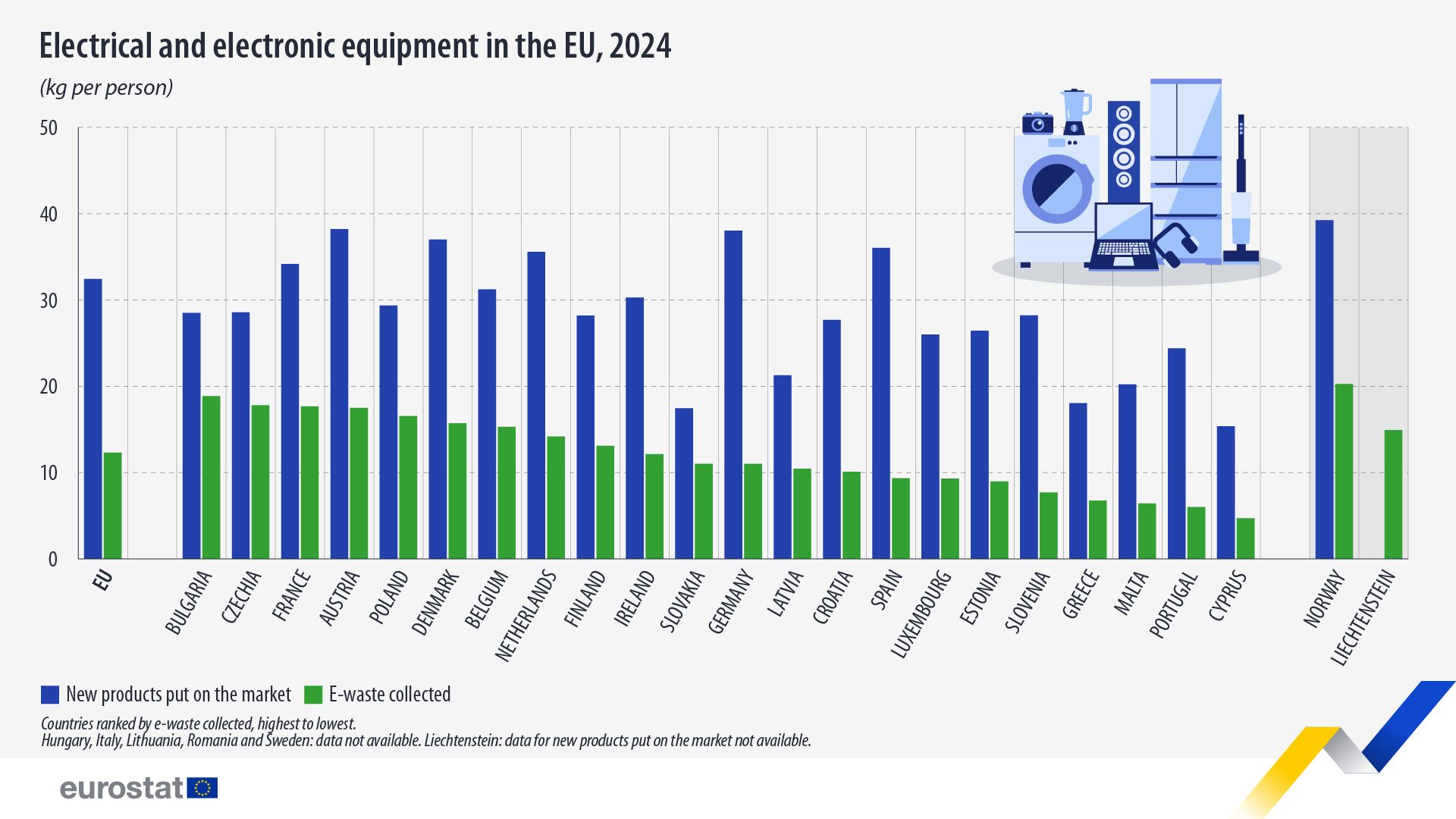
In 2024, each EU resident generated 12.3 kg of waste electrical and electronic equipment (WEEE). At the same time, this figure for new equipment stands at 32.4 kg, which has raised concerns amongst experts. This disparity points to a looming problem due to the massive accumulation of this specific type of waste and potential gaps arising from uncontrolled processing and the lack of clear waste accounting.
This is evidenced by Eurostat data.
The number of vehicles is only increasing
Over a ten-year period — between 2015 and 2024 — the volume of EEE placed on the EU market rose by 79 per cent. Whilst previously there were 18.1 kg of new appliances per European, by 2024 this figure had risen to 32.4 kg. Eurostat cites large household appliances – washing machines, dishwashers and solar panels – as the main driver of this growth.
At the same time, the volume of WEEE also increased, albeit at a slower rate — from 7.3 kg to 12.3 kg. In 2024, compared with the previous year, there was 0.7 kg more of this type of waste per person.
Leaders and non-leaders in the rankings
Throughout 2024, the highest amounts of electronic waste were collected in Bulgaria (18.9 kg per person), the Czech Republic (17.8 kg) and France (17.7 kg). At the other end of the scale were Cyprus, Portugal and Malta, where 4.7, 6 and 6.4 kg of WEEE were collected per person respectively.
At the same time, Austria, Germany and Denmark lead the way in terms of new equipment released onto the market — 38.2, 38 and 37 kg per person respectively. The lowest figures were recorded for Cyprus, Slovakia and Greece — 15.4, 15.7 and 17.5 kg respectively.
All the countries that provided data have one thing in common: significantly more new equipment is being released onto the market than is officially collected as waste.
Slovakia has the smallest difference between EEE and WEEE per capita (6.4 kg), whereas in Spain (36.0 kg versus 9.3 kg) and Germany (38.0 kg versus 11.0 kg), the weight of electronic products placed on the market is more than three times the volume of officially collected electronic waste.
"The reported figures for both new equipment placed on the market and collected electronic waste are potentially underestimated. This is mainly due to ongoing difficulties in fully accounting for cross-border online trade, collecting data from all non-compliant producers, and accurately assessing a significant proportion of WEEE collected and treated by the informal sector,” commented Eurostat.
EcoPolitic previously reported that the average European throws away around 129 kg of food waste per year. More than half of this amount comes from households, whilst restaurants and cafés account for just 12 per cent.