Due to the hostilities and the resulting damage to infrastructure, heavy metals and petroleum products are entering Ukrainian water bodies. There is a risk that this toxic cocktail will seep into drinking water supplies. Surface water intakes are at the greatest risk.
This was reported by Espreso Media, citing a response from the State Agency for Water Resources of Ukraine.
Dangerous exceedances
In Ukraine, the quality of surface water is monitored by the state, and the State Water Agency is responsible for this process. According to the agency, the programme was able to collect data from 98.5 per cent of monitoring points during 2025. The remaining points are inaccessible due to hostilities or temporary occupation.
The agency’s conclusion is clear: the war is affecting water resources, and this impact is extremely negative.
Monitoring has revealed an increase in chemical oxygen demand (COD) levels. This indicates a rise in the anthropogenic load on water bodies.
Among the recorded exceedances are concentrations of metals, in particular lead, cadmium, manganese, nickel and barium. Elevated levels of petroleum products have also been detected.
"The rise in concentrations of certain pollutants may be linked, in particular, to the consequences of military action and the destruction of infrastructure," the State Water Agency noted.
The impact is not confined to the front line
The adverse effects of a full-scale war could extend to surface waters throughout the country. However, the extent of this impact varies. It depends on the nature and scale of the hostilities, as well as the location of potential sources of pollution.
War-related pollution has already been recorded in the catchment areas of the following rivers: the Dnipro (Dnipro Reservoir), the Siverskyi Donets, the Southern Bug (Lodyzhyn Reservoir), the Desna and the Dniester.
Water from wells, particularly in frontline regions, is significantly more dangerous than that treated by water supply companies. However, the agency points out that even there, the risk of drinking water contamination should not be ruled out.
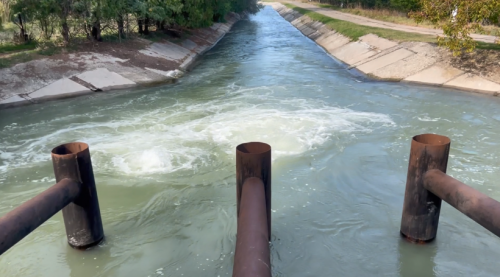
"There is a risk of pollutants from surface waters entering centralised drinking water supply systems. All water intakes drawing water from surface water bodies may be at risk if they become blocked. In the event of significant water contamination, it may be necessary to suspend the water supply,” the State Water Agency reported.
EcoPolitic previously reported that mine water from the combat zone could seep into aquifers.
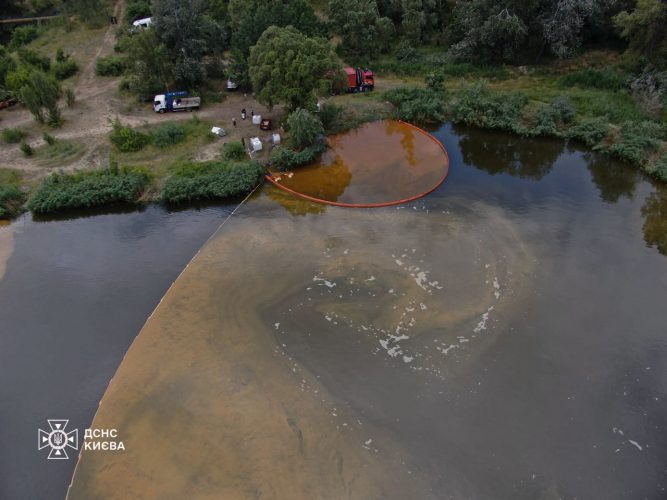
An example of surface water pollution caused by the war is the spill of petroleum products into Lake Kyrylivske in Kyiv. An oil slick covering an area of 20.6 thousand m² formed there, prompting the launch of large-scale clean-up operations in the lake.