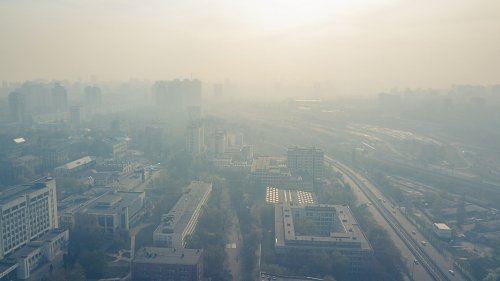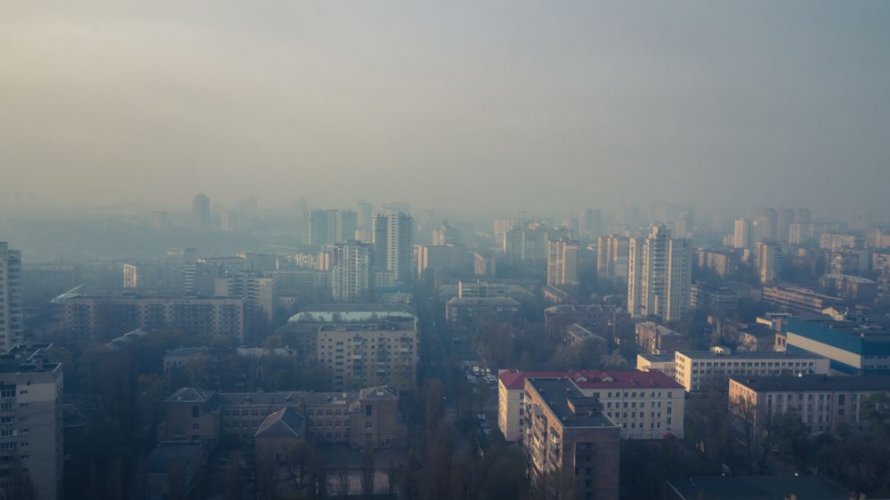
As of the morning of 30 September, air pollution levels in Ukraine are generally moderate; however, in some areas, pollutant levels are up to 10 times higher than the norm.
This is evidenced by data from the international monitoring platform IQAir.
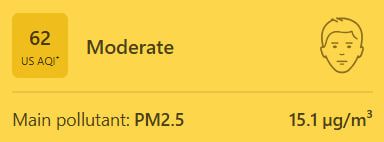
The average level of pollution in the capital is in the ‘yellow’ range on the scale. The main type of pollutant is PM2.5 fine particulate matter. The upper limit for normal concentrations of this pollutant, as defined by the World Health Organisation, is 5.5 µg/m3. However, in Kyiv, it is almost three times the standard, reaching 15.1 µg/m3.
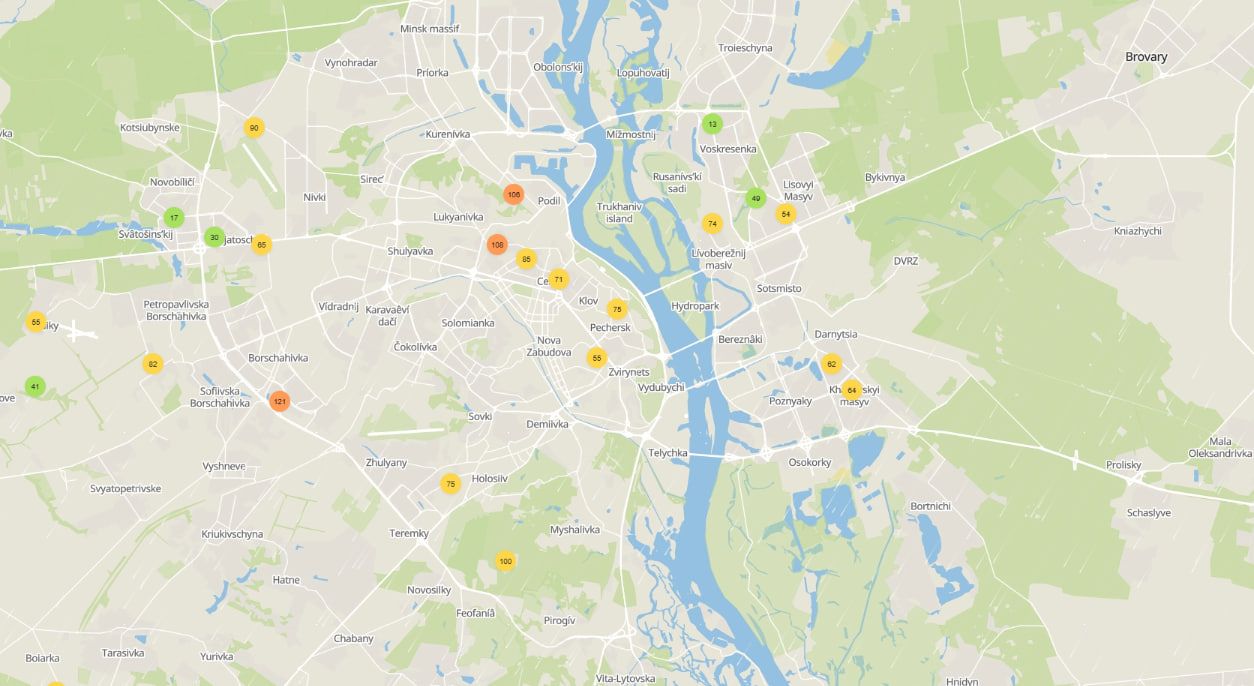
Good air quality at the capital’s monitoring stations this morning is something of an exception. For example, on Sichovykh Striltsiv Street, the air quality is generally unhealthy — people are advised to avoid going outside and keeping windows closed. Here, the dust concentration is almost 11 times the norm, standing at 59.7 µg/m3. In Holosiiv, pollution levels are hazardous for people in vulnerable groups. Dust levels here are 38.4 µg/m3. Average pollution levels are recorded on Konovaltsia Street (11.1 µg/m3), near the Kyiv City Council (20.1 µg/m3), on Kyrylivska Street (30.8 µg/m³), on Kakhovska Street (21.3 µg/m³), and on Horlivska Street (15 µg/m³).
On the whole, moderate levels of pollution prevail in Ukraine. These levels have been recorded in the following towns, with the dust concentrations specified:
- Rivne — 29.6 µg/m3;
- Ivano-Frankivsk — 29 µg/m3;
- Chernivtsi — 17 µg/m3;
- Lviv — 16.7 µg/m3;
- Odessa — 16 µg/m3;
- Cherkasy — 14.8 µg/m3;
- Vinnytsia — 14.1 µg/m3;
- Zaporizhzhia — 13.7 µg/m3;
- Ternopil — 13 µg/m3;
- Mykolaiv — 11.2 µg/m3;
- Lutsk — 10.4 µg/m3;
- Kharkiv — 9.9 µg/m3;
- Kherson — 9.8 µg/m3;
- Dnipro — 9.4 µg/m3.
Good air quality is observed only in the following regional centres:
- Zhytomyr — 7.3 µg/m3;
- Khmelnytskyi — 6.6 µg/m3;
- Poltava — 6.4 µg/m3;
- Chernihiv — 6.1 µg/m3;
- Uzhhorod — 2.5 µg/m3.
EcoPolitic previously reported that Ukrainian scientists had investigated the impact of the war on air quality. You can find out more about this in this article.