As of the morning of 29 September, air quality in most of Ukraine’s major cities is at a moderate level. Good air quality is rather the exception. However, the ‘yellow’ alert level is not yet high enough for the air to be hazardous to human health.
This is evidenced by data from the international monitoring platform IQAir.
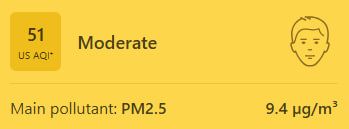
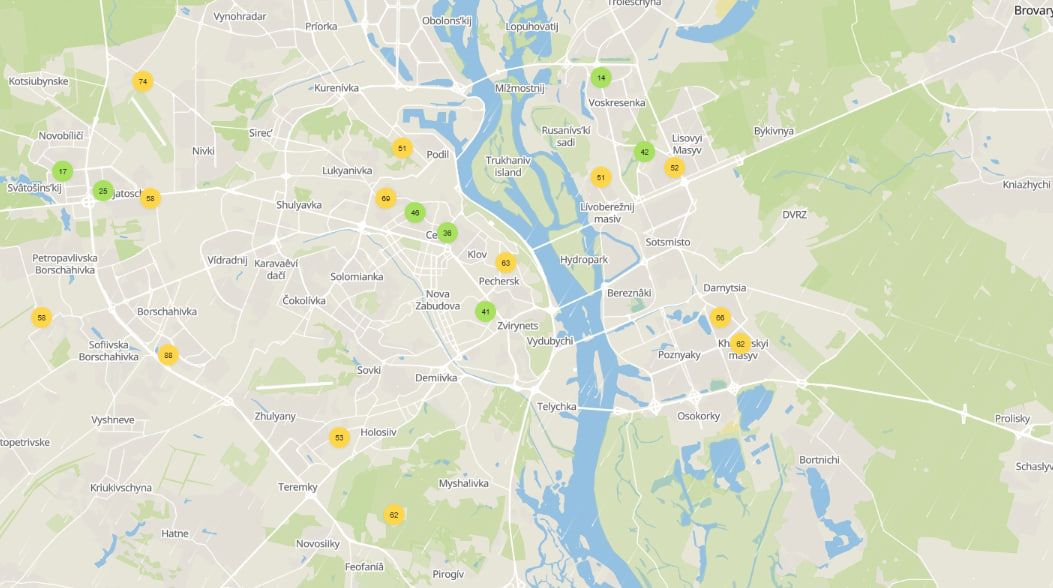
In Kyiv, air pollution levels are rated as moderate. The main pollutant is PM2.5 fine particulate matter. Its average concentration is 9.4 µg/m3. Meanwhile, the upper limit of the standard, according to the World Health Organisation, is 5.5 µg/m3.
In some parts of the capital, pollution levels are significantly higher, although they still fall within the ‘yellow’ range. For example, on Horlivska Street, dust concentrations are recorded at 17.2 µg/m3, on Trostyanetska Street at 13.9 µg/m3, and on Sichovykh Striltsiv Street at 18.8 µg/m3.
In the vast majority of regional centres, air quality is also ‘moderate’. The average concentration of particulate matter there is as follows:
- Rivne — 18.9 µg/m3;
- Ivano-Frankivsk — 18 µg/m3;
- Cherkasy — 15.2 µg/m3;
- Odessa — 14.7 µg/m3;
- Ternopil — 14.3 µg/m3;
- Zhytomyr — 12.8 µg/m3;
- Chernivtsi — 12.7 µg/m3;
- Vinnytsia — 12.5 µg/m3;
- Poltava — 12.3 µg/m3;
- Lviv — 11.2 µg/m3;
- Mykolaiv — 11.1 µg/m3;
- Chernihiv — 11 µg/m3;
- Lutsk — 9.8 µg/m3;
- Dnipro — 9.7 µg/m3;
- Khmelnytskyi — 9.1 µg/m3.
The monitoring system shows good air quality for only a few towns:
- Kharkiv — 6.1 µg/m3;
- Kherson — 5.5 µg/m3;
- Zaporizhzhia — 5 µg/m3;
- Uzhhorod — 2.6 µg/m3.
As a reminder, air quality may deteriorate in areas hit by Russian shelling. Ukrainian scientists have found that in some places, levels exceed the limit by up to ten times.