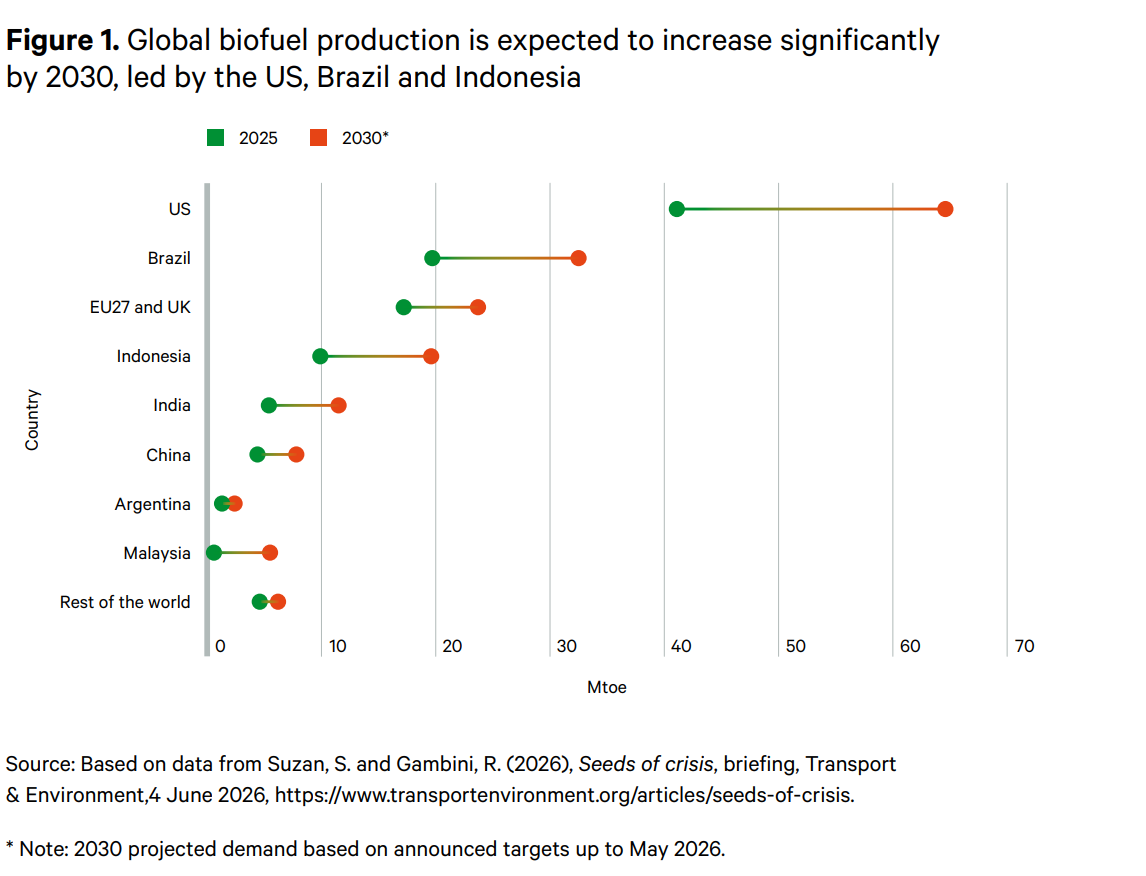
The global energy crisis triggered by the war in the Middle East could lead to a sharp rise in biofuel production. The expected increase in volumes by 2030, compared with 2025, is estimated at 70 per cent. This is also linked to stricter requirements regarding the blending of fossil fuels with ‘green’ fuels.
This was reported by Reuters, citing a study by the Chatham House think tank.
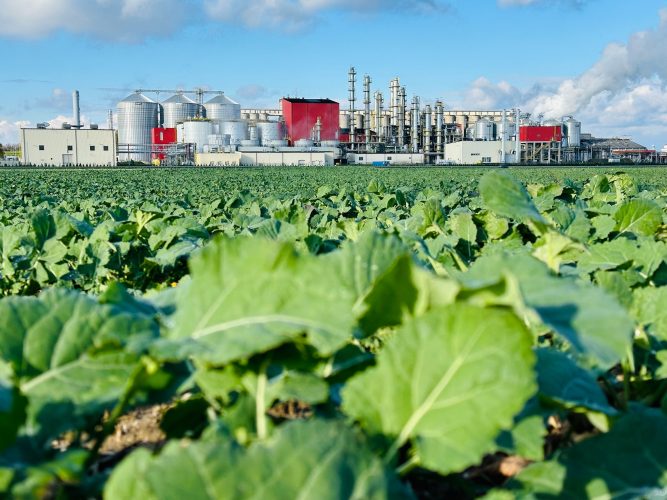
Food crops and animal feed are usually used as feedstock for biofuel production, although it is possible to utilise a much wider range of organic raw materials. When blended with diesel or petrol, these fuels become more competitive on the market due to the general rise in prices.
Source: Reuters
For the environment or against it
The impact of biofuel production on the environment and food security is the subject of heated debate. Analysts point out that a surge in production may not be in the interests of the latter.
"By prioritising energy security in the short term, certain policy measures may lead to a deterioration in food security in the medium term, with any additional shock – such as extreme weather conditions – potentially having a serious impact on food prices," the study states.
A number of countries, including some EU member states, China, India, Brazil and the US, have proposed or have already adopted stricter requirements regarding the blending of biofuels since the start of the war in Iran.
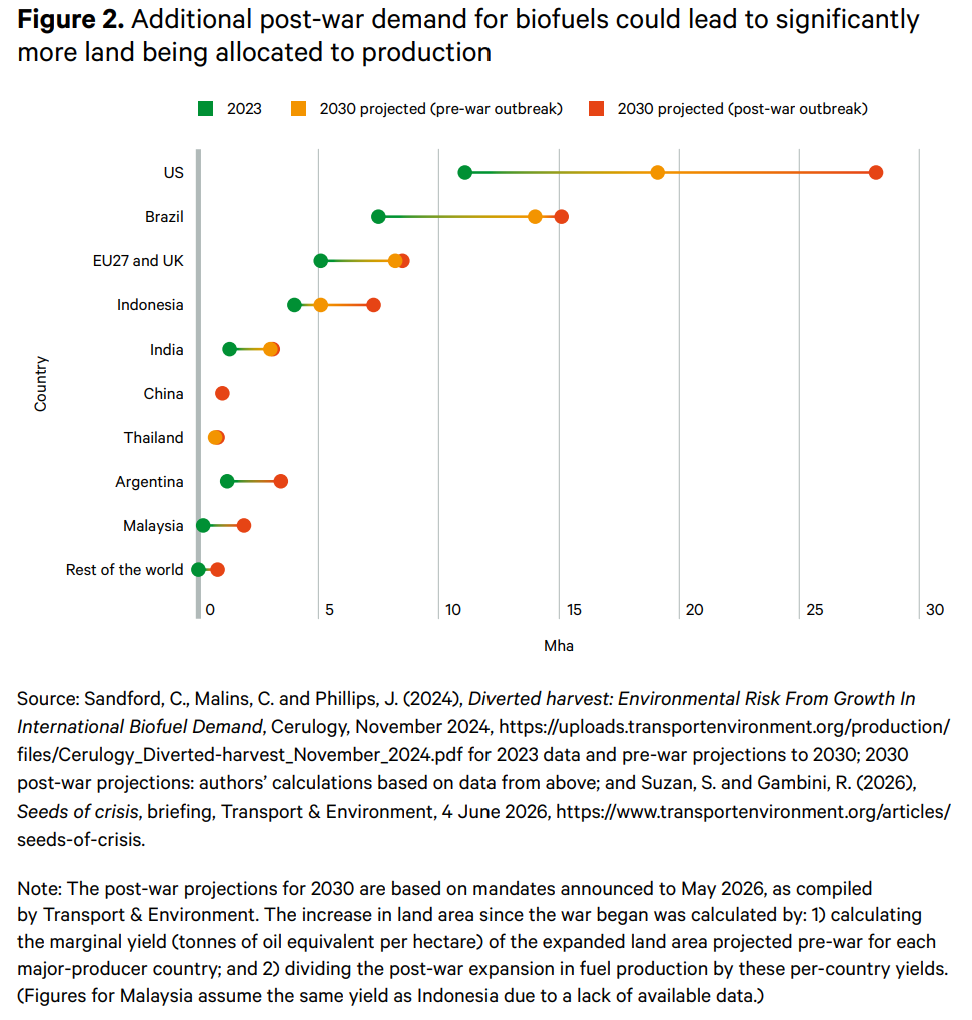
Higher demand will require more land for growing biofuel feedstocks. According to preliminary estimates, by 2030, the area required will have doubled compared with 2023. This amounts to an estimated additional 36 million hectares – roughly the size of Germany.
"Demand for raw materials may be growing faster than environmental protection measures, certification schemes, land-use planning and compliance mechanisms can be put in place," the authors note.
Source: Reuters
The situation could be improved by using raw materials grown on degraded land or during the off-season. However, this is not suitable for first-generation biofuels – these require maize, sugar cane or other food and fodder crops. Nevertheless, whilst oil prices have risen by 40 per cent since the start of the war, those for maize and sugar have risen by 20 per cent.
Improved second-generation biofuels can now be produced from organic residues and waste, including even used cooking oil.
As a reminder, from 1 July, petrol in Ukraine must contain 10 per cent bioethanol. The authorities are proposing to increase its production to 1 million tonnes per year. However, this will require the necessary regulatory changes to be made.