Ukraine has adopted a key document designed to ensure the transition to a circular economy — one based on the reuse and recycling of resources. This applies not only to household waste, but also to agricultural residues, industrial and construction waste. The Circular Economy Development Strategy has been adopted for the period up to 2035; therefore, in addition to the transition to sustainable resource consumption, it represents a crucial milestone in European integration.
This was revealed in Decree No. 934-r of the Cabinet of Ministers of Ukraine dated 17 September 2026.
Implementation and reporting
The Government has approved the Strategy itself and adopted an operational plan of measures for its implementation for the period from 2026 to 2028.
Ministries and other central executive bodies have been instructed to ensure that the plan’s objectives are met, using budgetary resources and extra-budgetary resources not prohibited by law. These bodies must submit information on the progress of the plan’s implementation to the Ministry of Economy by 1 March each year.
For its part, the Ministry of Economy is required, from 2027 onwards, to submit a report to the government by 15 April on the progress made in implementing the Strategy and the Plan, and to make this information publicly available by 15 May.
The draft action plan for the next period — from 2029 to 2031 — must be submitted to the government by 1 December 2028.
The Essence of the Strategy
In Ukraine, there were only scattered legislative and regulatory instruments in place, which had a limited impact on the development of the circular economy. The strategy, however, is intended to introduce a holistic approach, covering all processes and stages of waste generation, recycling and reuse. In addition to environmental objectives, there is also an economic aim here — the creation of added value.
"This Strategy sets out the approaches to addressing the identified challenges in the context of Ukraine’s European integration, access to EU financial instruments and programmes, the introduction of new technologies and the achievement of climate neutrality by 2050," the document states.
The strategy sets out policies for priority sectors that are important for Ukraine’s resource and economic sustainability, its recovery and its integration into the European Union market. Of course, this refers to a specific kind of ‘importance’ linked to the possibility of reintroducing into the market materials and waste generated as a result of manufacturing and other processes.
The main opportunities for key sectors are as follows:
- food production and distribution. To prevent food waste, the Strategy proposes donating food to charities free of charge. The target for redirecting food to food banks is 20 per cent, whilst awareness campaigns on preventing food waste are to reach at least 5 million citizens;
- agriculture. Here, the ‘circular’ plans are as follows: to use livestock manure to produce biogas and biomethane, to standardise the use of digestate as an organic fertiliser, and to develop infrastructure for nutrient recovery;
- construction. In this sector, the focus is on selective demolition with the sorting of demolition waste, the preparation of materials for reuse and recycling, and the development of the market for secondary construction materials;
- textile manufacturing. The range of possibilities here is quite broad – the introduction of extended producer responsibility and eco-design requirements, the promotion of product reuse and repair, and the development of infrastructure for the collection and recycling of clothing;
- electrical and electronic equipment throughout its life cycle. The transition to a circular economy encompasses requirements for the production of more durable equipment that is suitable for repair and recycling, the availability of spare parts, and the development of repair services and systems for the return and collection of waste;
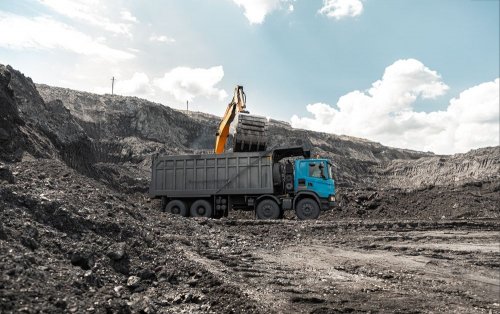
- the extractive industry and quarrying. The strategy provides for the entry into force of a regulatory framework for the recovery of critical raw materials from mining waste. It also provides for the creation of technical and regulatory conditions for the safe use of mining waste as secondary materials;
- metallurgical production. For this sector, plans include expanding the use of by-products, establishing regulatory frameworks for the use of slag in the construction and road sectors, and developing industrial symbiosis.
In relation to these sectors, value chains and the implementation of circular economy principles are examined separately for the following segments:
- plastics and packaging. First and foremost, this involves the introduction of extended producer responsibility (EPR). The Strategy also covers waste prevention, the promotion of reuse and recycling, restrictions on the use of single-use products, the improvement of labelling requirements, and the expansion of the range of applications for recycled materials;
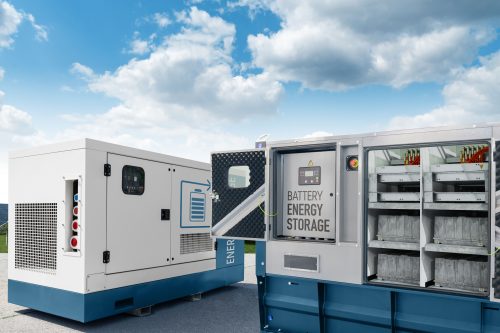
- batteries and accumulators. This also covers waste batteries and accumulators. In addition, provision is made for the development of collection and recycling systems for this category of waste, the recovery of materials from the relevant waste streams, and restrictions on the use of non-rechargeable batteries where suitable alternatives are available.
Strategic objectives of the Ukrainian circular economy:
- Establishing a comprehensive regulatory and institutional framework for the implementation of the circular economy;
- Creating the conditions for sustainable circular business models;
- The roll-out of innovations, infrastructure and digital tools for circular transformation;
- Empowering citizens and local communities for an inclusive circular transition;
- Developing human capital and institutional capacity to implement the circular economy.
As a reminder, a working draft of the bill on the introduction of extended producer responsibility was presented back in February 2026. You can read a review of it here.
Plans to draw up the legislative framework for the establishment of food banks were announced in March 2026. At that time, the Ministry of Economy signed a memorandum with the Ukrainian Federation of Food Banks.
EcoPolitic covered the Circular Economy Strategy and other key environmental documents drawn up by the Ministry of Economy in a separate article.