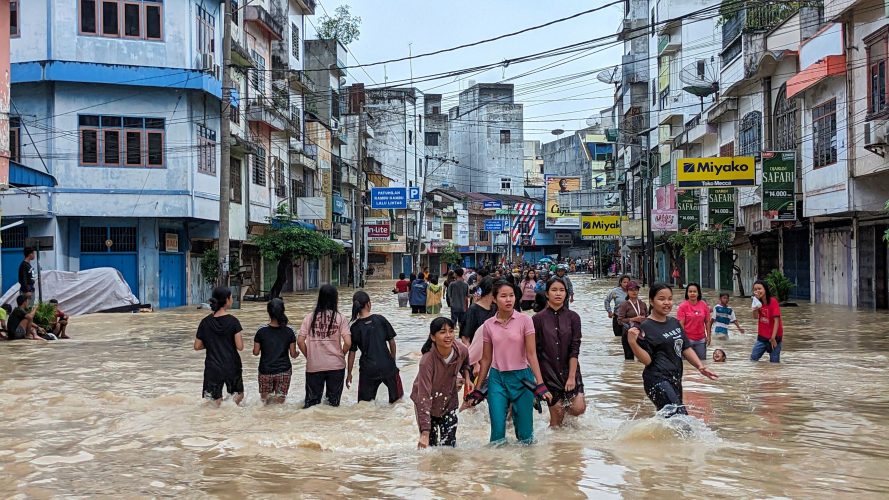
Between 1901 and 2018, global sea levels rose by 20 cm. This is no longer a distant threat, but a factor that directly affects countries’ economies and the lives of millions of people. At the same time, sea levels are now rising faster than they have in the last three thousand years, and human activity is the dominant cause of the crisis.
This was reported in CarbonBrief.
Growth rates and forecasts
In recent years, the rate at which sea levels are rising has increased significantly. More than half of the total rise over the last 117 years has occurred in just 33 years – 10.6 cm since 1993.
Scientists attribute this to the melting of glaciers. However, there is another factor – the thermal expansion of water due to global warming, as well as a reduction in water reserves on land.
Sea levels may also fluctuate locally due to volcanic and seismic activity.
Even under a fairly optimistic scenario in which greenhouse gas emissions are kept at a moderate level, scientists predict that sea levels will rise by a further 56 cm by 2100.
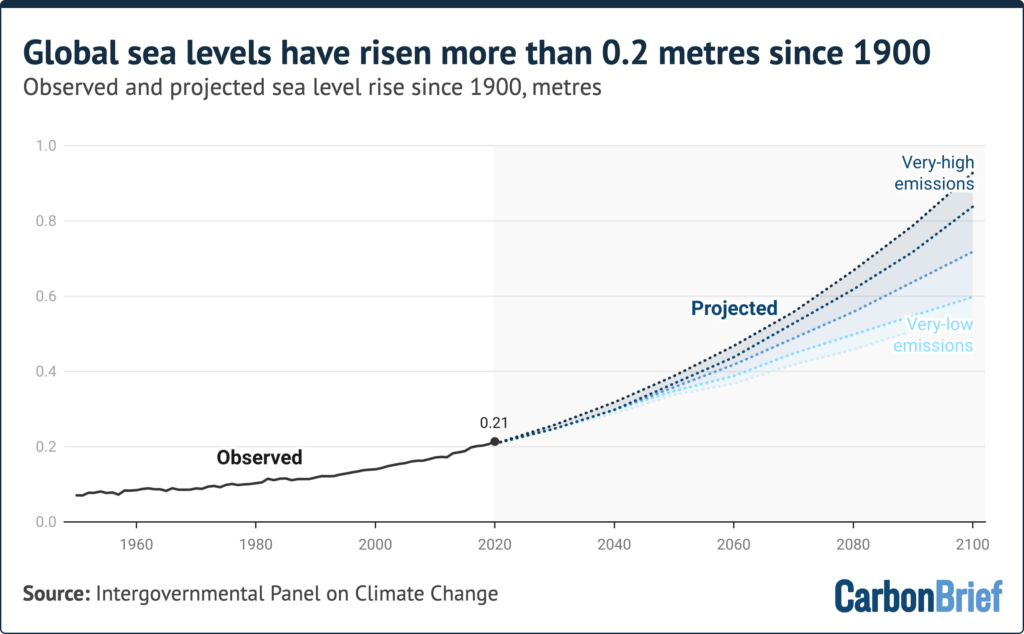
Source: CarbonBrief
The scale of the water threat
Ten per cent of the world’s population – around 770 million people – are at acute risk from rising sea levels. This is according to a UN report published last month. This level of risk applies to areas lying less than five metres above the high-tide line.
This group includes a number of major cities. Among them are Mumbai in India and Shenzhen in China.
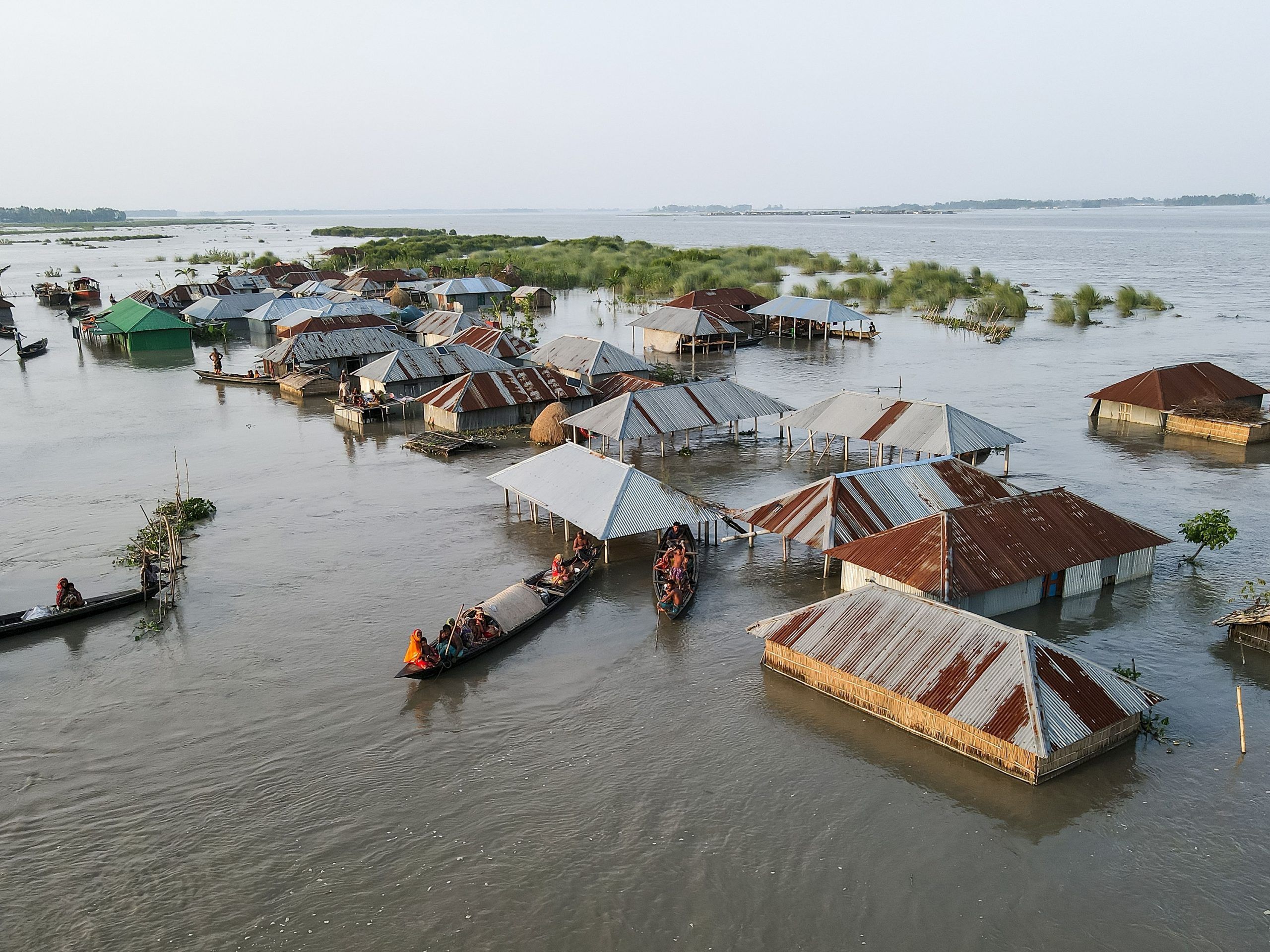
Changes in sea level pose a threat primarily in the form of extreme water-related events – storms, coastal erosion, floods and inundation. Since 1900, the frequency of such large-scale events has increased twelvefold.
This can cause damage to buildings and structures, as well as to critical infrastructure. At the same time, flooding causes salt water to seep deep into the land, damaging agriculture and, consequently, food security.
A number of cities are already undergoing drastic changes. For example, Jakarta in Indonesia is sinking by 15 cm every year. The main reason is the accelerated extraction of groundwater, which is causing the collapse of aquifers.
At the same time, the population is growing faster in coastal areas than in inland regions. Whilst the global population increased by 23 per cent on average between 2000 and 2018, it grew by 28 per cent within a five-kilometre coastal zone. This is leading to accelerated development in these areas, meaning that the damage caused by flooding will be more severe. In the world’s 136 largest coastal cities, losses could reach $52 billion a year by 2050 – compared with $6 billion in 2005.
Source: Shutterstock
Other risks associated with rising sea levels include:
The ‘squeezing’ of ecosystems. Due to dense development and economic exploitation, ecosystems are unable to ‘migrate’ further inland when water levels rise. This has already led to the loss of nearly 28 million hectares of wetland area since 1970. Island ecosystems are particularly at risk, as they are the sole habitat for over 20 per cent of the Earth’s plant species. There is already a documented example: in 2024, the Key Largo cactus, which grew in the USA, disappeared for good due to rising water levels.
A blow to small island states. On average, atolls and lagoons rise only 1–2 metres above sea level. For example, in 1999, the ocean had already swallowed up two small islands in Kiribati. Island nations usually have low levels of economic development, so they cannot cope with these threats on their own. By 2035, they will need up to $6 billion a year to combat climate change.
Threats to coral reefs. On the one hand, higher water levels will slightly lower the temperature, from which these ecosystems are already suffering. However, rising sea levels will reduce the amount of ultraviolet radiation and increase the amount of sediment. The latter may impair the corals’ ability to reproduce and feed.
Cultural heritage. Civilisations have typically developed near bodies of water, and these waters may engulf their monuments. In the Mediterranean region alone, 49 UNESCO World Heritage sites are at risk. These include the ruins of Carthage and Pompeii, as well as St James’s Cathedral in Croatia. If temperatures rise by 3°C compared with pre-industrial levels, the Sydney Opera House, the Chilean island of Rapa Nui and the Hiroshima Peace Memorial could be submerged.
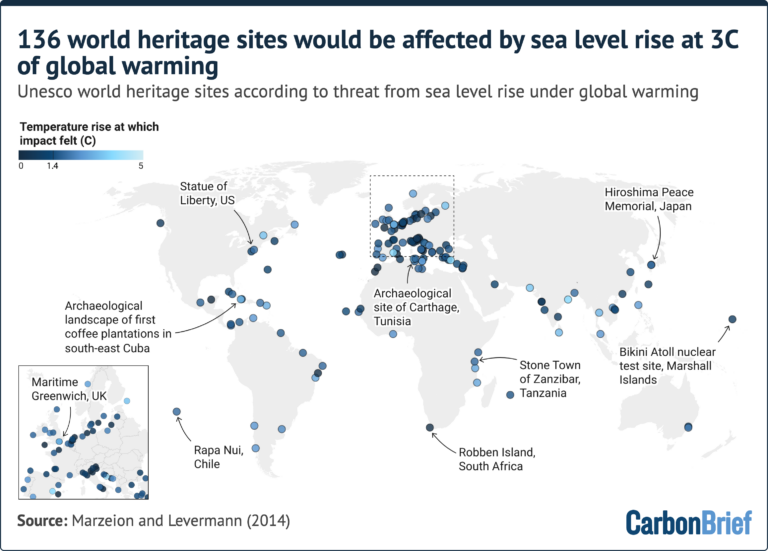
Source: CarbonBrief
Whilst the world’s oceans are gaining strength, water is receding from the land. According to forecasts, by 2100 more than 40 per cent of the world’s land area will become arid.
At the same time, global warming is continuing. August 2026 was the driest on record.