There are plans to amend the regulations on the handling of batteries and accumulators in line with EU requirements. The aim is to introduce passports, QR codes, a new classification system and clearer rules on collection, reuse and recycling.
This was reported by the parliamentary committee on environmental policy and natural resource management.
Legislative tasks
The committee proposes that the forthcoming legislation on batteries be considered as part of a unified waste management system. This will require the following legislative measures:
- amendments to the Law ‘On Waste Management’ – it is proposed that general requirements and a framework for extended producer responsibility (EPR) be incorporated into this legislation;
- the drafting of sector-specific legislation, where specific rules and the particular characteristics of individual product types need to be set out in detail;
- Revision of the Act ‘On Chemical Power Sources’ in line with European requirements.
According to Deputy Minister of Economy Oleksandr Krasnolutskyi, Ukraine is required to fulfil a number of waste management targets by the end of 2027. The draft bill on batteries must therefore be drawn up and submitted to parliament in good time. At the same time, he noted that this would be done following consultations with the business community and the public. It should be recalled that no such discussions took place regarding any of the three draft laws on the emissions trading scheme that were registered on the Verkhovna Rada’s website.
The basis and essence of the future regulations
The Batteries Act forms part of the implementation of the European integration benchmark under Chapter 27, ‘Environment and Climate Change’. The document has been drawn up on the basis of the current Regulation (EU) 2023/1542, which replaced Directive 2006/66/EC.
Although work on the text is still ongoing, the document’s key innovations are already known:
- New battery classification. Five categories will be introduced.
- Battery data sheets. These are intended for LMT batteries, industrial batteries with a capacity of over 2 kWh, and batteries for electric vehicles.
- Mandatory QRcodes. These must provide access to information about the product – product data sheets, labelling, declarations of conformity, due diligence reports and information on the management of battery waste.
- A two-tier waste management model. Its general rules will be set out in the ‘Waste Management Act’, whilst the specific rules will be laid down in a new Act. Producers will be able to fulfil their obligations under the waste management system either independently or through authorised organisations.
There are also plans to implement the provisions of the European Regulation concerning the collection, acceptance, treatment and recycling of batteries. In particular, this involves the possibility of establishing voluntary collection points and deposit schemes. Rules on the reuse and recovery of materials will also be transposed from EU legislation.
Specific issues include the technical regulation and administration of the future system, as well as the development of the relevant digital infrastructure. These still need to be examined.
It is expected that interested parties will receive a working draft of the bill in October–November this year. In the meantime, business representatives and other stakeholders can already familiarise themselves with Regulation (EU) 2023/1542 and prepare their proposals, particularly regarding transition periods and practical implementation.
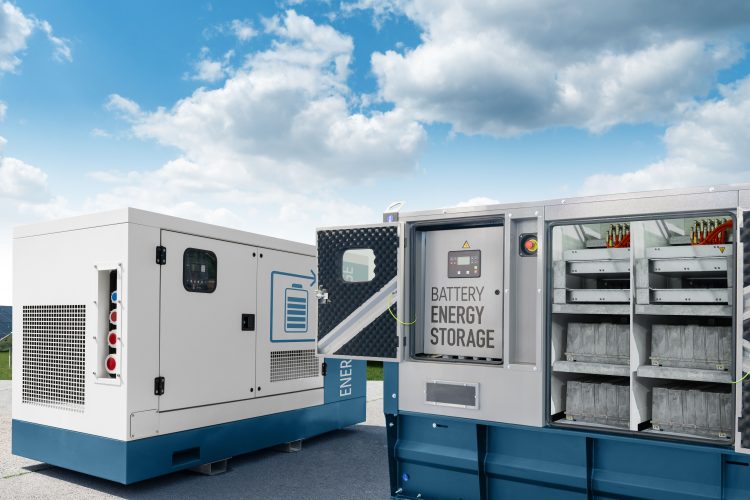
It is worth noting that, in terms of the volume of energy storage systems installed, Ukraine has joined the top five in Europe. Around half of these are domestic batteries with a capacity of 3 to 5 kWh. Storage volumes in the residential sector are also significantly influenced by portable charging stations with a capacity of 0.6 to 2.5 kWh. Ukrainians are buying them to provide an independent power supply during power cuts.
You can find out where Ukrainians can hand in used batteries here.