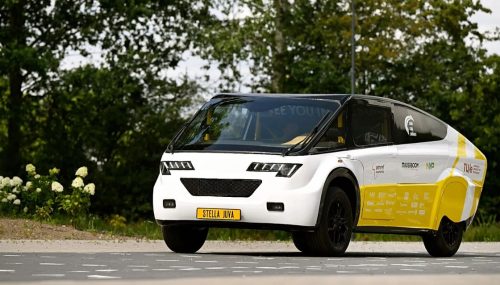
In August, the share of electric cars increased across all segments of the Ukrainian car market – domestic resales, and imports of new and used cars. At the same time, Ukrainians began buying fewer petrol and diesel cars.
This was reported by the Automotive Market Research Institute.
Overall, the passenger car market has seen a slight decline. Over 97,200 cars were registered in August. However, this is 4.4 per cent fewer than in July and 8.4 per cent fewer than in the same period last year.
Changes in the sectors
Petrol cars continued to lead the way, accounting for 44.2 per cent. They were followed by diesel cars (24.7 per cent), gas-powered cars (15.6 per cent), battery-powered cars (9.3 per cent) and hybrids (5.8 per cent).
However, the trend is gradually changing. This is most noticeable in the new passenger car segment. Whilst electric cars gained 2.9 per cent in this segment, petrol cars lost 1.9 per cent and diesel cars 2.5 per cent.
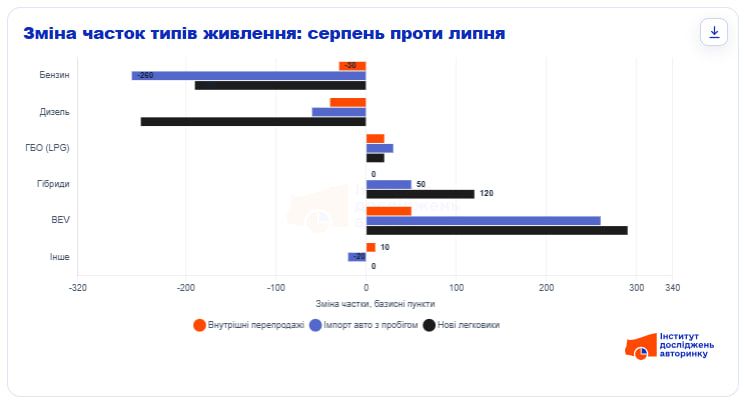
Source: Automotive Market Research Institute
Statistics covering 14 months show a sharp drop in the share of electric cars between December 2025 and January 2026. It was then that VAT became compulsory again when clearing electric cars through customs. However, this segment is gradually growing once more. As of August, it accounted for 7 per cent of domestic resales, which is even higher than the 4.7 per cent recorded in August last year.
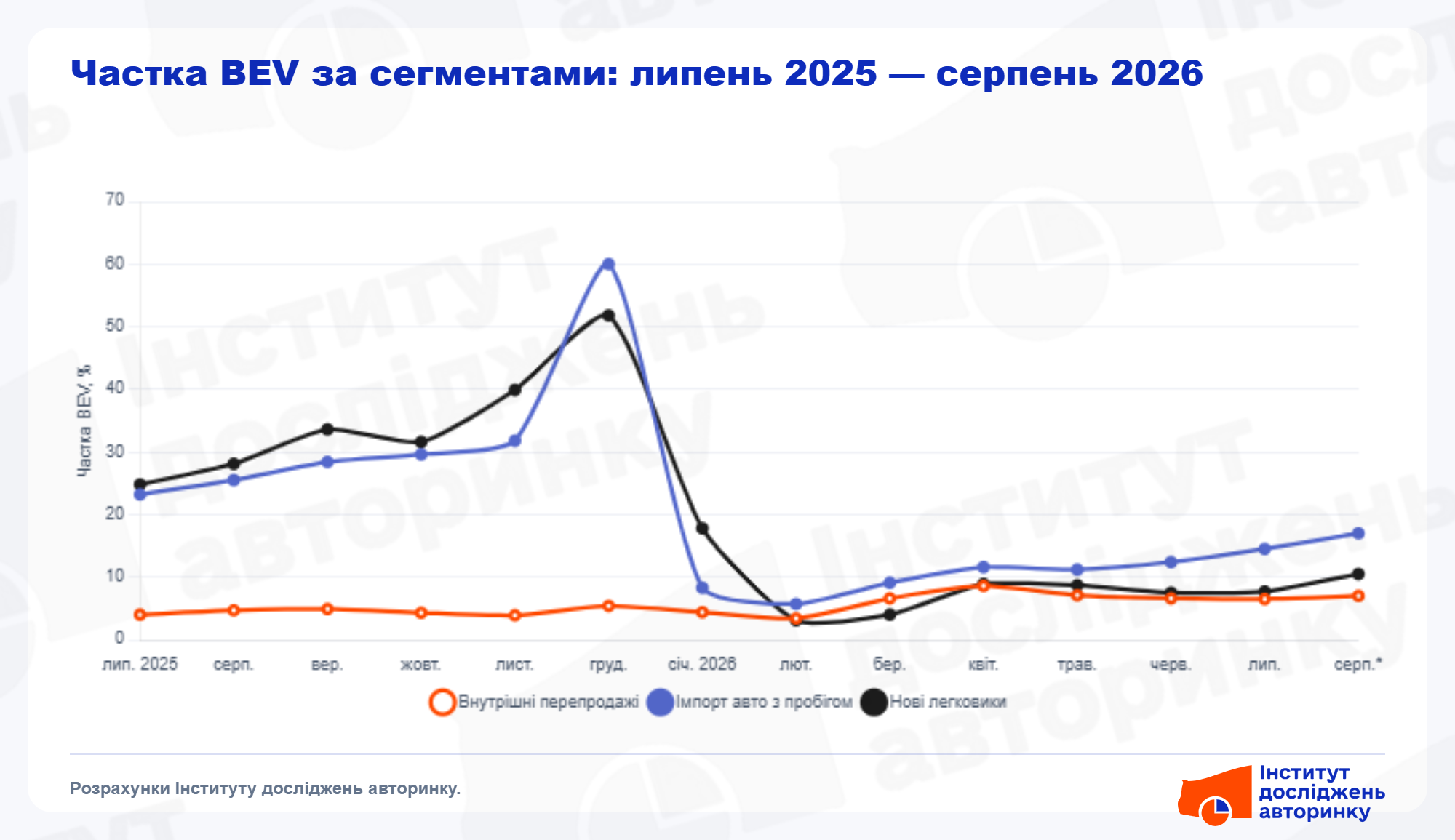
Source: Automotive Market Research Institute
Fuel mix
Over 71,100 passenger cars were sold on the domestic market in August. This is 4.3 per cent less than in July and 6.4 per cent less than a year ago. Over 90 per cent of new registrations were for petrol, diesel or LPG-powered cars. However, it was the share of electric cars that showed the highest year-on-year growth – 2.2 per cent.
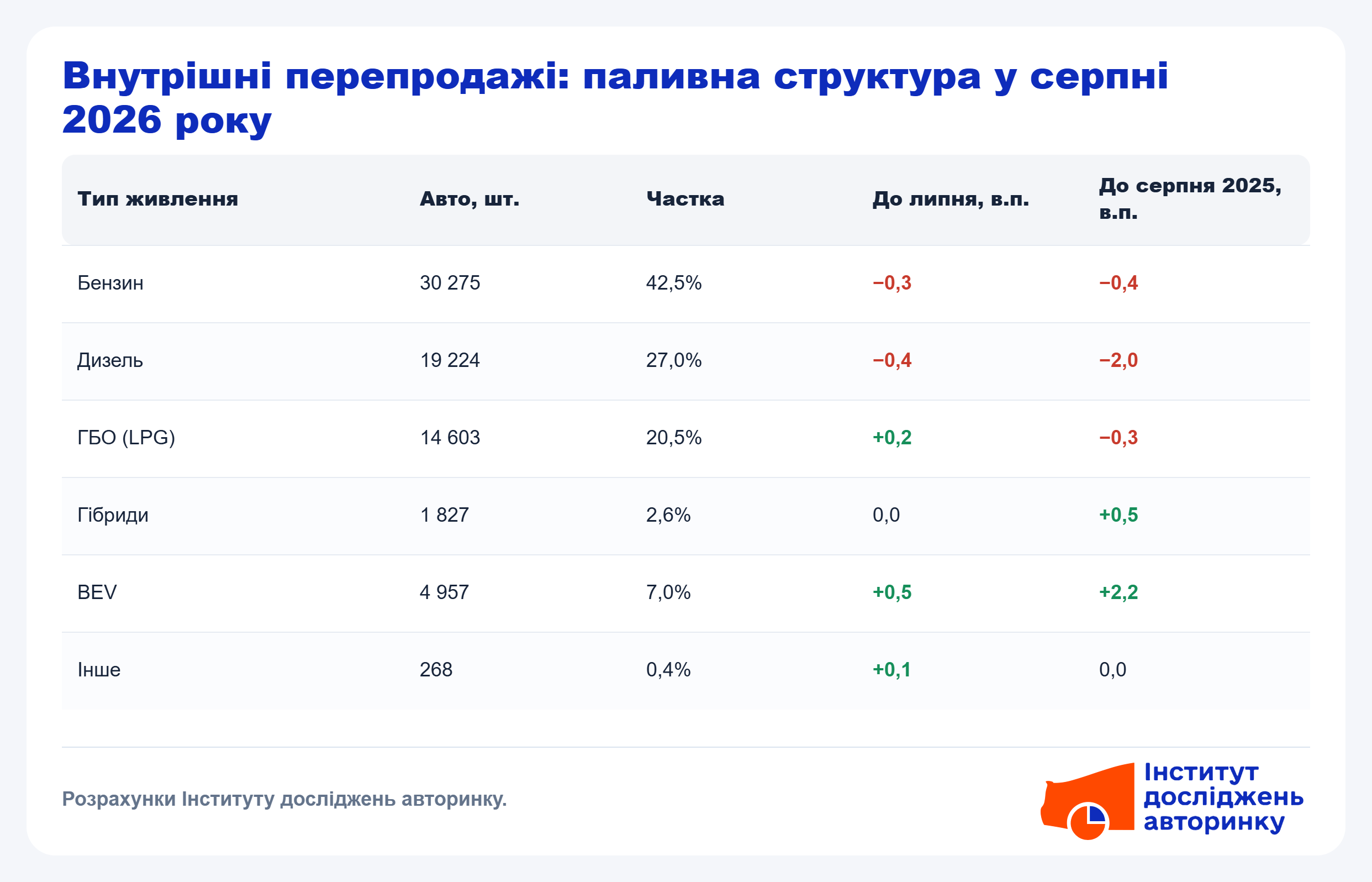
Source: Automotive Market Research Institute
In the used car import segment, the monthly decline in the share of petrol cars is the same as the monthly increase in the share of electric cars – 2.6 per cent. In total, nearly 21,300 such cars were registered. This is 3.7 per cent fewer than in July and 8.2 per cent fewer than in the same period of 2025.
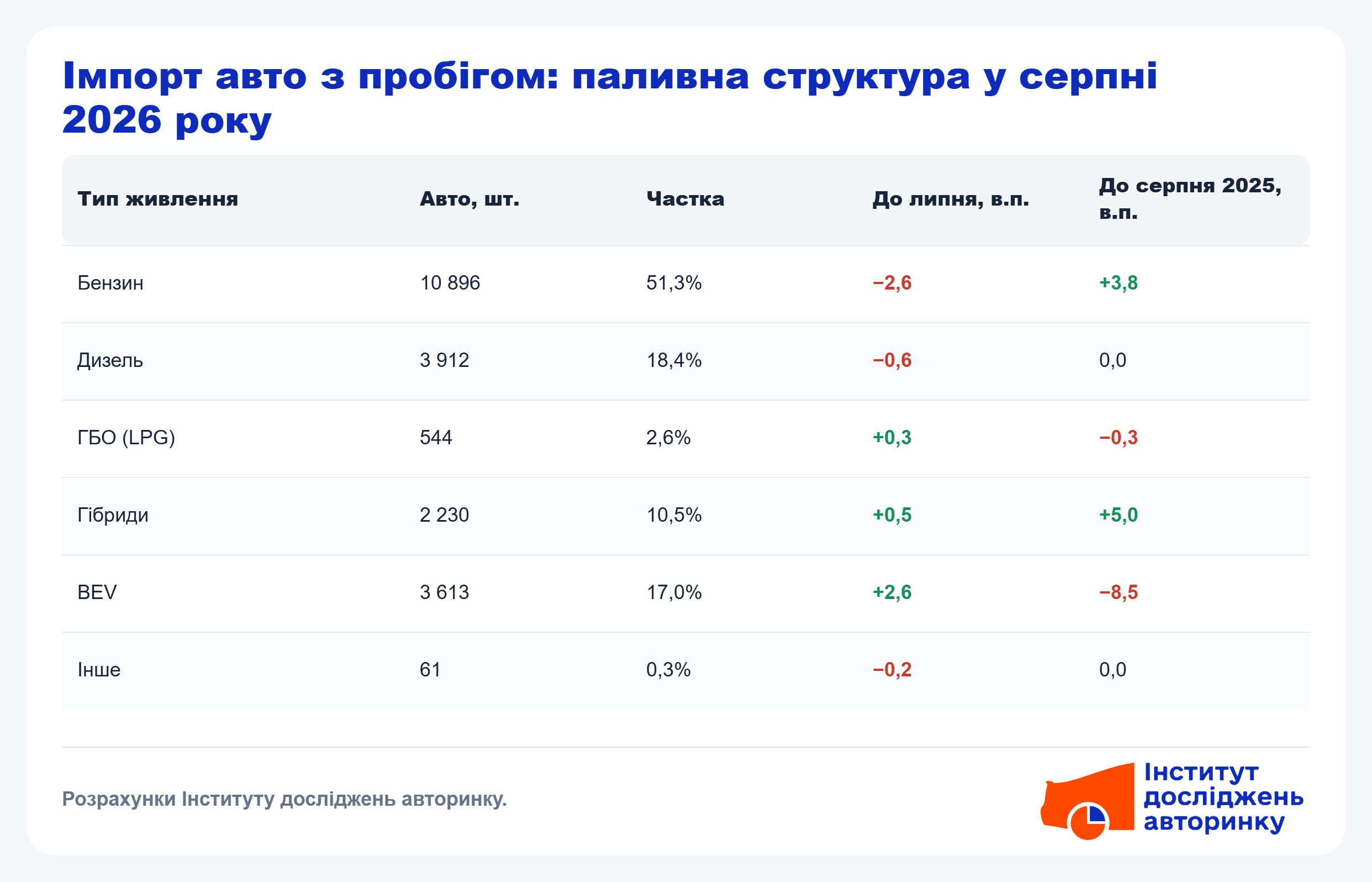
Source: Automotive Market Research Institute
Over the course of the month, the share of electric cars in new car imports rose by 2.9 per cent. However, this is still 17.5 per cent lower than a year ago. The most popular electric cars in August were the Nissan Leaf, the Tesla Model 3 and Y, the Volkswagen Golf and the Renault Zoe.
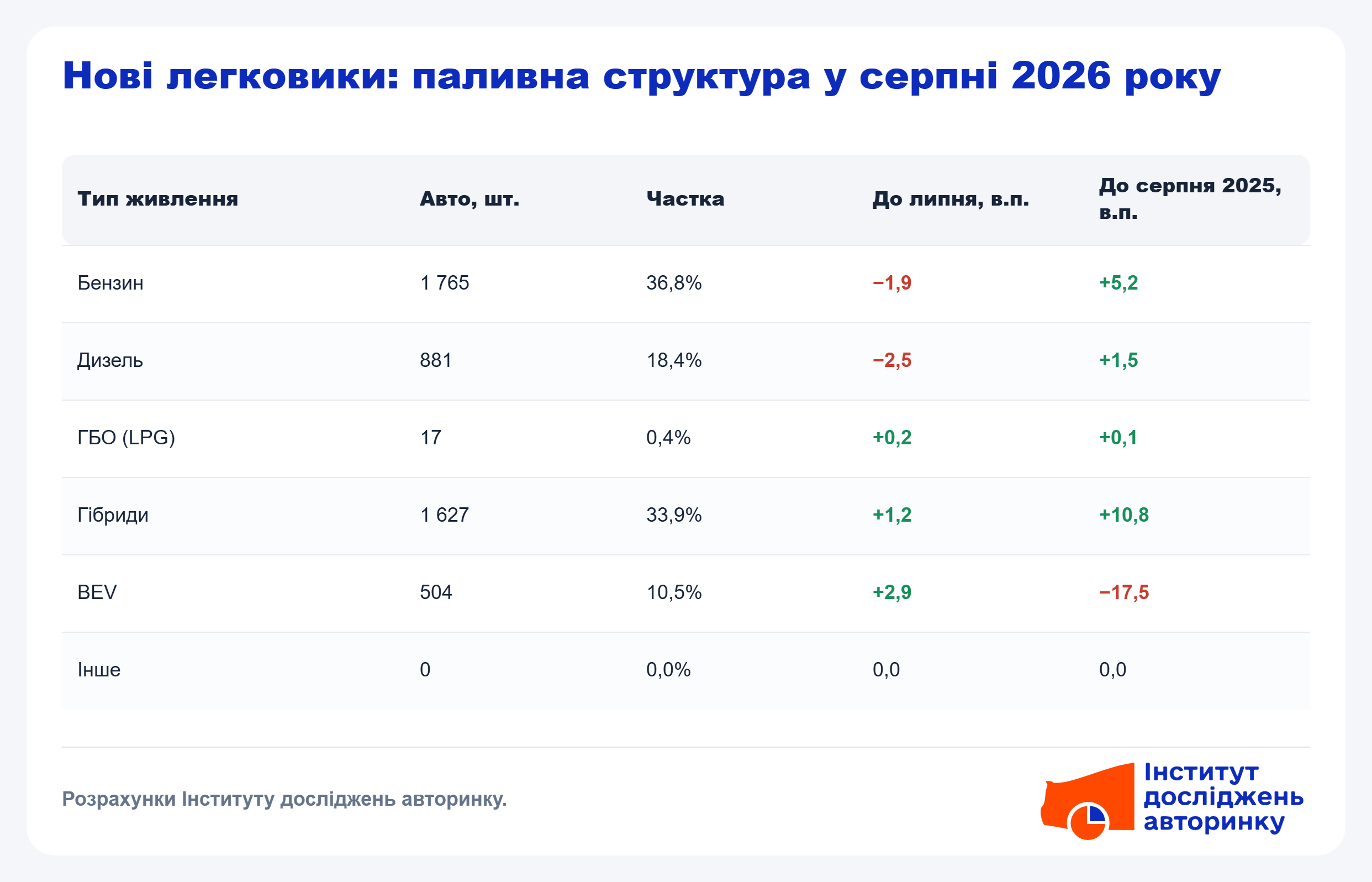
Source: Automotive Market Research Institute
Whilst the electric vehicle market in Ukraine is experiencing a slight downturn, it is breaking new records worldwide. EcoPolitics previously reported that, against the backdrop of the fuel crisis, 50 countries had recorded an all-time high in sales.