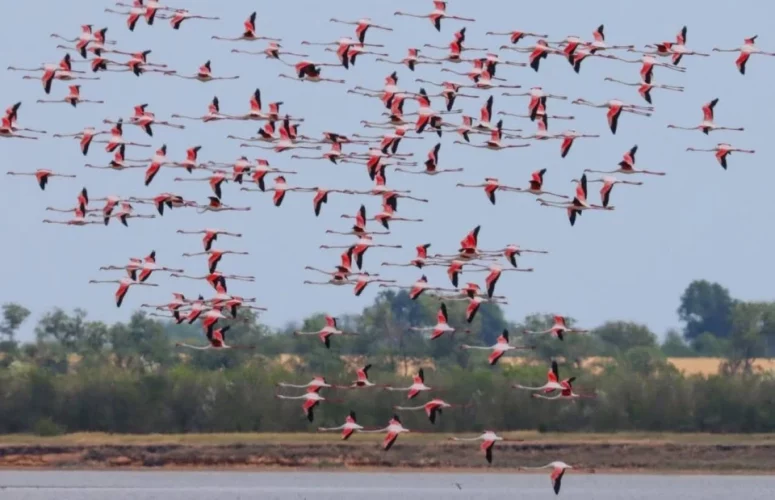
Rare pink flamingos have become permanent residents of the ‘Tuzly Estuaries’ National Nature Park, situated on the Black Sea coast of the Odesa region. However, the population is barely growing – the noise of war disrupts the breeding season year after year.
This was reported by Ivan Rusev, head of the research department at the Tuzly Estuaries National Park, to Espreso Media.
One brood in five years
Pink flamingos settled in the ‘Tuzly Estuaries’ area back in 2021. A full-scale war broke out shortly afterwards, and since then, it was only in 2023 that the breeding season coincided with a period of relative calm, allowing 200 chicks to be raised.
"In the 24th, 25th and 26th years, they were unable to nest. This was despite the fact that they had formed several colonies in different parts of our park – in other words, they had already built nests and laid eggs there. But the war prevented them from nesting," said Ivan Rusev.
Nesting requires peace and quiet, but there is none
A glimmer of hope for a new brood emerged this year. The birds managed to find a sheltered spot where they were due to raise their chicks. However, this was once again thwarted by enemy attacks. The noise caused by the enemy attacks, as well as the fly-bys of military drones, frightened the birds, causing them to abandon their nests. This was enough time for the yellow-legged gulls to plunder them.
"It was simply that the loud noises prevented them from choosing a more suitable site. That is why, in all this time, the flamingos have had only one chance to nest. Nesting depends solely on the silence that can follow peace, following victory," the scientist concluded.
Previously, EcoPolitic reported that acoustic trauma caused by explosions is one of the deadliest factors of war for Ukraine’s birdlife.
It is precisely because of the negative impact of noise that making a racket in the countryside is prohibited in Ukraine during the quiet season. However, the controversial hunting bill No. 15431 may introduce exceptions for the hunting of male roe deer, which will undoubtedly disturb all other inhabitants of the ecosystems. Read more about the criticism of these questionable provisions in a separate article.