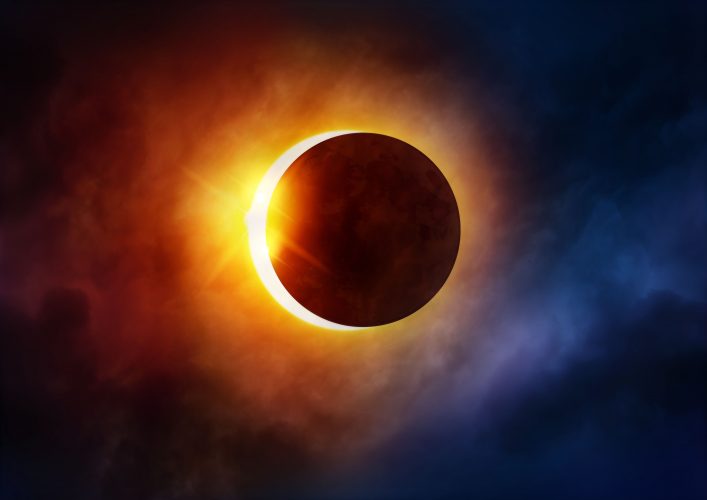
Next Wednesday, 12 August, a number of countries in the northern hemisphere will be able to observe a total solar eclipse. In even more countries, the sun will be partially obscured. Experts stress that this could affect solar power generation in the European Union, so power grid operators are preparing for the consequences.
According to Reuters, the European Commission forecasts that the impact on consumption will be negligible.
“Given that this is set to take place closer to the afternoon, its impact is not expected to be significant,” said European Commission spokesperson Anna-Kaisa Itkonen.
A minor but noticeable drop
High-voltage grid operator RTE has stated that the drop in generation will be rapid but temporary. This is reported by Le Figaro.
“Within a matter of tens of minutes, the decrease and subsequent return of sunlight will result in rapid fluctuations in photovoltaic energy production,” RTE emphasized in a press release.
At the peak of the eclipse, solar generation may decrease by almost 9.7 GW. This accounts for about 3.7% of the total solar power plant capacity in Europe. In France, consumers will miss out on 1.8 GW of energy; in Germany, 3.3 GW; and in Spain, 3 GW.
Where to observe the phenomenon
According to NASA, the total solar eclipse will be recorded in Iceland, Greenland, the Atlantic Ocean, Spain, and a small part of Portugal.
Meanwhile, the sun will partially disappear for many other locations in the Northern Hemisphere-in most of Europe and Canada, in the northwest of Africa, and in part of the northern United States. In Europe and Africa, the eclipse will occur almost at sunset.
The solar eclipse will be broadcast at the following link: https://www.nasa.gov/live.
EcoPolitic reported that during June, solar generation became the leading source of energy for the European Union, surpassing all other types of generation-both renewable and fossil-based.
Renewable energy last year accounted for 11% of Ukraine’s generation. Solar led the way, with a 78% share among all “green” sources.