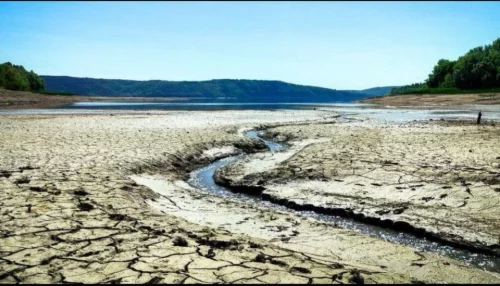
Record-breaking heat is posing a direct threat to global water security. A number of rivers are recording record-low water levels. In Europe, shipping and nuclear reactors are being shut down, whilst in the US, water use is being restricted. The low water levels have not spared Ukraine either, where record-low water levels are being observed on eight rivers.
EcoPolitic reports on the scale of the threat and how countries are trying to tackle the decline in river water levels.
Low water levels in Ukraine
Water levels in Ukrainian rivers have fallen critically, reaching record lows in some sections. Data from the Ukrainian Hydrometeorological Centre show that, as of 3 August, a sustained summer low-water period was observed on most rivers.
The Ministry of Economy has stated that the situation is worst in the Carpathian region and along the tributaries of the Middle Dnieper, Southern Bug and Pripyat. The lowest water levels on record have been recorded for the Dniester, Western and Southern Bug, Styr, Orava, Turya and Vicha rivers. Whilst the summer low-water period is still considered normal, the current low water levels are already regarded as an extreme phenomenon.
This has a highly negative impact on the ecosystem, water quality, and water usage conditions. The authorities are resorting to drastic measures – restricting special water use. For example, just in July, this approach was applied to 185 water users.
At the same time, activists urge comprehensive management of water bodies. They argue that clearing riverbeds is ineffective unless drainage of wetlands, plowing of riverbanks, and destruction of floodplains due to construction and cultivation are stopped.
Europe Is Drying Up
As recently as last Thursday, the water level in the Rhine within the Netherlands reached a historic minimum. At the same time, the flow of water the river carries from German territory has halved. Navigation has been restricted, as has the use of water for irrigation. Because of the weak flow at the river’s mouth, seawater is gradually replacing freshwater, making soils in the west critically saline.
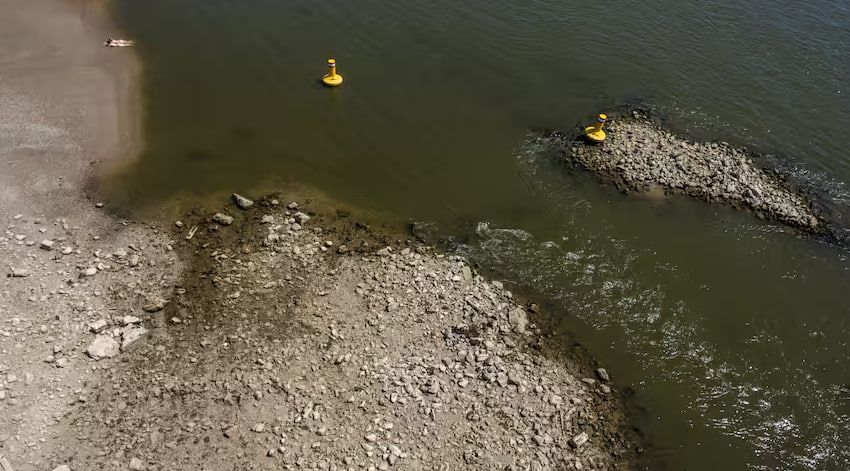
Source: nu.nl
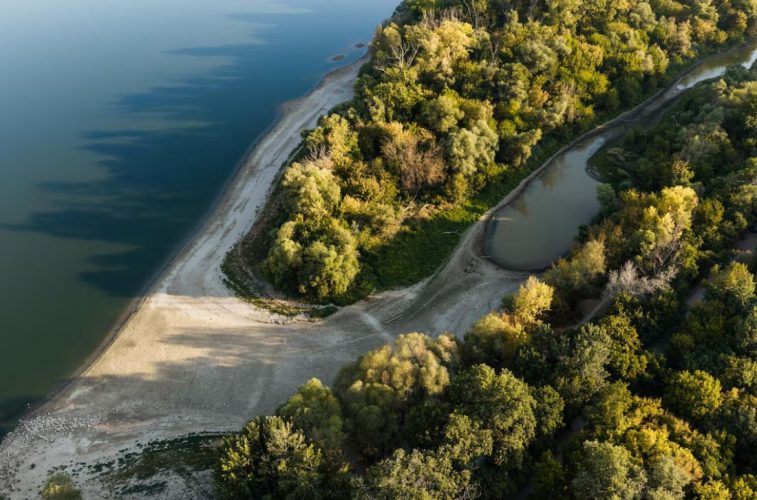
The problem has also affected the Danube – the second longest river in Europe. The water level has dropped so much that various artifacts, from mammoth bones to sunken Nazi ships, have been revealed. For instance, in a section of the riverbed within Serbia, sunken German battleships are visible, some of which are still loaded with weapons. The remains of a woolly mammoth were found in Bulgaria.
Romania is taking emergency measures to prevent the shutdown of the Cernavodă nuclear power plant. To divert the flow of water to the plant, it was decided on Wednesday, August 5, to sink four barges. The explosion area has already been cleared. However, the first unit of the nuclear power plant was preventively shut down on Monday, August 4.
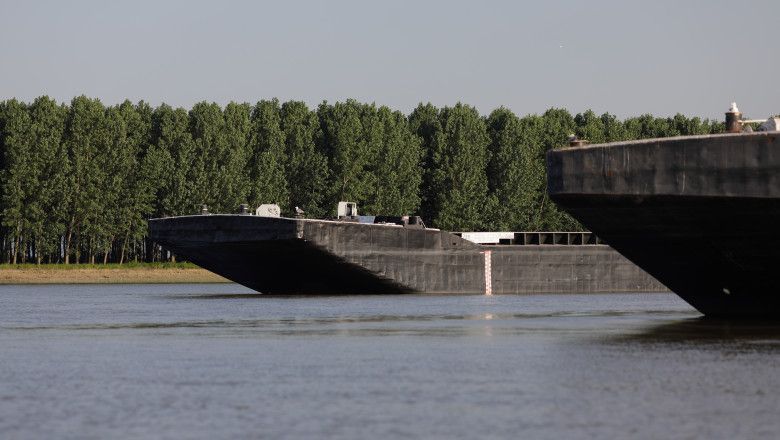
Source: digi24.ro
Austrian hydropower plants are producing 30% less energy, while nuclear reactors in Bulgaria will only be able to operate for three more weeks unless water levels rise.
Due to drought, authorities in Hungary have urged the population to reduce electricity consumption. They also had to partially shut down a nuclear power plant that used Danube waters for cooling.
Water Shortage in the United States
The Colorado River in the United States has been critically affected by drought. Authorities plan to take emergency action, requiring three states-California, Nevada, and Arizona-to cut their river water usage by 20% as early as by 2028.
However, some experts believe this will be insufficient. The river is exhausted, so water levels in reservoirs vital to seven states have dropped to record lows. Over 25 years, 95% of the Colorado Basin has already dried up.
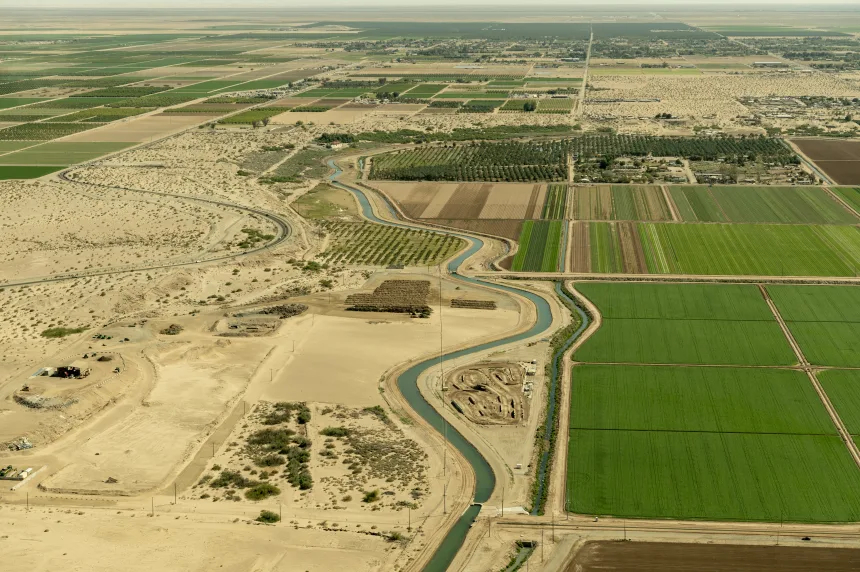
Source: cnn
EcoPolitiс previously reported on the desiccation of the largest lake in the Khmelnytskyi region-Sviate. The Great Supii in the Kyiv region is also at risk of drying up.
At the beginning of 2026, the United Nations declared that the world has entered an era of global water bankruptcy. As a result, 1.8 billion people lived under drought conditions during 2022–2023. Another 4 billion people worldwide experience acute water shortages for at least one month every year.