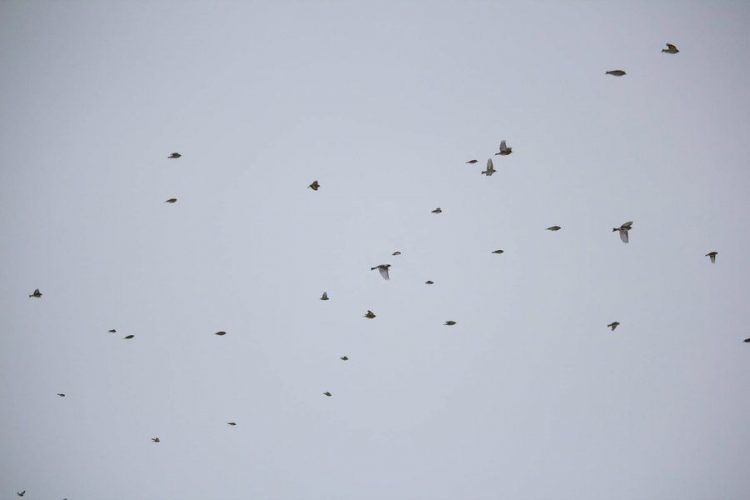
Military operations are radically altering the natural habitats of birds. Cratered fields, ashes where forests once stood, and constant explosions instead of the chorus of wildlife — all this is transforming Ukraine’s avian world. Some species are threatened with extinction, whilst others are either adapting or perishing.
Ornithologist Maksym Vysochyn spoke to the media outlet ‘Suspilne’ about the impact of war on the bird world.
Systemic threats
The scientist emphasises that assessments of the war’s impact on birds are based on hypotheses derived from the behavioural biology of these animals. After all, a precise study of this impact is only possible in ‘field conditions’ — that is, in the combat zone, where it is obviously not possible to observe birds at present.
In his view, disturbance and chemical substances are among the most destructive factors.
Disturbance
This refers to constant noise disturbances, primarily explosions and the sudden pressure surges they cause, which disrupt normal life and breeding. Due to the structure of their internal organs, birds react more acutely and rapidly to these disturbances.
“Birds have air sacs that provide so-called double breathing during a wingbeat. When an explosion causes a sharp change in pressure, these sacs can rupture. This leads to very rapid and often fatal consequences-the bird may die,” Maksym Vysochyn explained.
The operation of military equipment, drones, and gunfire can also force birds to abandon their nests, even if eggs have already been laid. Thus, no new offspring will appear.
Destructive Chemicals
Chemical threats are not immediately apparent, but over time, they affect the entire natural chain, including birds. Through air and soil contamination, chemicals enter the water, plants, and smaller creatures, which become food for birds. This is how chemical substances enter their bodies and, according to the ornithologist, may have lasting consequences for entire populations.
Optical Fiber Cables
The primary threat is that birds can become entangled in them. Afterward, they are unable to take flight and are effectively doomed to die.
If you encounter a bird entangled (not just in optical fiber cable), the scientist advises cutting off all strands, especially on the wings, and then releasing the animal.
“If done promptly, birds usually fly away fairly quickly on their own. But if the bird has been trapped for several days, the chances are slim: even a day without food or water may be enough for it to die-these animals are extremely vulnerable and delicate,” the expert comments.
Transformation of Natural Ecosystems
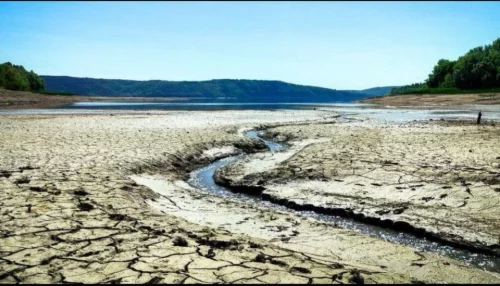
War fundamentally changes the natural habitats of birds. Explosions, fires, and shell craters all have an impact. As Maksym Vysochyn explains, under normal conditions, nature is capable of self-restoration-a process scientists call succession. However, when destructive factors act repeatedly, nature does not have enough time for this process.
“As a result, we may see very serious changes in natural complexes. For birds, it is precisely the alteration of habitats that is the main reason for population decline. In fact, war creates every condition necessary for certain species to disappear from specific areas,” the ornithologist emphasized.
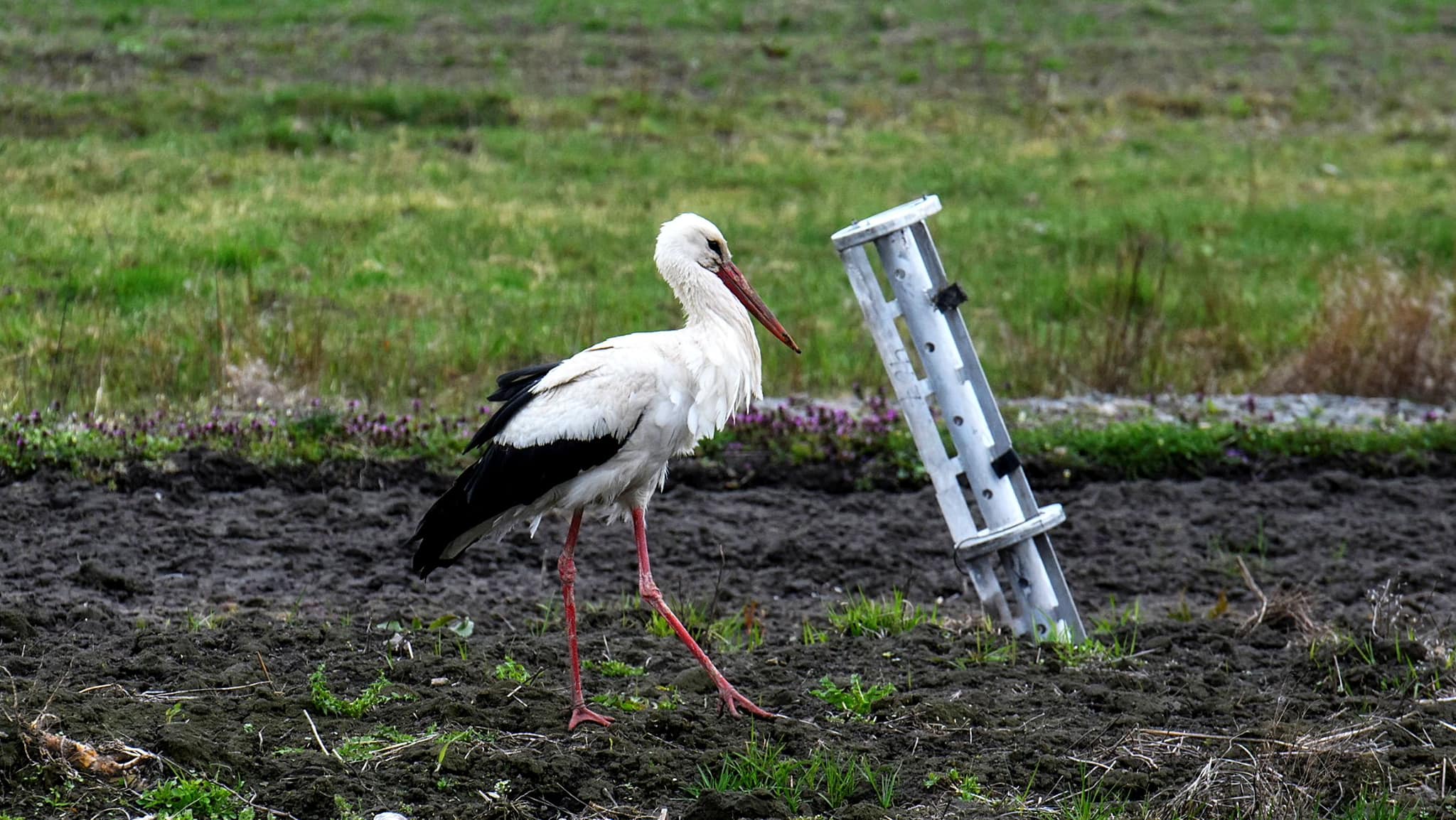
By No Means an Imaginary Threat of Extinction
A scientist assures that because of the war, rare steppe birds, previously common in the Donetsk region, and other avian species may disappear from Ukraine's ornithofauna.
During 2020-2021, he conducted research near Kramatorsk to compare the situation with data from before 2014. In particular, the scientist tried to assess the status of the white-tailed eagle population near Kramatorsk. Only two individuals were recorded, whereas in the mid-2000s, up to 20 birds of this species could be observed at the same time.
“The short-term military actions of 2014 in the Sviatohirsk area, which coincided with the nesting, spring-summer season, simply scared the birds away. The white-tailed eagle is highly sensitive to such disturbances: it abandons its nesting area, where it could have lived for decades, and does not return,” stated Maksym Vysochyn, giving his main hypothesis.
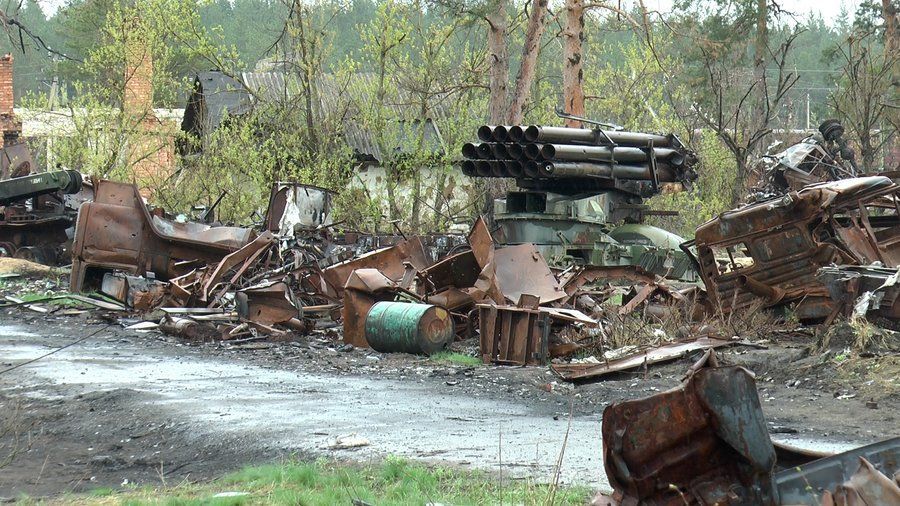
Sviati Hory Park. Source: Suspilne Donbas
Another reason has been the thinning of shelterbelt forests, which previously served as corridors between forest ravines. In these areas, the scientist documented uncontrolled logging; the old trees where birds of prey typically nest have disappeared.
However, the numbers of some species have even increased since 2014. Maksym Vysochyn notes:
- the pheasant, a fairly adaptive species whose distribution is aided by climate change;
- the stock dove, whose population overall is rising in cities with green spaces;
- the kestrel. This small falcon is settling in cities more frequently, while in its traditional habitats-chalk cliffs and ravines-its numbers are decreasing.
EcoPolitic previously reported that after the disappearance of the Kakhovka Reservoir, pink pelicans began returning to Zaporizhzhia.
You can learn about fish species that may soon become extinct in Ukraine in this article.