The relatively young biomethane sector in Ukraine is already producing millions of cubic metres of gas each year and has begun exporting it to the EU. The government has ambitious plans for this sector, and EU markets are prepared to pay a high price for this biofuel. However, there are several barriers that are still preventing the sector from reaching its full potential.
The International Energy Agency (IEA) has devoted an entire analytical report to the development of Ukraine’s biomethane sector, according to the Ukrainian Bioenergy Association (UABIO).
Potential leadership
Ukraine is the European leader in terms of the volume of raw materials available for biomethane production. The sector has the potential to utilise organic matter from 33 million hectares of agricultural land — ranging from agricultural waste and by-products to the organic fraction of household waste. The IEA estimates that this could enable the production of 11.6 billion m³ of biomethane annually.
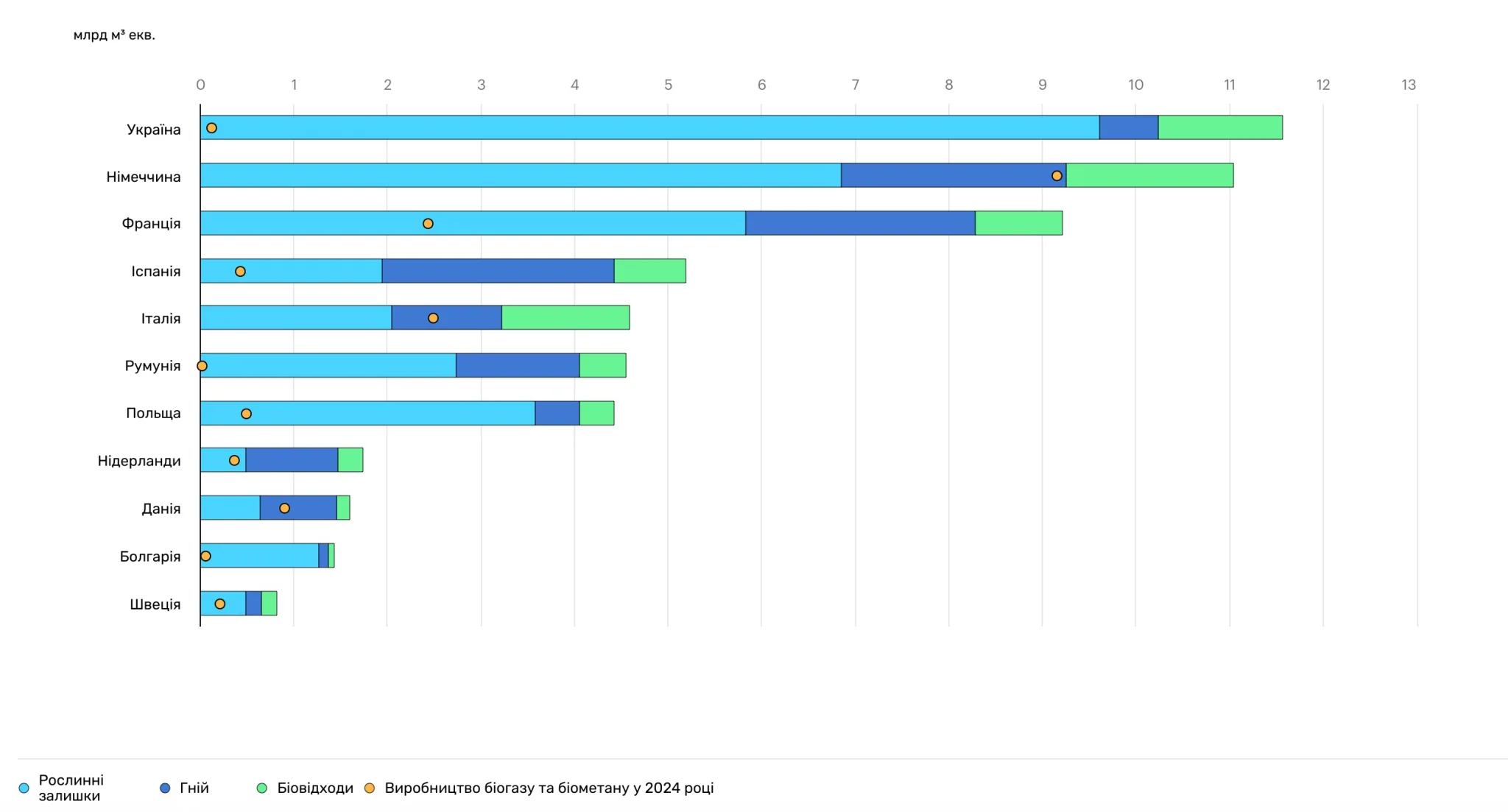
Source: IEA. Translation: UABIO.
The second factor in Ukraine’s potential success is its extensive gas infrastructure. On its western borders, Ukraine is connected with Slovakia, Poland, Hungary, and Romania via Moldova.In addition, Ukraine’s underground gas storage facilities can accumulate up to 31 billion m3 of gas. Geographically, these are also located closer to the west, outside the area of active hostilities.
Industry successes
Experts mark the start of Ukraine’s biomethane sector in 2015. Since then, the industry has achieved significant progress and major milestones.
As of 2025, there were 85 biogas plants operating in Ukraine. Their combined electrical capacity was 140 MW, including 33 MW from landfill gas plants. All existing facilities together have the potential to produce 260–300 million m3 of biogas per year. Currently, most of this biogas is used for heat and electricity generation.
Alongside production, a market is gradually emerging. Ukrainian biomethane first entered the national grid in 2023. In February 2025, domestic producers exported biomethane to the European Union for the first time. By autumn of last year, the first batch of liquefied gas (bio-LNG) was delivered to the EU, specifically to Germany. Road transport was used for this shipment.
In spring 2026, there were seven biomethane production plants operating in Ukraine, with a total installed capacity of 111 million m3 per year. According to the IEA, five more plants with a combined annual capacity of 20 million m3 are expected to be commissioned in the country during the year.
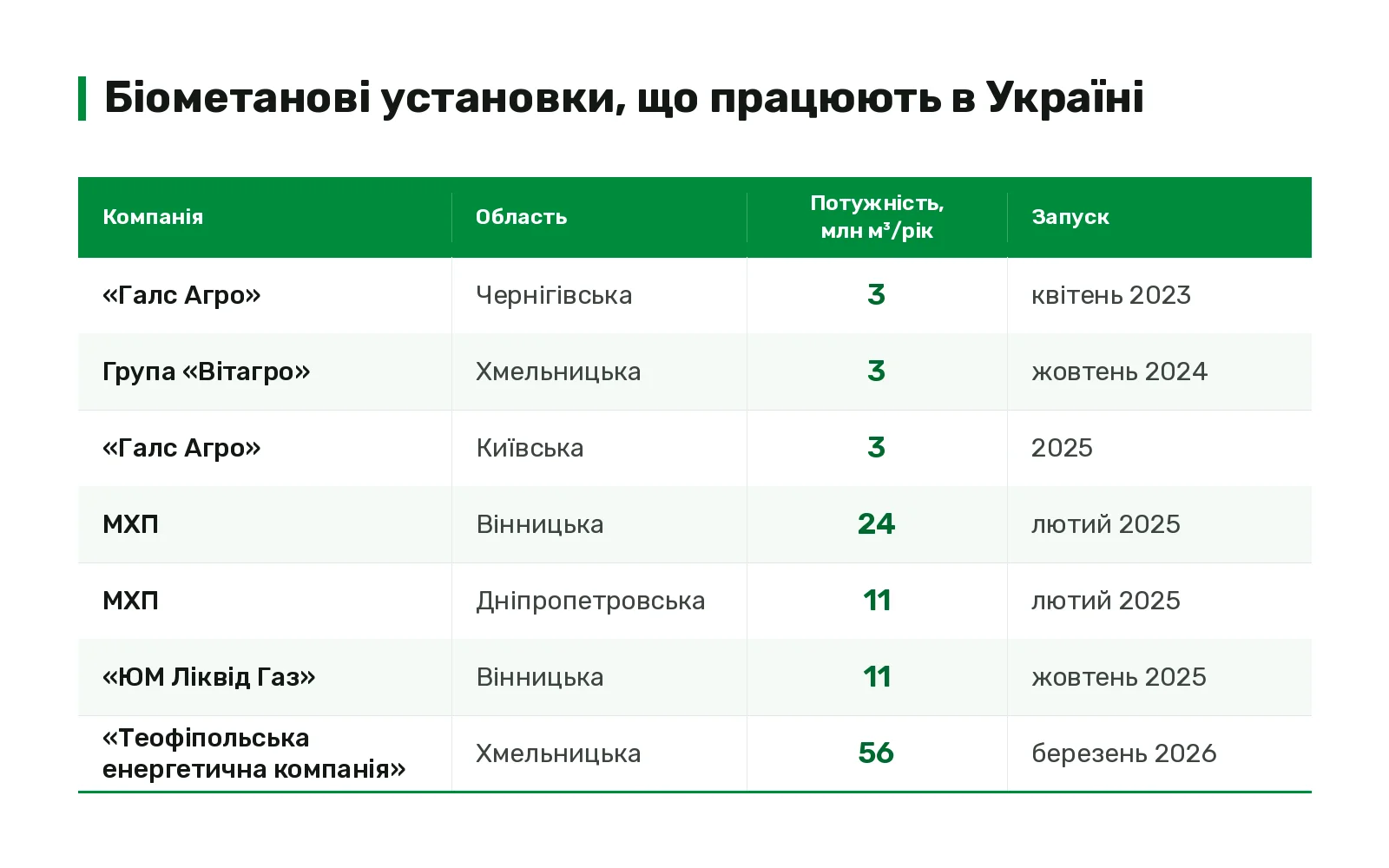
Source: IEA. Translation: UABIO.
From resilience to international trade
Biomethane serves several important functions for Ukraine. Among them:
- reducing import dependence and supporting energy resilience. The enemy has temporarily disabled 60% of gas production, but the biomethane sector is more decentralized and therefore less vulnerable.
- reduction of greenhouse gas emissions, particularly in heavy industry and transport. In turn, this enables producers to adapt to EU requirements, especially regarding the Carbon Border Adjustment Mechanism (CBAM).
- support for the local economy – from creating new jobs to developing machine building, since about half of the equipment for biomethane plants is manufactured in Ukraine.
European Perspectives
The European Union, under the REPowerEU plan, intends to increase biomethane production to 35 billion m3 by 2030. However, the International Energy Agency (IEA) forecasts that Europe is unlikely to surpass the 26 billion m3 mark.
This opens the stage to external suppliers, to whom the EU is ready to offer a rather high price for their products. With a production cost of around €650 per 1,000 m3 of biomethane for Ukrainian producers, a price of €800–900 is already profitable. However, in some markets, it is even higher-up to €1,000 per 1,000 m3.
What Holds Ukraine Back?
In April 2026, the state set a national target to produce at least 1 billion m3 of biomethane annually by 2030, with an increase to 2.1 billion m3 by 2035. At the same time, the National Energy and Climate Plan (NECP) sets indicators to use at least an additional 2 billion m³ biogas equivalent by 2030.
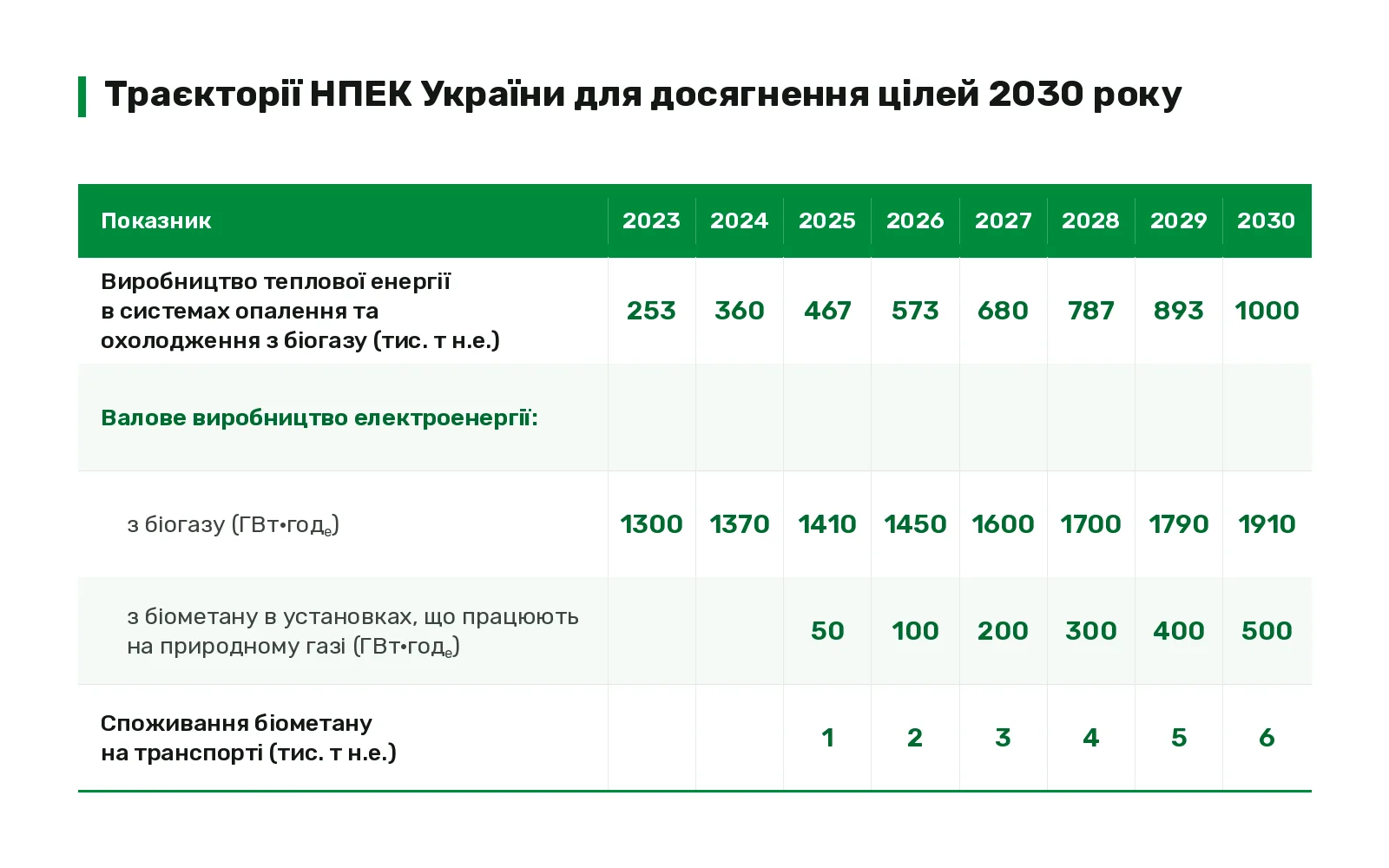
Source: IEA. Translation: UABIO.
However, a number of factors hinder these ambitions:
- tough competition with the natural gas segment, which is subsidized by the state;
- taxation of biomethane at the same level as fossil fuels;
- infrastructural and technical limitations;
- the need to modernize gas networks;
- war-related risks.
According to IEA experts, Ukraine has already taken important steps to support the sector. However, there is still a lack of stability and transparency in the regulatory framework, interagency coordination for the implementation of the biomethane plan, targeted financial support, risk reduction for investors, and facilitation of integration of the gas infrastructure with the European network.
EcoPolitic previously reported that biomethane in Ukraine has the potential to fully replace natural gas. However, this would require at least €40 billion in investment.
This year, Germany announced its intention to import Ukrainian biomethane for district heating needs.
Read more about the adoption of the Biomethane Production Development Program until 2035 in a separate article.