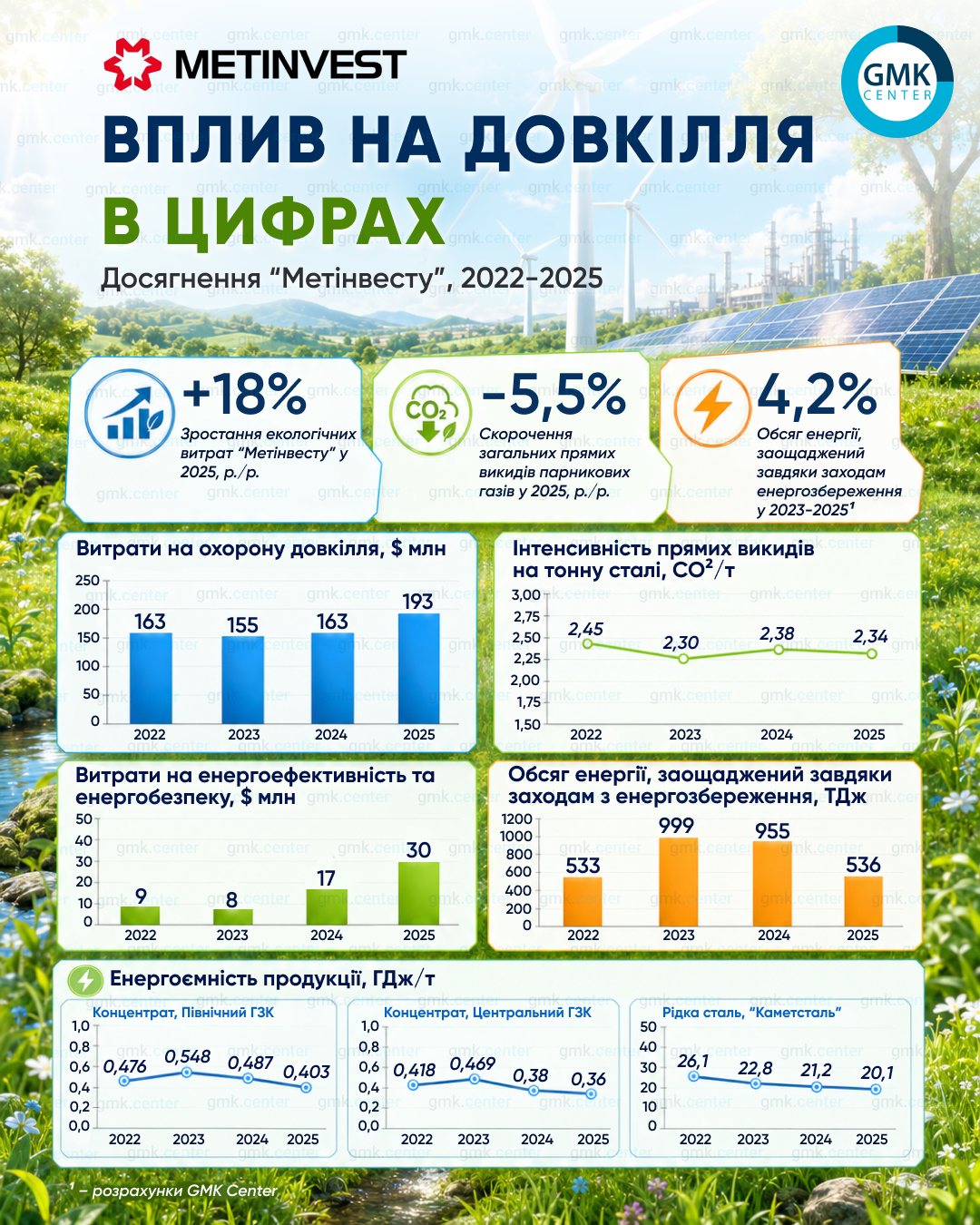
Throughout 2025, the Metinvest Group spent $193 million on environmental projects and energy efficiency. This is 18 per cent more than in the previous year. The Group’s enterprises implemented large-scale projects to improve energy efficiency and ensure effective waste management.
This is illustrated by an infographic prepared by GMK Center analysts based on data from Metinvest’s annual integrated report.
Expenditure on environmental protection rose by $30 million, whilst spending on energy efficiency measures increased by $13 million. Capital expenditure accounted for 24% of the company’s total environmental expenditure.
The majority of the funds were spent on repair works. All of these had a specific environmental impact – bringing equipment into line with environmental standards, effective management of production waste and reducing the negative impact on the environment. Among such projects is a programme of measures for pulp thickening at the Northern Mining and Processing Plant, aimed at reducing the volume of pulp discharged into the tailings pond.
Source: GMK Center
Energy sector
Last year, Metinvest allocated approximately $30 million to projects aimed at improving energy efficiency and energy security. Expenditure rose by 80 per cent compared with the previous year. This was driven by increased activity in several areas: the expansion of in-house power generation, efficiency improvements at specific production sites, and the implementation of a number of energy service projects.
The group of companies managed to reduce energy consumption by 9 per cent. However, the main factors were temporary stoppages in equipment operation. Specifically, this refers to the shutdown of coke oven battery No. 1 at Kametstal and the suspension of operations at the Ingulets Iron Ore Mine and the Pokrovsk Coal Group. The use of coke in pig iron production was also optimised.
At the same time, Metinvest saved 536 TJ of energy thanks to energy-efficiency measures. For example, natural gas consumption was reduced during the production of pellets at the Northern and Central Mining and Processing Plants. There, it was partially replaced with biofuel – crushed sunflower husks. As a result, the energy intensity of production has fallen. At the Northern Plant, for instance, it now stands at 0.423 GJ per tonne of pellets, down from 0.46 GJ in 2024.
Plans for the future
Among the measures that Metinvest intends to implement are the installation of 120 MW of gas piston power generation units and 37 MW of solar panels. The company expects this to provide its production operations with around 20 per cent of the energy required.
At the same time, the group is working on creating autonomous ‘energy islands’. These are self-sufficient power systems that Metinvest is developing at its main assets in the cities of Kryvyi Rih and Kamianske.
EcoPolitic previously reported that in the first quarter of 2026 alone, Metinvest paid 190 million hryvnias in environmental tax.
The group has also signed an agreement with the Black Sea Trade and Development Bank for €20 million. The loan proceeds will be used to build Metinvest’s first solar power stations.